The Cleveland Cavaliers practiced Tuesday for the first time since Nov. 4, with the primary focus centering on the defensive side of the ball. Aside from the actual participation itself, the Cavs learned some hard truths through an eye-opening film session where head coach Kenny Atkinson put things in perspective.
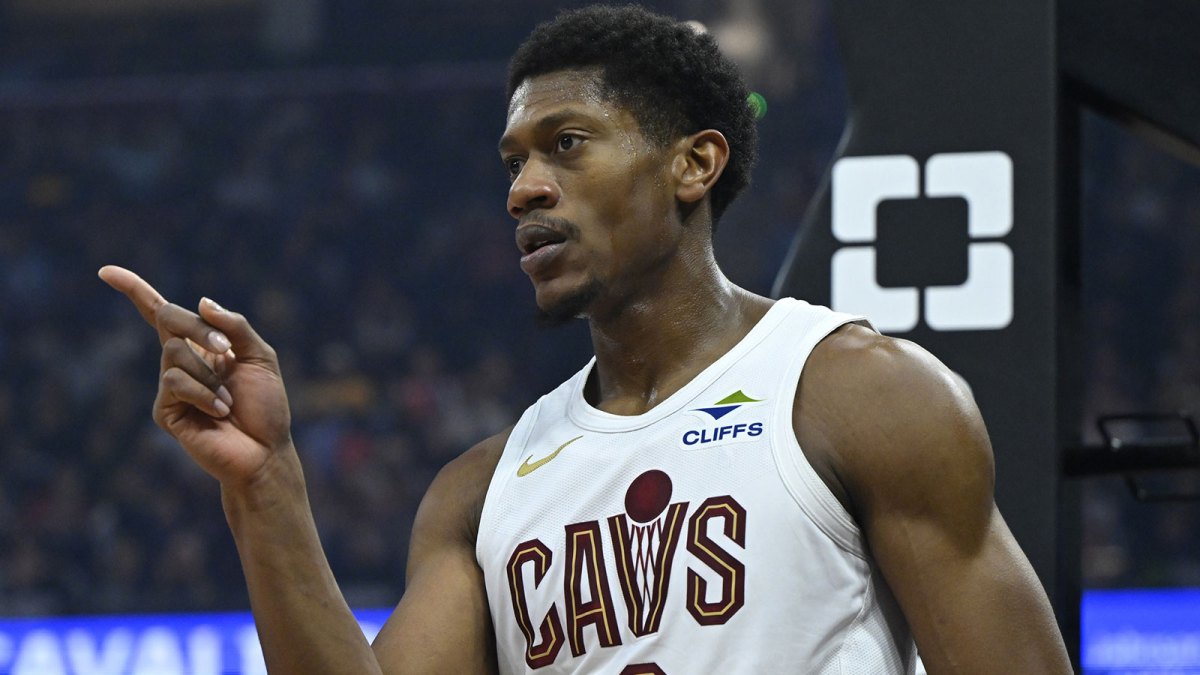
“He just called us out,” De'Andre Hunter said after practice. “He broke down exactly what we needed to do, exactly what we haven't been good at, and we watched it. As a whole team, it's not the easiest thing to see when you're not doing well, but we saw a lot of that.
“It's negative. I feel like anything negative, if you watch it and try to actively work on it, you should get better at it… You need those things. You can't just brush 'em to the side and say we're gonna be better later in the season because that's not necessarily true.”
Atkinson compared this week of non-gamedays to a training camp setting, where Cleveland can reset and get back to its principles. He also likened the team's current standing to being down 2-1 in a playoff series. Part of improvement is constructive criticism and holding everybody, including himself, accountable during this time off.
“We're not enjoying it. We're on edge,” Atkinson said. “We're competitors. This isn't fun, wasn't fun in the sense of the film session was uncomfortable. Practice is uncomfortable. Everybody wants that joy. The joy comes back when you start improving and turning a corner as far as what we want as a team.”
Hunter felt that direct messaging, accompanied by supporting evidence, sends a clear message to each individual.
“It's your own accountability,” Hunter said. “You can't blame anyone else, can't say you weren't in a rhythm, or you aren't making shots or anything like that. If you just watch film and see yourself and you're getting cut backdoor or you're getting beat in transition, that's on you. We saw that, and we're taking accountability. It helps every single player because we saw it, so it's hard to deny it.”
“It's not fun, it's not joyful,” Atkinson added. “So you're a little tweaked, you're a little frustrated, and how are we going to react to that? It does not feel good right now. How do we react to that? How do we bounce back? This is an important stretch to see how we react to our struggles right now.”
Thomas Bryant refers to the December-January-February period as the “dog days” of the NBA, where mental toughness is constantly tested. He finds the Cavs to be in a “gray area” due to a taxing schedule and injuries that have forced out important glue guys, but there is no excuse for lacking intention and focus.
Bryant has been in a similar situation as recently as last year with the Indiana Pacers, whose rocky start ultimately galvanized them all the way to the NBA Finals. Cleveland's backup center was reminded of that when the players met on their own accord on Tuesday.
“I feel like it'll catapult us right here,” Bryant said. “Sometimes, you have to feel that playoff-ready mode, you have to feel those type of games, you have to feel those type of feelings throughout the season, so that way it gets kind of engraved into you as the year goes on.”
“It just shows that we're all bought in,” Hunter added. “We're all not happy with where we are. We're all trying to be better, and we have a common goal. To have a team-led meeting and have guys speak out and speak their minds, I think that helps not only the players, but the coaches as well.”
While Hunter didn't reveal the specifics of the discussion, Bryant shared that it revolved around mentality and, ultimately, enthusiasm.
“There was a few games where we might make a play here and there, and we're not celebrating each other's joy out there, and that was a real big emphasis as well,” Bryant said. “It's a long season, it's a grueling season. We're gonna have ups and downs and everything, but our consistency level of what we do with each other has to stay the same, and that has to grow day-in and day-out.”
“This team is self-driven. It's player-driven. It's player-led,” Atkinson added. “I think I also have to look in the mirror. I think, especially with so many young guys in the mix, I can be a little more hands-on. I think that's going to be my little tweak, my little reset, is being a little more intentional with how I'm coaching the young guys and helping them. We obviously have really great leadership with our players, but I can also do a better job helping them be more consistent.”
Bryant agrees with both his teammate and coach that the Cavs' consistency level has varied. They've been waiting for the tide to turn instead of diving into the water headfirst and dictating the games.
“We can't just start thinking like, ‘Oh, it might be this game. We can turn it on in the second quarter or fourth quarter when we're down,'” Bryant said. “No, it has to start at the beginning of the game, before the clock starts, and then, all the way 'til the clocks hit zero in the fourth quarter.”
“It's something that we've been having issues with this whole season,” Hunter added. “Just rebounding, and I just feel like our overall toughness. We have a chance these five days to right that and get back on track.”
Using this gap in the schedule to recover and finally implement some strategies should result in a shift.
“I feel like part of this reset is just getting back to what we started in training camp and our identity,” Atkinson said. “And quite honestly, with five [games] in seven [nights], you don't have time to do that. And there's slippage. Slippage happens. especially when you're playing three, four young guys.”
Tactically, the Cavs won't make drastic tweaks. They're going to prioritize the need to play harder and compete for longer.
“Right now, we have slippage in how consistently we're doing it,” Atkinson said. “We talked about it a couple of days ago, how to bounce back from missing shots and that resiliency. There's been some slip-ups there, where it's not running back on defense, miss a closeout or mess up a closeout because the offensive end affected you.
“Get back to our principles and our fundamentals and how we do things. Double down on that, double down on our identity.”