
The first week of January is always a reckoning point in women’s college basketball. Nonconference resumes collide with the realities of league play, reputations are stress-tested, and assumptions built in November either harden into truth or dissolve under pressure. In the first week of the new year, women's college basketball finds itself in one of its most competitive and fluid seasons in recent memory, and there were enough upsets over the holidays to prove it.
Some traditional powers remain formidable, but upwardly mobile programs have seized opportunities through statement wins, while once-stable contenders are avoiding panic after some notable upsets. Let's dive into this edition of the power rankings.
1. UConn (=)
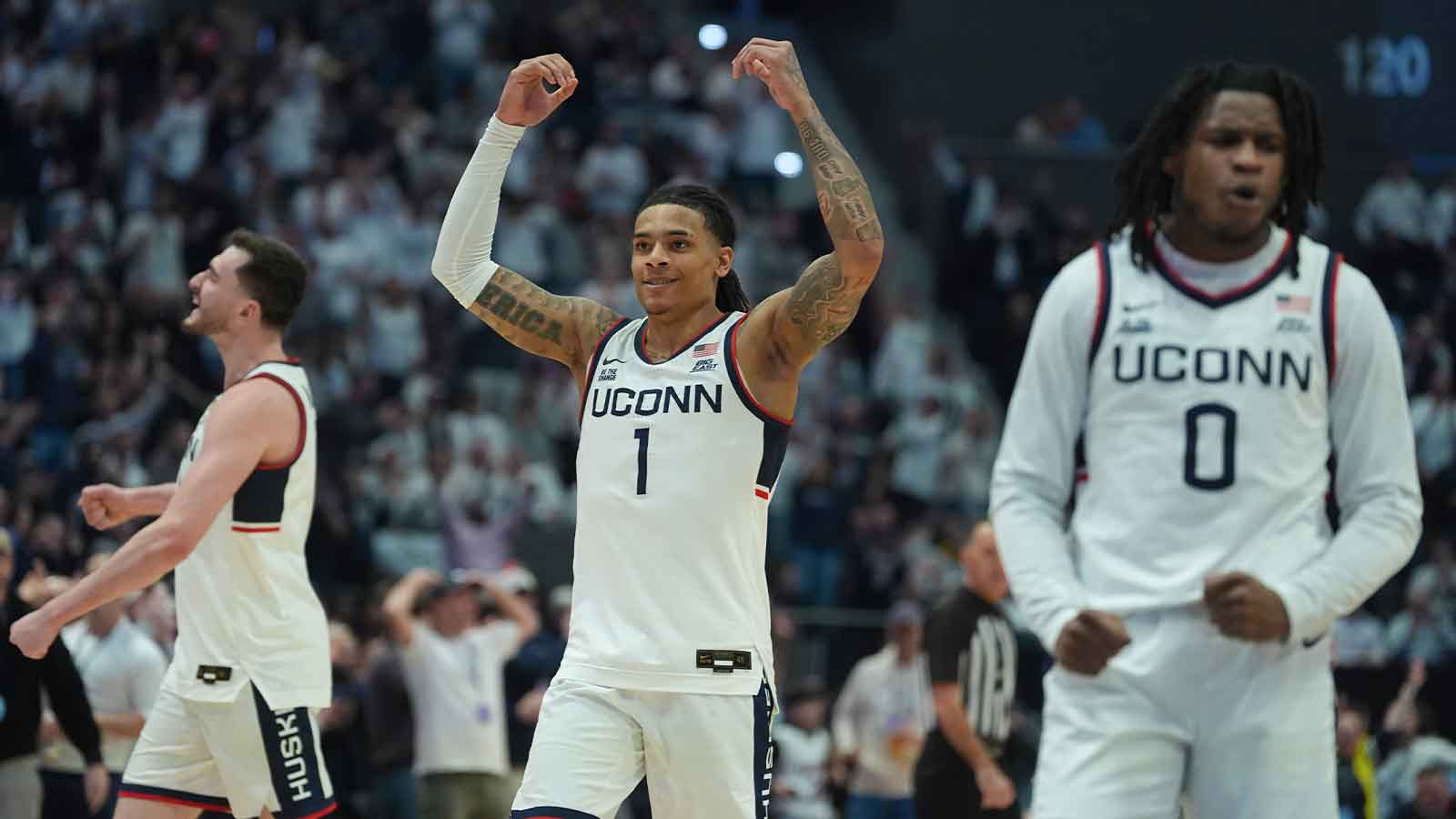
UConn women's basketball continues to occupy the top spot not because of history, but because of control. The Huskies dictate games from opening tip to final horn, often turning competitive matchups into extended demonstrations in elite execution. Their defense remains the foundation, forcing opponents deep into shot clocks and denying clean looks at every level.
But what elevates this group beyond past top-tier UConn teams is offensive balance. There is no single pressure point opponents can attack since scoring comes from multiple spots, lineups shift seamlessly, and decision-making rarely wavers. And maybe most impressively, UConn has not needed a perfect game to win decisively.
The Huskies have survived cold shooting stretches, foul trouble, and physical opponents without losing structure. That adaptability suggests that this is a team that's still approaching its peak. Entering January, they look less like a contender and more like the standard others must reach.
2. Texas (=)
Texas women's basketball has emerged as the most physically imposing team in the country. Their undefeated start is anchored by size, depth, and a defensive approach that wears opponents down possession by possession. The Longhorns do not rush shots or force tempo. They trust their ability to win over the course of the contest, and that confidence shows late in games. When margins tighten, Texas has consistently executed better than its opponents.
What separates this version of Texas from strong teams of the past is composure. Close games have not spiraled into chaos, and leads have been protected with patience rather than passivity. Texas may not yet have the signature win that would spark national consensus at No. 1, but week-to-week performance places them squarely in the championship tier.
3. UCLA (+1)
UCLA’s placement into the top three is rooted in versatility. The Bruins have proven they can play fast without losing control, slow games down without stagnating, and adjust their defensive schemes depending on the matchup. That flexibility makes UCLA women's basketball one of the most difficult teams in the country to prepare for on short notice. The Bruins' lone setback this season looks more like an exception than a trend, especially given the sharp response that followed.
Offensively, UCLA thrives on balance rather than dominance. Multiple players besides Lauren Betts can initiate offense, which prevents defenses from loading up on a single threat. Defensively, they communicate well and rotate with purpose, limiting second-chance opportunities. As conference play deepens, that adaptability may become their greatest asset.
4. South Carolina (-1)
South Carolina women's basketball remains a defensive juggernaut, even if their offensive execution occasionally lags behind their physical dominance. The Gamecocks arguably control the paint better than anyone in the country, rebounding at an elite level and turning misses into extra possessions. Their defense alone keeps them in every game, even on nights when shots refuse to fall.
What keeps South Carolina just outside the top three is offensive consistency. Since the Gamecocks are missing some key players, scoring can become laborious against disciplined opponents, and stretches without a basket have cost them momentum. Still, this is a team with championship DNA, built to improve as the season progresses. Few programs are better equipped to handle adversity.
5. Oklahoma (+4)
Oklahoma has turned momentum into identity. The Sooners’ extended winning streak is no accident; it is the result of disciplined offense, strong perimeter defense, and guards who control pace with maturity. They rarely force shots and are content to let games unfold on their terms. When opponents make mistakes, Oklahoma capitalizes quickly and efficiently.
What stands out most is their confidence. This is a team that expects to win close games and plays accordingly. As conference play intensifies, Oklahoma’s ability to maintain structure under pressure positions them as a genuine threat rather than a temporary riser.
6. Vanderbilt (+6)
Vanderbilt’s presence this high marks one of the most significant developments of the 2025-26 NCAA season. An undefeated run paired with a defining win over LSU announced that the Commodores are not merely competitive but formidable. Their offense is creative and well-spaced, attacking mismatches with precision rather than volume. Defensively, they have shown discipline and connectivity that belies their preseason expectations.
What makes Vanderbilt especially dangerous is belief. The Commodores play without hesitation, trusting their system and one another. Sustaining this level through the SEC grind will be a challenge, but as January begins, they have earned every bit of this ranking.
7. Kentucky (+4)
Kentucky has built its season on toughness. The Wildcats defend with purpose, disrupt passing lanes, and embrace physical play without losing composure. Their standout wins have been the result of sustained pressure rather than fluke shooting nights. Kentucky understands exactly who it is, and that clarity has fueled consistency.
Offensively, they may not overwhelm opponents with pace or flair, but they generate enough quality looks to complement their defense. In a league defined by physicality, Kentucky has carved out an identity that translates anywhere.
8. Michigan (-1)
Michigan’s strength lies in reliability. The Wolverines rarely beat themselves, execute cleanly, and maintain defensive discipline even when shots aren’t falling. They may lack the explosive ceiling of teams above them, but their floor is remarkably high. Losses have come against quality opponents, and wins have been handled professionally.
Michigan’s style may not attract headlines, but it is built for longevity. As conference play grinds on, their steadiness could quietly elevate them further.
9. Baylor (+13)
Baylor’s season has been uneven, but its ceiling remains undeniable. The statement win over Iowa State served as a reminder of what this team can be when fully engaged. The Bears' defense can suffocate opponents, particularly when they control the glass and limit transition opportunities.
Power rankings reward daring performances as much as stability. Few teams in the country are more capable of knocking off elite opponents on any given night.
10. Louisville (+3)
Louisville continues to embody versatility. The Cardinals can score in transition, grind in the half-court, and shift defensive looks fluidly. While they may lack a signature national win, their body of work is solid and sustainable. Depth has allowed them to absorb minor setbacks without dramatic swings in performance. This is a team that understands how to navigate the long season, even if it has yet to fully announce itself on the national stage.
11. Iowa (+3)
Iowa women's basketball remains defined by offensive rhythm and mental resilience. Defensive limitations persist, but their ability to control tempo and respond to adversity keeps them competitive against anyone. The Hawkeyes rarely panic, even when games tighten late, and that poise has translated into close wins.
Iowa’s ranking reflects respect for consistency rather than dominance. They may not be overwhelming, but they are persistently difficult to beat.
12. Maryland (-6)
Maryland’s recent loss exposed vulnerabilities, particularly in defensive rotations, but the Terrapins remain too talented to discount. Their backcourt can change games quickly, and when their transition offense clicks, they can overwhelm opponents in short bursts.
The question moving forward is sustainability. If any issues linger, Maryland may continue to slide. If adjustments take hold, the squad could climb back up just as quickly.
13. Michigan State (+11)
Michigan State’s efficiency is impossible to ignore. The Spartans prove they can value possessions, rebound effectively, and defend without fouling. While they lack headline moments, their consistency and discipline make them a difficult matchup. This is a team that wins the games it should and still competes fiercely in the ones it shouldn’t. Michigan State feels like a program poised to outperform expectations once brackets are drawn.
14. Iowa State (-4)
Iowa State settles into the mid-tier of the rankings after suffering its first defeat of the season. The loss to Baylor highlighted defensive vulnerabilities against physical teams, but the Cyclones remain offensively potent. Their interior presence and scoring balance ensure they will remain competitive in every matchup. This spot is simply a reflection of reality rather than an indication of how the program's season will progress. Iowa State is good, dangerous, and capable — but not yet complete.
15. TCU (-7)
TCU mirrors Iowa State in trajectory. The Horned Frogs have shown flashes of elite play, but recent losses revealed gaps in execution and depth. TCU is competitive, talented, and improving, but consistency against top-tier opponents remains elusive. The Horned Frogs' ceiling remains intriguing, but their recent form places them firmly in the middle tier.
16. Texas Tech (+5)
Texas Tech’s unbeaten record and defensive identity demand attention. Anchored by size and rim protection, the Lady Raiders control the paint in ways few teams can match. Offensively, they play within themselves, prioritizing shot quality over volume. Schedule strength tempers expectations, but momentum and confidence matter in power rankings. Texas Tech has both.
17. LSU (-12)
LSU’s slide reflects its performance since the new year rather than its overall talent level. Losses to Kentucky and Vanderbilt exposed issues with defensive discipline and cohesion, particularly in high-pressure moments. The roster remains loaded, but execution has lagged behind potential.
This is not a final verdict, but a checkpoint. LSU women's basketball still has the pieces to surge upward, but credibility now must be re-earned on the court.
18. Nebraska (+2)
Nebraska continues to thrive on efficiency. They execute well offensively, defend with structure, and avoid prolonged scoring droughts. Without a marquee win, the Cornhuskers' ceiling remains capped, but their consistency keeps them firmly in the national picture. They are a team few opponents overlook, even if they rarely dominate headlines.
19. Ole Miss (-4)
Ole Miss remains competitive through guard play and toughness. They respond well to adversity and rarely fold, but offensive limitations against elite defenses restrict their upside. Still, they are a credible tournament team with the ability to frustrate higher-ranked opponents.
20. Ohio State (-1)
Ohio State’s defense anchors their ranking. They force difficult shots and maintain discipline, even when games become physical. Offensive inconsistency keeps them from rising, but their structure and effort ensure they remain relevant.
21. Tennessee (+2)
Tennessee women's basketball’s placement reflects unrealized potential. The talent is evident, but execution and decision-making have been inconsistent. Defensive lapses and turnovers have undermined otherwise strong performances. This is a team that could rise quickly with refinement or stagnate if issues persist.
22. North Carolina (-6)
North Carolina’s physicality and rebounding keep the team competitive, but offensive efficiency has lagged behind much of the top 25. The Tar Heels can challenge ranked teams, but closing games remains a hurdle. Their ranking reflects promise tempered by inconsistency.
23. Princeton (+2)
Princeton earns its spot through discipline and execution. While they lack the depth of power-conference teams, their precision and composure make them dangerous in neutral settings. They play smart, efficient basketball and rarely beat themselves.
24. USC (-7)
USC women's basketball’s recent losses have forced recalibration. Talent remains, but defensive lapses and inconsistency have disrupted momentum. This position reflects the uncertainty surrounding the team rather than signaling a full-on collapse. The Trojans still possess upside, but we need to see the proof.
25. Duke
Duke rounds out the list through steadiness. They defend well, compete consistently, and avoid blowouts. Without a clear offensive breakthrough, they remain on the fringe but firmly within the national conversation.
As January unfolds, women’s college basketball stands at a fascinating crossroads. The elite have begun to separate, but the gap between contenders and challengers is narrower than it has been in years. Statement wins have reshaped expectations, while losses have exposed vulnerabilities that can no longer be ignored.
Teams like Vanderbilt, Kentucky, and Oklahoma have seized the moment, while programs such as LSU, Iowa State, and USC now face defining stretches that will determine their trajectories as March Madness approaches. Conference play will continue to apply pressure, force adjustments, and reward resilience.
But what is already clear is that this season is defined less by inevitability and more by opportunity. The path to March is wide open, and the teams that adapt fastest — not those with the most established reputations — will shape how this story ultimately ends.