The stretch of the season leading into early February often functions as a truth serum for women’s college basketball. Nonconference resumes have faded into the background, conference play has tightened the margins, and teams are now judged less on reputation and more on execution.
Injuries, fatigue, and pressure begin to separate contenders from pretenders, and weekly performances carry an amplified weight. A dominant win against a ranked opponent can recalibrate national perception, while a single lapse can expose structural weaknesses that linger long after the final buzzer. This power ranking reflects those exact moments.
These top 25 teams represent the women's college basketball's current competitive core — volatile, deep, and increasingly unforgiving. Some sit comfortably atop the standings with championship-level consistency, while others hover on the edge of a breakthrough, using momentum and resilience to force their way into the national conversation.
1. UConn (=)
At the summit sits a program that has defined excellence all season: UConn women's basketball. The Huskies remained undefeated, extending a powerful win streak and dominating marquee matchups. They closed the latest week of play with a comprehensive 96-66 home victory over a historically strong Tennessee squad, quashing any doubts about consistency in late-season play.
UConn's offense remains dynamic, and its defense is elite, limiting opponents to subpar efficiency across multiple facets of the game. Opponents consistently struggle to contain UConn’s tempo and shot creation — a testament to elite perimeter play and interior scoring balance.
Unlike many programs that rely on sporadic bursts, the Huskies' execution in clutch moments reflects a disciplined approach that balances pace with strategic restraint. They're among the national leaders in several advanced metrics, including scoring defense, adjusted offensive efficiency, and turnover differential. Their positional play also gives them the tools to pressure defenses and respond to opponents’ adaptations.
Through midseason, UConn exerts a psychological edge, forcing teams to play at its pace, not the opponent’s. In every major category of situational performance — second-chance points, transition buckets, defensive rebounding rate — the Huskies rank at or near the top of Division I teams. This week’s results underscore UConn’s ability to deliver consistently and dismantle elite opposition while maintaining poise. The Huskies remain the unquestioned team to beat as conference play intensifies.
2. UCLA (=)
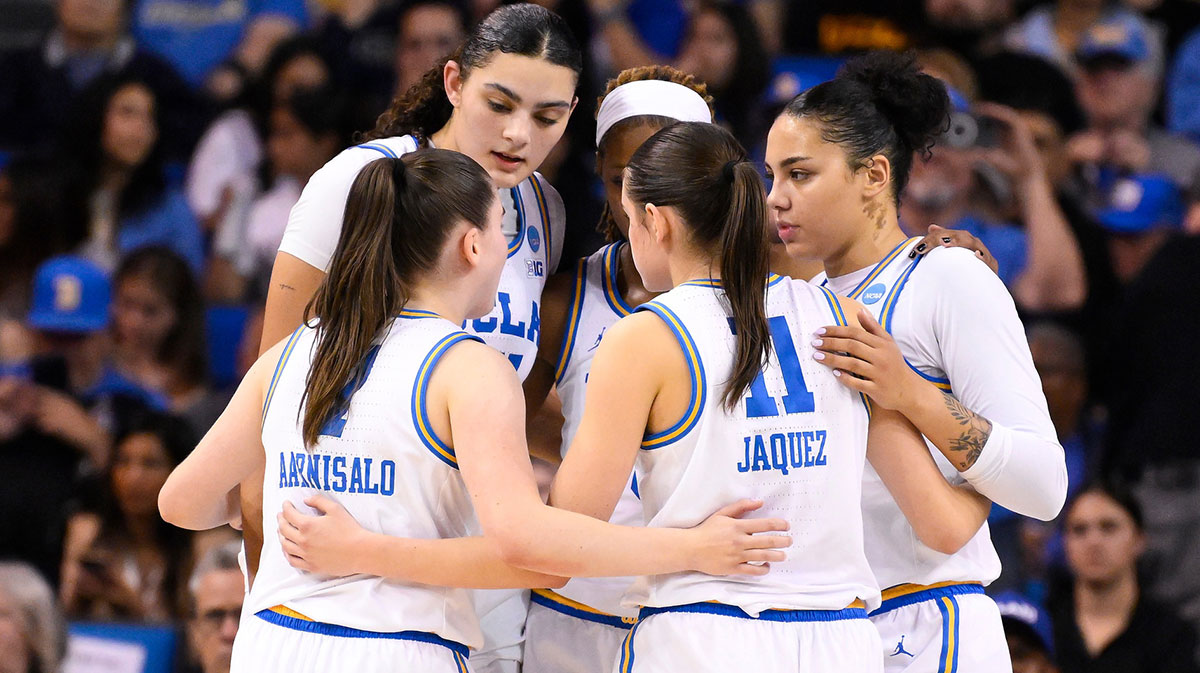
UCLA’s week exhibited all the hallmarks of an elite program: Consistent execution, defensive toughness, and the ability to close games against top 15 foes. The Bruins claimed a signature 88-65 victory over Iowa, a team that had built early momentum in Big Ten play. That win — especially by a sizable margin — illustrates UCLA’s balance between perimeter shooting and interior rebounding, allowing the team to dictate tempo in both halves.
What sets UCLA women's basketball apart is its blend of seasoned leadership and young talent capable of generating scoring spurts against pressure defenses. The Bruins' turnaround from a highly competitive non-conference slate to mid-season conference success is notable. They have absorbed key lessons from their toughest outings and tilted game outcomes in their favor with tactical discipline.
Heading into the coming week’s matchups, UCLA’s sustained excellence positions them as a team capable of supplanting UConn if the Huskies should falter. The Bruins' depth has improved later in games, where fatigue usually becomes a factor, and they have shown the ability to win both in tight contests and outright dominant performances.
3. South Carolina (=)
South Carolina women's basketball’s performance this past week highlighted resilience. Since the upset loss in overtime to Oklahoma, the Gamecocks have responded with authority, blowing out Vanderbilt and then Auburn by an unprecedented 81-51 margin. This swing from narrowly dropping a game to decisively crushing a previously undefeated team showcases their adaptability and offensive firepower.
The Gamecocks' scoring balance remains a key strength. Multiple players can create shots off the bounce and punish mistakes in transition, and their defensive identity — especially when it comes to forcing turnovers and challenging contested shots — reliably snuffs out opposing runs. South Carolina’s metrics in contested 3-point defense and defensive rebounding have improved in recent weeks, contributing to the mid-season surge.
Despite the relatively recent loss, the Gamecocks closed the week as one of the most feared offensive teams in the country. Their ability to respond to adversity — and do so emphatically — assures they remain in the top tier of national contenders.
4. Texas (+2)
Texas women's basketball arrived at this point of the season with a reputation for offensive balance and home domination. In the last seven days, they delivered a 78-70 signature win over a top-10 Oklahoma, showcasing the team's ability to distribute scoring while maintaining defensive discipline. Although they suffered a couple of losses in the previous stretch, the Longhorns have responded by tightening their execution on both ends of the floor.
What makes Texas formidable is its adaptability. The Longhorns can push the pace when necessary and grind through half-court sets with efficiency. Their floor spacing has improved, leading to cleaner shot attempts in late-clock situations, and they have tightened passing reliability to limit turnovers. Factor in their ability to reliably lean on their defense, and this brand of versatility — both tactically and roster-wise — puts the Longhorns solidly among the nation’s elite.
5. LSU (-1)
LSU’s week mirrored the identity that has made them one of the SEC’s most dangerous units: An electrifying, high-scoring offense paired with opportunistic defense. Over the past few games, the Tigers have showcased an ability to score at volume, returning to the triple-digit outings — a rare benchmark, even among elite programs — that were common at the start of the season in a 103-63 win over Alabama.
While LSU women's basketball's scoring output draws flashy headlines, its defensive principles have also tightened, especially in limiting transition buckets and securing defensive rebounds. The Tigers' perimeter matchups often see them contesting shots effectively, forcing lower-than-expected point totals despite generous offensive tempos. LSU’s scoring depth and controlled aggression move it firmly inside the top five.
6. Louisville (+4)
Louisville’s recent surge — including a 14-game winning streak and road victories at Stanford and Cal — has re-established the team among the sport’s elite. This momentum reflects a deep offensive arsenal and disciplined defense that limits opponents to ineffective field goal percentages compared to most DI teams. The Cardinals' balance between inside scoring and perimeter efficiency helps keep defensive rotations honest.
Over the past week, Louisville has continued to grind through challenging ACC matchups. The team's ability to win in hostile road environments stands out statistically, and its roster depth has been a differentiator late in games. Louisville’s emerging star power is also becoming more consistent, turning it into one of the most reliable top-tier squads in the country.
7. Vanderbilt (-2)
Vanderbilt entered the week coming off a brutal loss that ended its winning streak, suffering a landmark defeat at the hands of South Carolina. While the Commodores' overall performance remains notable and they have had one of the most efficient offenses in the country when their shooters are on rhythm, it took a while before they could right the ship with an 82-66 comeback win over Florida.
What cost them ground in the power rankings this week was the narrow 83-75 defeat to Ole Miss in between those two contests. Still, Vanderbilt’s statistical profile — including offensive rebounding and 3-point effectiveness — keeps it competitive with higher-profile programs. If they tighten on the defensive glass and limit turnovers, the Commodores remain poised for a deep postseason run despite recent adversity.
8. Michigan (-1)
Michigan’s recent performances reflect a team that consistently overachieves relative to preseason expectations and continues to climb in the national hierarchy. The Wolverines proved they're capable of winning close games. A massive 94-91 overtime victory versus rival Michigan State points to clutch execution and mental toughness. Michigan combines disciplined half-court offense with tough defensive stances, often limiting high-volume scoring teams.
The Wolverines also benefit from strong bench contributions, enabling sustained pressure late in games while keeping starters fresh. In a crowded field of teams jockeying for tournament seeding, Michigan stands out for its stability and reliability.
9. Ohio State (+2)
Ohio State’s ascent this season has been impressively engineered through depth and versatility on both ends of the court. The Buckeyes continue to post wins against quality conference foes, like Wisconsin and Nebraska, while limiting defensive breakdowns in critical possessions. Their interior presence and ability to score in the paint make them difficult to defend, even against top-ranked opponents.
While Ohio State’s athleticism may not always grab headlines, its statistical efficiency — especially in rebounding and second-chance points — keeps the team competitive week-to-week. Given the consistency they’ve displayed, the Buckeyes remain firmly inside the top ten.
10. Oklahoma (-1)
The Sooners enter this week with a question mark surrounding their identity a bit. They lost a statement rivalry game in overtime against Texas, 78-70, showing a weakness in their game at one of the worst times of the season. Oklahoma’s offense thrives on tempo and spacing, but defensive consistency remains the key improvement area if they hope to climb further.
11. Iowa (-3)
Iowa women's basketball entered the week with a strong Big Ten start, but back-to-back losses have tempered momentum. The Hawkeyes still have one of the most potent offenses in the country, but defensive lapses cost them against unranked USC and UCLA recently. Their flexibility in scoring, both perimeter and interior, keeps them relevant, but tightening late-game defensive execution will determine whether they can reassert themselves among the elite.
Despite recent bumps, Iowa’s body of work remains strong enough to keep it from falling too far out of the top 10 in the power rankings. However, the Hawkeyes' trajectory this month will be crucial for how they're perceived ahead of March Madness.
12. TCU (=)
TCU had shown signs of growth and consistency within conference play until its 62-60 road loss at Texas Tech on Sunday. But the Horned Frogs did beat Kansas 79-77 a few days before, so their overall performance suggests that this is a squad still building toward sustained success. Their defensive discipline and rebounding fundamentals give them a strong base to climb the rankings.
13. Michigan State (=)
Michigan State has made noise through a combination of disciplined offense and opportunistic defense against quality competition, but the team fell just short of a statement win over in-state rival Michigan. The Spartans' ability to limit turnovers and control tempo usually makes them a dangerous opponent in close games. Their recent week did also include an 86-65 blowout win over Purdue, proving that the heartbreaking loss didn't derail their steady upward trajectory.
14. Ole Miss (+3)
Ole Miss’s fundamentals, including strong half-court execution and improved rotations, have turned heads. While the Rebels haven’t consistently beaten elite opponents, their performance in recent conference matchups, like their win over Vanderbilt, indicates a capability to swing unpredictable games in their favor. Ole Miss sits just outside the group of teams capable of national impact but remains on the cusp of broader recognition.
15. Kentucky (+3)
Kentucky’s profile has risen after finally halting its three-game losing skid with a 93-73 victory over Arkansas. The Wildcats' competitive effort in a strong SEC slate earns them respect in a crowded field, and they possess the physical tools to upset higher-seeded teams in tournament scenarios down the road.
16. Duke (+4)
Duke continues to show flashes of high-end capability, particularly in offensive execution and tempo control. The Blue Devils' most recent 80-44 decisive win over Wake Forest marks their 13th in a row. Whether or not they can maintain this streak will be the deciding factor in whether they climb the ranks or stabilize where they are.
17. Texas Tech (+4)
Texas Tech’s recent performance versus TCU underscores a gritty, defensive identity. While not yet on par with the top-tier squads on a week-to-week basis, the Lady Raiders' ability to force turnovers and grind out low-possession games offers a blueprint for future success.
18. Baylor (-4)
Baylor has consistently won against mid-tier opponents and played competitively with ranked squads for most of this season. However, a disappointing 70-60 defeat at the hands of West Virginia has thrown a wrench into the Bears' previously stellar record. For Baylor to move higher, they must demonstrate a knack for closing tight contests against elite foes — a step they have flirted with but not fully completed yet.
19. West Virginia (+3)
West Virginia’s defensive pressure and ability to force turnovers delivered a signature win over Baylor this week that boosted its standing. While the Mountaineers' offensive output hasn’t consistently matched the top 15, their gritty style keeps them competitive in many conference games.
20. Tennessee (-5)
Tennessee’s program history speaks for itself, but its performances this week haven't necessarily lived up to that reputation. Defensive inconsistencies and uneven stretches have limited the Lady Vols' ranking potential recently, especially after suffering their first 30-point loss since 1984 on Sunday to UConn. When the Tennessee women's basketball team plays to its strengths, it can flip tough matchups, and the team will need to tap into that before it takes on the rest of its SEC slate.
21. Princeton (-2)
Princeton’s well-executed system and discipline on both ends earn it recognition as the best team in the Ivy League. But the Tigers' losses tend to come against power conference opponents — and even then, only by small margins — but this time, they fell short against in-conference foe Columbia. The team did take over the fourth quarter against Cornell to win 72-61, though, showcasing a return to form. While Princeton may lack the depth of larger programs, its efficiency warrants this ranking.
22. Maryland (-6)
Maryland’s season has been a tale of highs and lows: Impressive wins offset by poor defensive showings. Despite a fourth-straight loss — this time, 68-61 against Oregon — the Terrapins deserve to remain in the top 25 based on a competitive schedule full of ranked opponents and quality performances in close games. But inconsistency keeps them from a higher slot.
23. North Carolina
Entering the top 25 is North Carolina, which has displayed competitive resolve in recent weeks. While results have been mixed against top-tier ranked squads, the Tar Heels have remained competitive and shown the grit necessary to warrant inclusion among the nation’s 25 strongest teams.
24. Alabama (=)
Alabama’s last two performances come amid an up-and-down stretch in its record, balancing one another out at best. Although the Crimson Tide topped Georgia 68-53, they also suffered one of the worst losses in program history to LSU. Alabama has shown the ability to compete with ranked teams throughout the campaign, but the team will need to find consistency as it faces arguably the toughest part of its SEC schedule. Incremental progress suggests they may climb with a few signature wins.
25. Washington (=)
Washington’s recent winning bout with ranked Maryland has shown the team is capable of greatness, but the 75-66 loss to Illinois that followed proved it is still not elite. The Huskies' scoring balance and perimeter defense are strengths, and they should remain in this tier if they continue tightening late-game execution.
As February unfolds, the national picture in women’s college basketball is both clearer and more complex: Clear because a small group of programs has established a level of week-to-week excellence that separates them from the pack, and complex because the distance between teams ranked in the middle and those just outside this list is narrower than ever. One sharp-shooting night, one defensive breakdown, or one unexpected injury can dramatically alter the balance.
The top tier, led by programs that combine depth, discipline, and adaptability, has shown an ability to absorb pressure and respond with authority. Just beneath them lies a dense cluster of teams capable of trading wins, forcing stylistic mismatches, and creating chaos within conference races. This parity is not a flaw in women's college basketball — it is its defining strength, ensuring that rankings remain fluid, that postseason paths are never guaranteed, and that every week carries consequences.
Most importantly, this moment underscores how performance, not pedigree, ultimately dictates standing. Teams that defend with purpose, execute late, and sustain intensity across four quarters are rewarded, while those that rely on past success without solving present-day problems are exposed. As the season moves toward the NCAA Tournament, these power rankings will continue to evolve.
For now, this ordering reflects where things stand: A league defined by excellence at the top, ambition throughout, and the unmistakable sense that the most consequential basketball is still ahead.