
Despite tying Saint Mary's for the West Coast Conference regular season title, Gonzaga enters the 2026 March Madness bracket in an awkward position. The Bulldogs still have time to regain momentum in the conference tournament, but they have not looked nearly as dominant as in years past.
Gonzaga's 16-2 WCC record was still dominant on paper, but it did not run roughshod through the conference as fans have become accustomed to. Part of that has to do with the improved league having a great year, but Mark Few's team has also had a few fatal flaws exposed throughout the year.
Gonzaga ended the regular season with a 6-2 record against Quad 1 opponents, according to the NET Rankings. Those two losses, however, were a 40-point beatdown from Michigan and an 11-point loss to Saint Mary's in the regular-season finale.
The Bulldogs' other big wins over Alabama, Kentucky and UCLA are offset by a horrendous loss to 15-19 Portland.
Gonzaga still entered the WCC Tournament with one of the best records in college basketball, but its uncharacteristic struggles in conference play have raised many questions as the 2026 March Madness season approaches.
Win or lose in the WCC Tournament, Gonzaga will enter March Madness as a top-three seed. However, Few's recent postseason shortcomings could rear their ugly head once again in the 2026 NCAA Tournament.
Gonzaga has serious flaws in its game
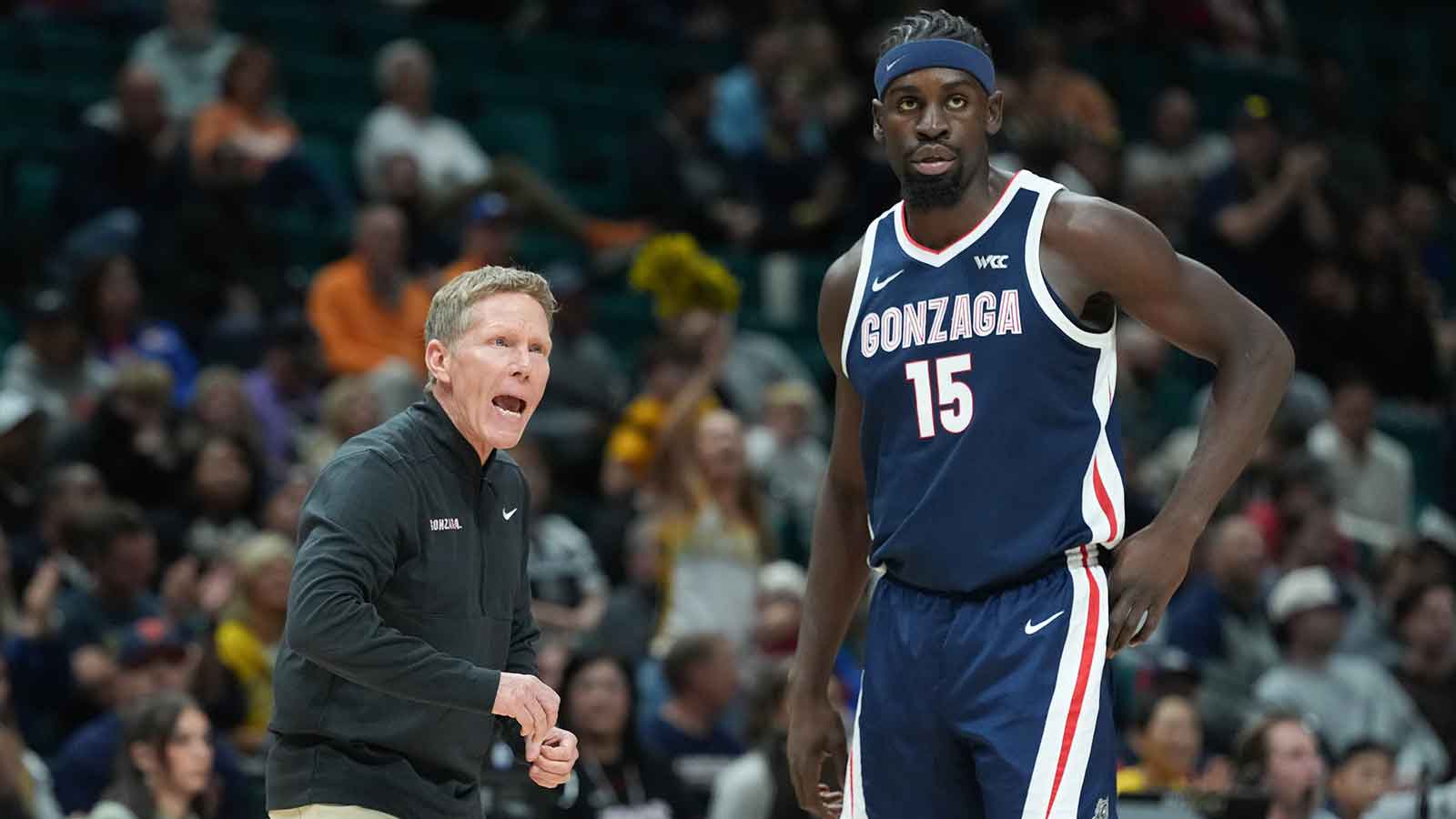
Even in just three losses, Gonzaga has proven to be one of the most flawed top-15 teams in the country.
None of the Bulldogs' three losses were particularly close, with an average margin of 19.3 points. Of course, Michigan's 40-point win weighs heavily in those numbers, but each defeat boiled down to the same few issues.
As a team that loves to pound the rock inside, Gonzaga struggles against teams that can match their size down low. That describes Michigan to a tee, as the Wolverines' frontcourt of Yaxel Lendeborg, Aday Mara and Morez Johnson Jr. completely shut down Graham Ike and Braden Huff.
Gonzaga did not face any other team as big as Michigan, but the size of Arizona State, UCLA and Oregon still gave it a bit of trouble early in the year. Even Santa Clara, which has struggled to defend the paint but brings a scrappy mentality, made the Bulldogs sweat in two regular-season matchups.
But Gonzaga's biggest issue all season was not its struggles with size. Instead, their biggest woes came from the perimeter; specifically, their inability to defend the outside.
Poor perimeter defense was the common denominator in each of the Zags' three losses. They gave up 49 points to Michigan's guards, 44 to Portland's guards and 57 to those of Saint Mary's.
Gonzaga's guards struggled in different areas in each of its three losses, further raising red flags. Portland's Joel Foxwell and Garrett Nuckolls torched them off the dribble and in the paint, while Saint Mary's sharpshooters Mikey Lewis and Joshua Dent killed them from deep. Michigan used a blend of both, racking up 42 points in the paint and hitting 16 triples.
The Bulldogs have also ceded big games to Alabama's Labaron Philon and Oklahoma's Xzayvier Brown in wins. Whenever it faces elite guard play, Gonzaga almost seems out of place and cannot contain opposing perimeter attacks.
Gonzaga's 2026 March Madness nightmare scenario
Struggling to defend the perimeter is a difficult weakness to overcome in the modern college basketball landscape. Gonzaga finds itself in that position as it seeks its elusive first national championship.
Gonzaga's porous perimeter defense leaves it vulnerable against almost any team in college basketball, but there are specific matchups Few has to pray to avoid. The Bulldogs matchup horribly with teams that play behind an elite lead guard and physical interior play, such as Arizona, Arkansas, Houston, Illinois, Miami, Iowa and Wisconsin.
The guard-oriented McNeese State might be the worst first-round matchup for Gonzaga, should it come out on top of the Southland Conference. Despite their lack of size, the Cowboys allow the second-fewest points in the paint, and have five rotational players capable of taking any of Few's guards off the dribble on the other end.
Even struggling teams like Purdue and Indiana have the makeup to give the Zags trouble in the second or third round. Alabama, which the Bulldogs have already beaten, might even be favored to beat them in a rematch, given the Crimson Tide's improvement on the interior throughout the year.
Gonzaga's veteran leaders have been to the Big Dance before, but none have had much success in March Madness. This iteration of the Bulldogs might be even more vulnerable to an early exit and have too many flaws to get away with in the NCAA Tournament.