Few athletes in the world bring the combination of speed, confidence, and star power that Sha'Carri Richardson does every time she steps onto the track. The Olympic gold and silver medalist has become one of the most recognizable faces in track and field, known not only for her blazing performances but also for the personality and authenticity that have made her one of the most compelling athletes in any sport.
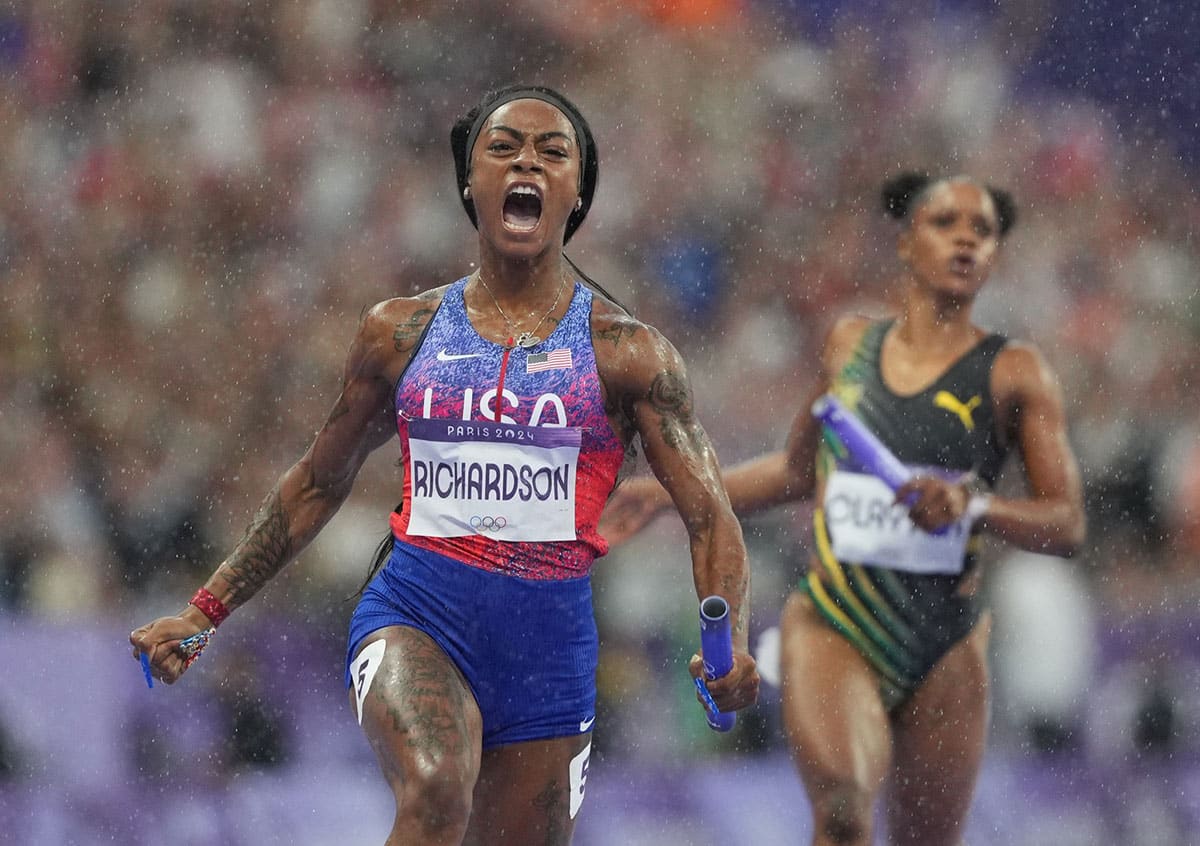
Richardson’s global profile reached new heights at the 2024 Summer Olympics, where she helped Team USA capture gold in the women’s 4×100 relay and added a silver medal in the 100 meters. But even with Olympic success now part of her resume, Richardson remains focused on growth, evolution, and inspiring the next generation of athletes.
For Richardson, success isn’t just measured in medals. It’s also about impact. That mission was on full display recently at the historic Colgate Women's Games, which celebrated its 50th anniversary at The Armory. The iconic event — one of the nation’s longest-running track and field programs dedicated to girls and young women — has helped provide opportunity, mentorship, and academic scholarships to generations of athletes. Richardson attended the milestone celebration, where she met young competitors, reflected on her own journey, and shared advice about growth, confidence, and staying true to yourself.
In this conversation with Rob Lepelstat, Richardson opens up about the impact of the Colgate Women’s Games, what it felt like to deliver gold for Team USA at the 2024 Paris Olympics, her viral staredown that took the world by storm and how she is preparing for the future — including the possibility of competing on home soil at the 2028 Summer Olympics in Los Angeles.
This interview has been edited for clarity and length.
———
Rob Lepelstat: Pleased to be joined by track and field superstar, Olympic gold and silver medalist, one of the fastest women on Earth, and of course, without a doubt, one of the most exciting athletes to watch across any sport. That is the one and only Sha’Carri Richardson. Welcome! Appreciate your time here on a Friday afternoon. How are you doing today?
Sha’Carri Richardson: I'm doing amazing. Thank you for that exciting introduction. I'm doing wonderful. I really cannot complain. Traveling, headed to another track meet, but I just do what I do best – just practicing and living. But I feel awesome.
RL: I love the energy there. Amazing is exactly the answer that I wanted, so I appreciate that! Let's talk about the main reason why you're here – the Colgate Women's Games, which happened last month at the Armory in New York City.
Actually, the 50th anniversary of the Colgate Women's Games, which is pretty crazy to think about, five decades. So, for anyone who might not know, what exactly is the Colgate Women's Games, and why was this something that was so important for you to be a part of?
SR: So the Colgate Women’s Games were just honestly a safe haven for women — an all-girls and ladies track meet that happened up in New York in the Armory. So that's considered short track now, but it definitely was an indoor meet that was filled with different generations of ladies — retired women, and then athletes from elementary school all the way even to college and beyond. It even had a master's part. But literally just the culture of Colgate’s Women’s Games was creating a haven where women can have the platform to go and perform when it comes to track and field. And so for me, when I was actually asked to come and be there amongst that, it was truly a no-brainer and literally reflects me in real time. So it was an amazing and monumental experience.
RL: How much did you see yourself in those girls that you got to meet and talk with and see compete there at the Armory?
SR: Oh my gosh, I saw so much of myself in those young ladies, only for the simple fact of — like when it comes to track, it keeps you young. So it literally reminded me of myself in the beginning when I first started running at six, showing me that the possibilities are endless to share with the girls that were there. And then the reminder of myself too actually — even being able to share just the memory of what it was like to actually be competing at a young age. So it was awesome actually seeing a mirror of myself in the young ladies.
RL: What advice did you hope they took away from meeting you and getting to be there at the Games?
SR: The advice that I gave to the young ladies was to always be themselves and always give themselves the opportunity to grow. And growth is not always pretty, growth is not always perfection, but growth is continuing progress. So I shared that with them — just continue to grow as well as have fun. I think that was the biggest thing I kept telling all of the young ladies, was to have fun because you never want to lose your joy when it comes to track and field.
RL: So one of the things also with the event I thought was so cool was the 300+ alumni in attendance. There was the Parade of Finalists with all these different alumni from the ’70s to current day. Describe what it was like to be part of that with all those amazing women there?
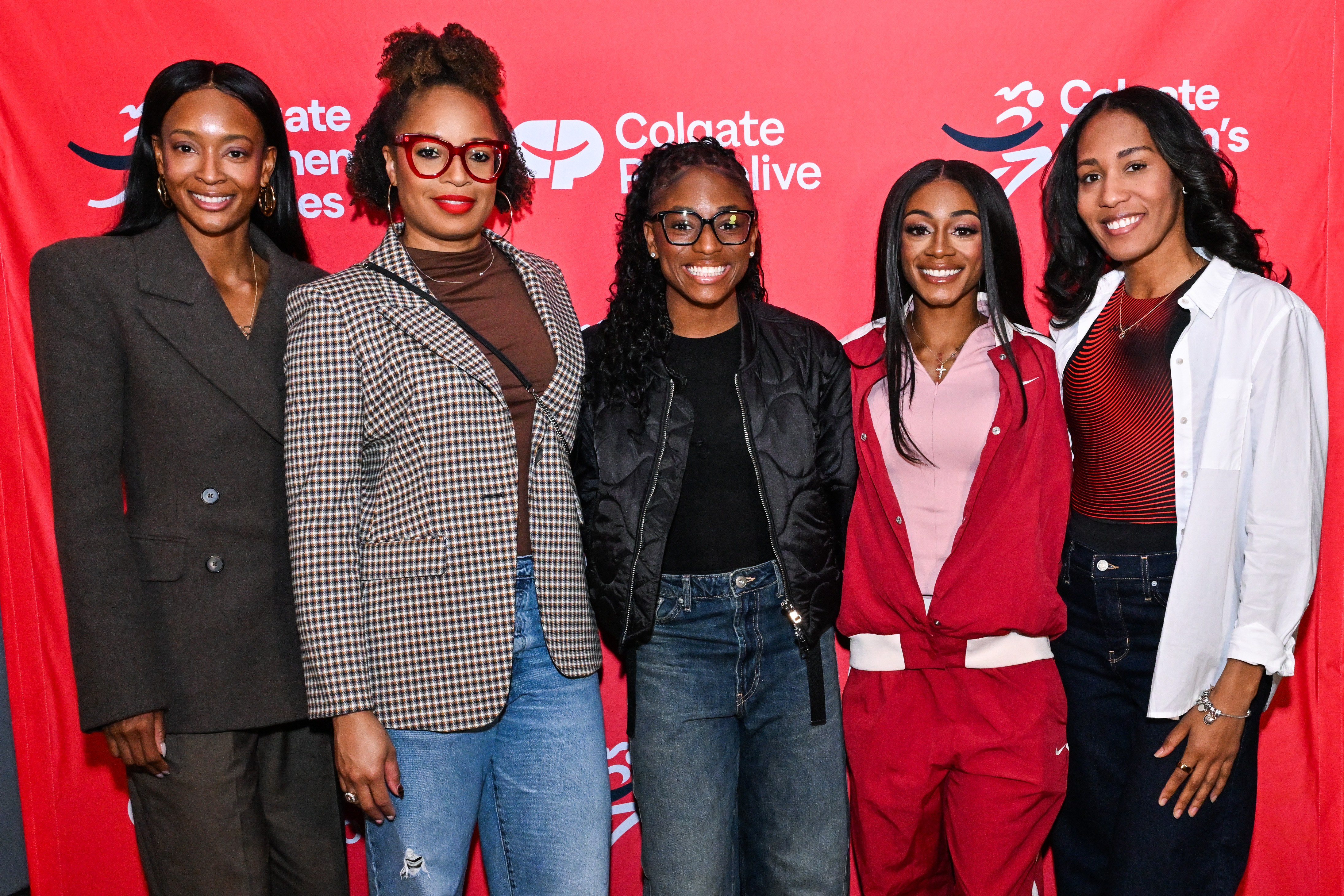
SR: Being able to see the women alumni — actually not even knowing certain women in the alumni and ones I actually have personal relationships with — but showing the reason why the present, yet knowing where we come from, is so important. Because all of those ladies literally created and had the courage to start something that was never heard of before and had the boldness to continue it. So we presently have today all of the athletes that we have been able to call mentors or just be able to look to and inspire ourselves. So it was literally — it felt like a living time capsule almost, seeing the ladies there as well.
RL: What's the memory or the moment from the Games that you're going to remember the most?
SR: The memory from the Games I'm going to remember the most is when I had to go on stage and do a speech that I wasn't prepared for necessarily, but doing that speech and just seeing all of the women, all of the girls and just the people in the crowd as well literally show a level of support, a level of joy, transparency and knowing that they're paying attention to me and I was paying attention to them as well. And we all in that moment could see each other. I felt like that was a big moment for me that I want to continue to think about.
RL: Let's go back to Paris 2024. Just when you think about overall your Olympic experience — obviously winning Olympic gold, Olympic silver – just how do you reflect back on your overall Paris 2024 experience?
SR: For me, I reflect on my Paris 2024 experience as another checkpoint in my life, as well as my career — a phenomenal checkpoint. I've been able to medal in two different races, as well as just continue to work on my craft in front of the world. And being in the Olympic Games is something that you just — those moments are really like indescribable. So I definitely felt very honored and actually like my hard work had paid off, but that was still in that same moment as well — just thinking there's so much more to come and so much more that I can and will do.
RL: How would you describe just the pressure of an Olympics and how you were able to overcome that? Obviously, so many people watching — millions — the whole world is watching. Just how do you deal with the pressure of competing in something like the Olympics?
SR: I feel as if when you — well, I can't speak for anybody else — but for myself, dealing with pressure is applying it every day. That way, when moments like that come, it's not a surprise. Your nervous system is not shocked by anything new. If anything, it's prepared. So I feel like I accept pressure every day from practice. I ask my environment, ask my coach, ask my support system to keep me accountable, to keep me just on the path that I know that I want to do. Because it's a very specific path and it requires a lot of attention, but it also attracts a lot of attention. So I just feel like for me, pressure is something that is truly a motivator for me, and I continue to just apply it, use it, and don't let it use me, if that makes sense.
RL: I think about that iconic 4×100 race. You grabbed the baton from Gabby [Thomas], you knew you had ground to make up. What was going through your mind there from when you grabbed the baton until you ultimately crossed the finish line to win Olympic gold?
SR: I would honestly say when I got the real-time fourth leg from my third leg, all I could think about was just doing what it is that I always do. And that's me run — just run to my fullest and leave everything on the track, like my mom would always tell me to. I would be lying to say I didn't feel that there was ground to make up, but when I actually crossed the finish line, when I actually did just what I call a performance — because it truly was, honestly — there was nothing I was thinking of other than just run. Just like, there's people, there's people, but I can feel by me, I need to run. That's literally all I was thinking — run.
RL: Were you almost more tight? Were you getting nervous? Or nothing else even crossed your mind, essentially?
SR: No, nothing crossed my mind but to just run, which is what I do. So I don't think that moment was nervous. I think that moment was, I've been prepared for this. That's why I'm here today.
RL: Absolutely. And of course, there is that viral stare-down moment that everyone talks about. When you look to your right, and it became a meme, it became this whole thing. Take me through why you did that, or was it even just a natural thing?
SHA'CARRI KNEW 💪 pic.twitter.com/L8dfSnwmMz
— SportsCenter (@SportsCenter) August 9, 2024
SR: Honestly, I don't even have an answer for you. It was nothing that was planned. It was nothing that I thought of. It was just something that when you're a pure athlete, when you have been a person that has been resilient, when you have been a woman that continues to show up — that just might be misunderstood — all that came out in that moment. So I could not give you a true answer on what made me do that. I just did it.
RL: Do you laugh at the reaction to it and the memes and all that?
SR: I definitely laugh at it, for sure.
RL: So I'm sure coming into the Games, you had this vision in your head of, if I won Olympic gold, I would feel this way, or I'd have this emotion, or this was how I would feel in that moment. So once you actually did it and you crossed the finish line and you're on that podium, how did the expectation of how you would feel as an Olympic gold medalist compare to the reality of it?
SR: I believe the feelings that I thought of beforehand and the feelings that actually came out when I medaled at the Olympic Games were — I really can't even think of that right now, honestly, for the simple fact of just coming into the Games, I just came in prepared to do what it is that we had been training to do. And when it actually happened, it was more of being able to hug the little girl inside of me, reassure her, give myself the reassurance that I'm exactly where I'm supposed to be. So yeah, it's an indescribable moment, honestly.
RL: I love that answer. Speaking to the little girl in you. That's awesome. So obviously, if you look ahead to LA 2028 and the potential for you to compete in front of a home crowd on home soil in the US, what do you think that moment would be like if you get the opportunity to compete in LA in front of US fans?
SR: I am excited to be able to actually run in the United States, represent the United States, and also compete and do what it is that I love to do in front of the world. And I think it's going to be a sensational moment. It's going to be historical. It's going to be everything that any Olympian, any athlete, any person has ever experienced before. It's going to be a one-of-one experience. So we like to go big or go home in the United States. So I'm actually super excited for LA 2028.
RL: What makes competing at the Olympics different than any other event that you've competed in?
SR: I would say the only difference — truly the only difference — is just the audience. It's the audience and the attention. There's a lot more people in the stadium, and then obviously there's a lot more people in the world watching. But the feeling, like being on the track, the nervousness, the confidence, the execution — it feels all the same.
RL: Switching gears a little bit, I am a huge fan of Serena and Venus Williams and their Stockton Street podcast. I know you were a guest on it, and I really enjoyed your guest spot on there. One of the things you guys talked about was the impact that Serena and Venus have had on women like yourself. Speak to the impact that those two amazing women have had on your career.
SR: When it comes to those two beautiful women, Serena and Venus Williams, I feel like they are two Black women that paved the way through adversity, through being misunderstood, through having that confidence to say it's okay to believe in yourself out loud and know that your ability to be bold, along with your talent is something that starts within yourself. And it's okay to express yourself no matter how it looks, as long as you're confident and you can walk with that and you know in your heart everything you're doing is exactly what you're meant to do. I think that is something those beautiful women have inspired me with, just as a young Black woman as well.
RL: Was that the main piece of advice they gave you?
SR: I would say keep being me. I think that was a big piece of advice that both of them, especially Serena, definitely gave me. I've seen her countless times. I've actually spoken to her countless times, and she always tells me just keep being myself.
RL: Who were your biggest influences for you growing up from track and field?
SR: I always speak highly of Wilma Rudolph. I feel like growing up reading her story was something that was actually very inspirational to me because of, again, just the perseverance she had. I would say, of course, Flo-Jo — Flo-Jo, the fastest to do it — and did it in a way that nobody else has ever done before. And I also give praise and influence to the women in my family actually. Those ladies showing me how to grow me, teaching me, nurturing me — those are ways that inspired me growing up, if that makes sense.
RL: I loved the ‘So Win’ Super Bowl commercial that you were in for Nike. It was you and a bunch of amazing women. Describe the experience of being part of that commercial and everything that it meant for you.
SR: Yeah, I would definitely say being a part of the Nike Super Bowl commercial — one that's been the first one in over like 25 years — and being, of course, with the company Nike, amongst and in company with the other great athletes and women as well, I definitely just felt honored. I felt actually seen — seen in a way that I am valued. And also just that I have a confidence that I'm a star amongst stars. And so I really enjoyed that moment. It was super cool. Anytime it comes on or every time it came on, it was something that was very exciting for everyone who loves and supports me to see. So I appreciate Nike thinking of me to even be part of that moment.
RL: 2026 is the year of BLANK for Sha’ Carri Richardson
SR: 2026 is a year of evolution for Sha’Carri Richardson.
I'm still going to be myself — but it is the growth, it is the progress, and it is also the validation from within that I am going to walk with and give to myself, but also share with the world.
RL: I'll let you out of here on this. Just what is your favorite thing to do when you're not on the track? Whether it's a hobby or anything like that, what do you love to do when you're not running?
SR: Well, I'm a TV head. I like to watch TV and different types of TV. I could go from true crime to reality TV to cartoons to dinosaur movies. I actually enjoy watching TV. I'm able to decompress and just block out everything and feel like I could just go into a different world.
RL: What are your favorite shows to watch?
SR: My favorite show to watch — it is Real Housewives of Atlanta. I am a fanatic. I will literally watch the old seasons like they came out yesterday and be just as tuned in. So that's probably my favorite show to put on just to decompress. I will put that on probably eight times out of ten.
RL: You're going to be surprised that I know this, but NeNe Leakes is my favorite character. Was she the same for you or do you have someone else in mind?
SR: Oh my gosh, she is definitely the most iconic. Her, Kandi, Shereé, Porsha — those are my top girls.
RL: For the record, my mom always watched Real Housewives at dinner. That's why I know about that — not something I'm necessarily doing on my own time (laughing). But Sha’Carri, with that, I appreciate your time. Really appreciate it here on a Friday afternoon, and best of luck with everything.
SR: I appreciate your energy. I appreciate the questions, and I appreciate everyone on the call's patience as well. So thank you so much, and I hope you have a blessed weekend and Friday.
RL: You too, Sha’Carri.
—-
For more info on the 2026 Colgate Women’s Games, visit https://www.colgatewomensgames.com/en-us
Rob Lepelstat is an experienced sports media professional with over 7+ years in content creation, editorial, social media, reporting/interviewing, etc. His work has been featured in USA Today, Yahoo Sports, Bleacher Report, and more. Check out more of his interviews, including Jay-Z, Kareem Abdul-Jabbar, Lawrence Taylor, Derek Jeter, Ice Cube, “Dr. J” Julius Erving, Drew Brees, and Livvy Dunne here.