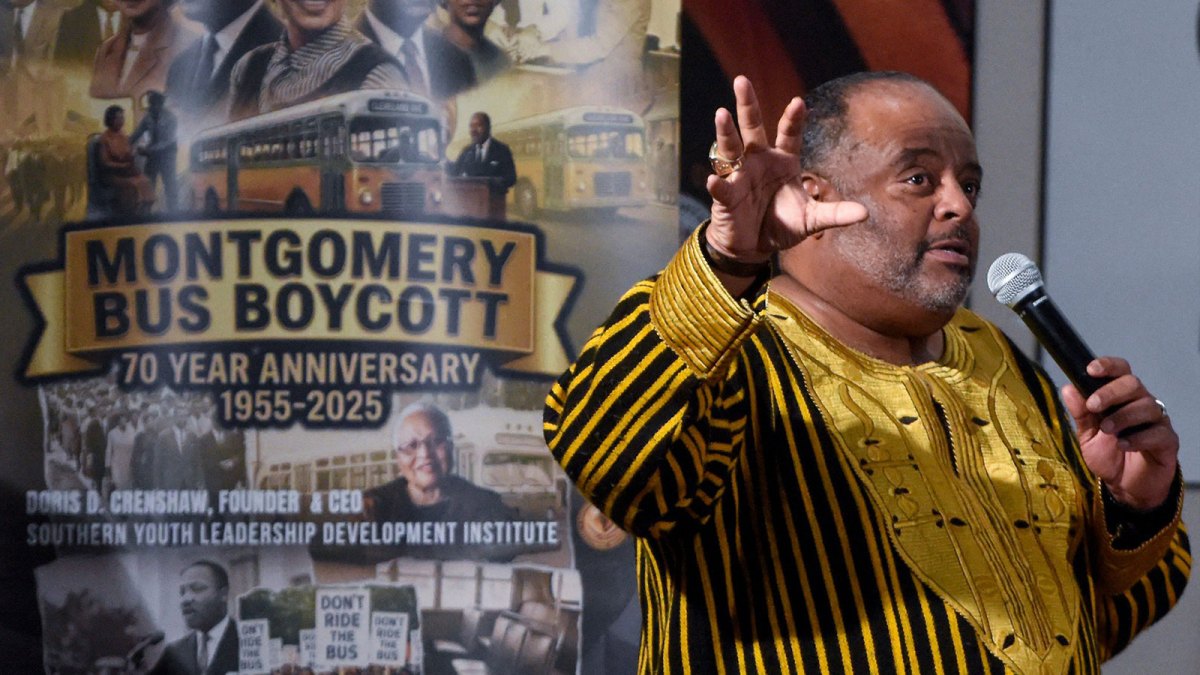
Media personality and journalist Roland Martin used the spotlight of the NAACP Image Awards red carpet to deliver a pointed and purposeful message to members of the Divine Nine, calling for unity, deeper civic engagement, and sustained investment in Black communities.
During a red carpet interview ahead of the ceremony, Martin addressed members of the National Pan-Hellenic Council—commonly known as the Divine Nine—urging Black Greek-letter organizations to leverage their collective influence beyond step shows and social gatherings. As cameras flashed and celebrities made their way into the venue, Martin underscored the historic responsibility and political power embedded within the fraternities and sororities that have long shaped Black leadership in America.
Martin, who is a member of Alpha Phi Alpha Fraternity, Inc., referenced Where Do We Go From Here: Chaos or Community? by Martin Luther King Jr., who was also a member of Alpha Phi Alpha. In the book, King outlined four key institutions he believed were designed to help liberate Black America: the Black church, the Black press, Black fraternities and sororities, and Black professional and business organizations.
While King believed in the potential of these institutions, Martin noted that he also questioned whether they were fully committed to the cause of liberation—a challenge Martin said still resonates today. In the current political climate, he urged members of the Divine Nine to deepen their commitment and expand their influence.
Though Divine Nine organizations have long contributed to their communities through service initiatives and scholarships, Martin encouraged members to think bigger. He emphasized the need for Black representation not only in community outreach but also in decision-making spaces—from City Hall and county commissions to school boards and Congress.
Further amplifying his call to action, Martin highlighted the critical role of the Black press in advancing social change. He pointed to trailblazers such as Ida B. Wells and Robert S. Abbott, whose fearless reporting and publishing helped shape the trajectory of Black America. According to Martin, progress would not have been possible without independent Black voices willing to speak truth without seeking validation from mainstream—and often white-owned—outlets.
Drawing from personal experience, Martin reflected on his time at CNN beginning in 2008. Despite the platform’s national reach, he ultimately chose to leave for TV One, a Black-owned network he said valued and compensated him for his perspective before any mainstream outlet did.
“Even when I was at CNN, I didn’t leave Black-owned media. They wanted me to. They asked me to. I said, absolutely not,” Martin said.