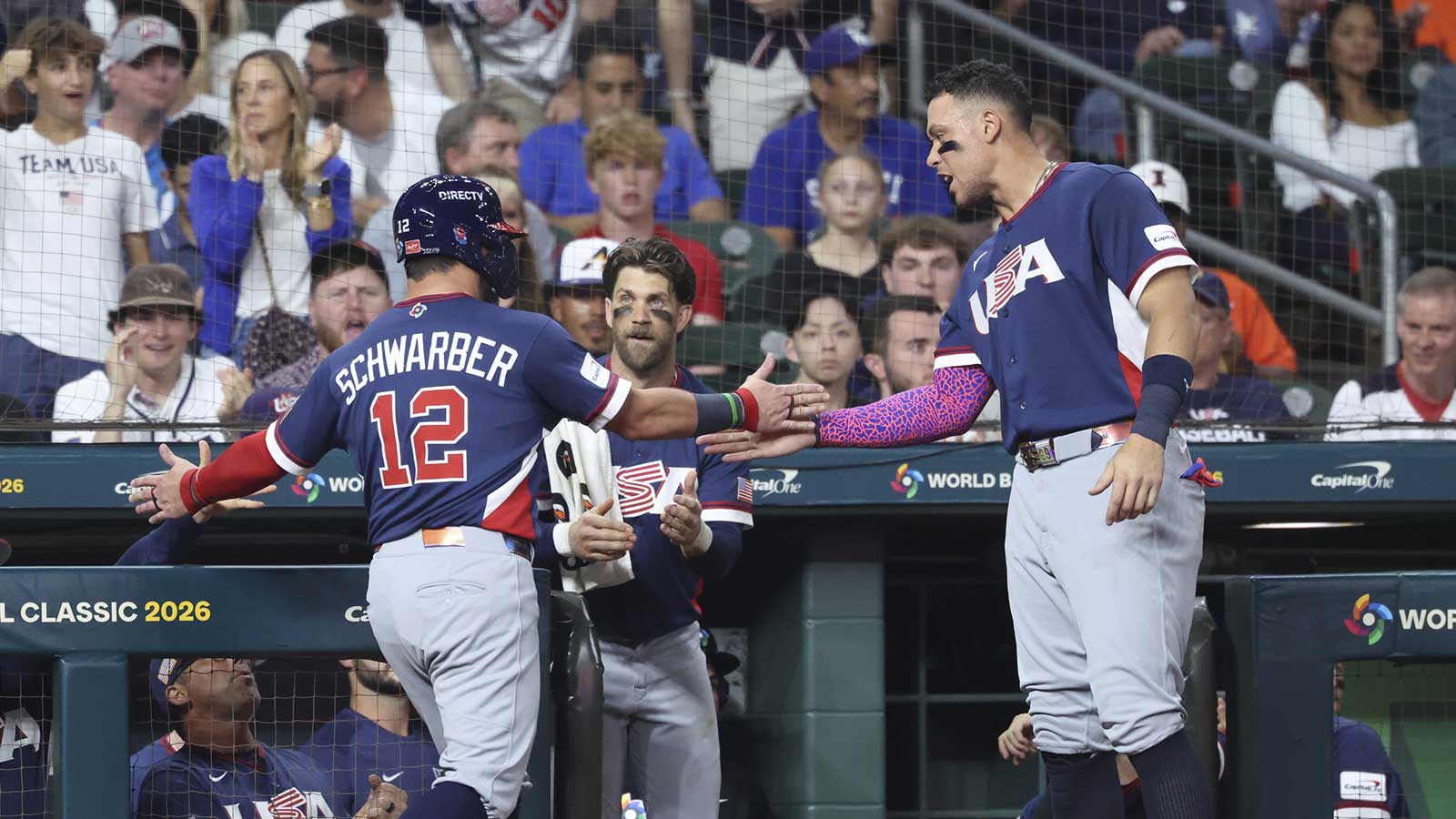

This offseason, the Philadelphia Phillies are at a crucial juncture. Philadelphia needs to take immediate action to address one of baseball's most obvious shortages: elite middle-infield production, given that Kyle Schwarber signed a five-year, $150 million contract and there are still a number of unanswered questions regarding their infield depth. Bo Bichette is exactly the kind of player who could alter the Phillies' postseason trajectory as they have quietly entered a crowded bidding war with the Yankees, Dodgers, Cubs, Red Sox, and incumbent Blue Jays.
The shortstop, who is 27 years old, is in his prime. He just finished one of his best seasons ever, contributing to Toronto's World Series while hitting .311 with an OPS of .840, 18 home runs, and 94 RBIs in 139 games. More impressively, Bichette is practically untouchable by opposing pitching staffs because he is the only player in Major League Baseball to record batting averages above .300 against fastballs, breaking balls, and changeups at the same time.
Why $182M Works for Bo Bichette
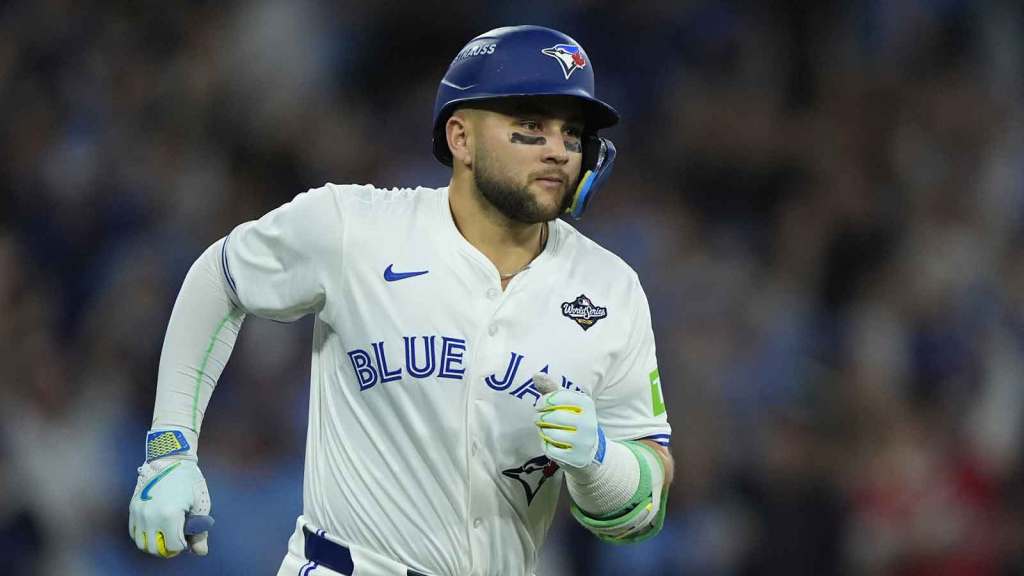
Bichette's free agent market is becoming more and more fragmented. The significant discrepancy in forecasts highlights an important fact: no team has unquestionably agreed to pay top dollar for a proven talent who satisfies almost all the requirements.
The Phillies have to walk a tightrope between going over budget and completely losing out. Philadelphia is positioned as a serious, financially committed suitor with a seven-year, $182 million contract that averages $26 million annually without going into the realm of extravagant spending. Both the franchise and the player should find this structure appealing, as it offers several benefits.
First of all, it suggests seriousness without desperation, as it falls squarely within market expectations. Secondly, it has an aggressive structure that sets it apart in a crowded field of potential suitors. Thirdly, it tackles the Blue Jays' possible reluctance: Despite Bichette's clear importance to their team, Toronto recently committed $60 million to Japanese slugger Kazuma Okamoto, suggesting they may be willing to let go of his exorbitant price tag.
The payroll of the Phillies is currently around $291 million. Philadelphia would raise their payroll to about $281 million by absorbing Bichette at $26 million a year and possibly moving Alec Bohm (at $10.3 million). This would still be well within their historical spending limits and allow for depth additions and a possible reunion with J.T. Realmuto.
Why Bichette Is the Correct Answer
Despite the team's aggressive spending elsewhere, Philadelphia's infield has consistently been a weakness. The Phillies' postseason hopes have been hindered by a gap in the middle of the diamond, stemming from Bohm's defensive shortcomings and Bryson Stott's subpar performance. Despite some defensive concerns of his own, Bichette is a major improvement in offensive output.
Take a look at his outstanding offensive profile, Bichette finished in the 99th percentile in hard-hit rate and second in the American League in hits (181), indicating that he is not only making contact but also crushing the ball with authority. His best full-season performance was 3.8 fWAR in 2025, and his wOBA of .361 places him among the most productive middle infielders in the league.
One cannot simply ignore the versatility factor as well. During the World Series, Bichette demonstrated his ability to move to second base, and he also has experience at third base. Such flexibility would enable the Phillies to rearrange their infield structure, thus possibly moving Stott to another position or making the defensive alignment more balanced. Given that position flexibility is highly valued in arbitration and free agency nowadays, Bichette's adaptability is a nice touch just to be sure.
The Context That Matters, Timing Is Everything
The market for premium position players has been purposefully slow, with teams playing a game of financial chicken. Bichette's market has developed an unusual dynamic: he is still unsigned well into early January, with pitchers and catchers reporting in about five weeks. While this may suggest weakening demand, the reality is more nuanced.
Rather than being a disqualifying factor, the injury history poses a manageable risk. Due to injuries in 2023 (knee and quad) and 2024 (calf strain, fractured finger), Bichette was only able to play in 135 and 81 games, respectively. But in 2025, he recovered to play 139 games and reportedly declared himself “100 percent healthy.” The average annual value of a seven-year contract is $26 million, which is reasonable considering his age, output, and the inflation of star position players in the current market.
The Phillies need to play with conviction. Bo Bichette's seven-year, $182 million contract represents the ideal blend of financial restraint and championship aspirations, transforming Philadelphia's infield from a liability into a genuine asset that can contend with any baseball team.