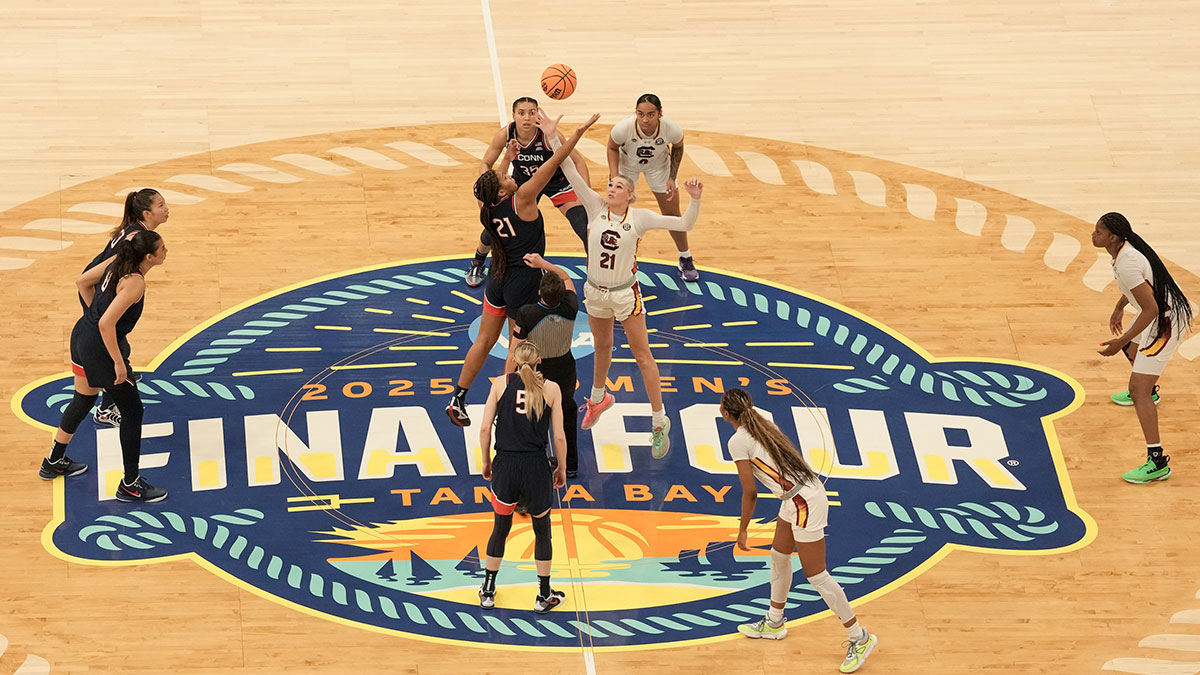
The early portion of the 2025-26 NCAA women’s college basketball season, including Feast Week, often provides the first real evidence of who may be prepared to contend in March. While preseason polls and projections offer a baseline, what happens on the court in November and early December begins to shape which programs have the talent and cohesion that will carry through to the postseason.
Heading into this season, the preseason rankings placed UConn at No. 1, followed by South Carolina, UCLA, Texas, and LSU to round out the top five. Those rankings were based on returning talent, roster continuity, where relevant, and the momentum of the programs. But early results have begun to confirm, and in some cases challenge, those expectations.
The national picture has become notably sharper. Some “baseline contenders” remain in position, some have surged, and others subtly slipped. The next several months will involve conference play, injuries, and the grind of a long season, but early signals suggest several front-runners are already emerging. Let's break down which programs are the leading contenders and why, plus a few wildcards to watch.
1. UConn
UConn women's basketball entered the 2025-26 season ranked No. 1 in the nation, and through the opening month of play, it has done nothing to dissuade voters, analysts, fans, or opponents from viewing it as the frontrunner for the 2026 NCAA championship. Their undefeated record speaks not just to dominance, but to the smooth cohesion of a team that understands exactly who it is and what it still wants to achieve.
UConn’s identity, as always, begins with coaching stability. The Huskies' system — built on elite defense, precision half-court execution, intelligent ball movement, and relentless competitive consistency — remains one of the most difficult ecosystems in college basketball for opponents to overcome. Even after graduating key contributors to the WNBA last year, UConn reloaded with a balance of seasoned upperclassmen, transfer additions who contribute immediately, and highly touted freshmen whose development has already begun to show.
Feast Week validated their readiness for the season. Facing physical and experienced competition, the Huskies executed at a level uncommon for November basketball. Their defensive rotations and late-game composure evoke the championship DNA that has defined the program for decades. Even in moments of offensive stagnation, UConn has proven it can rely on its defensive backbone to win games.
Looking ahead to March, UConn’s blueprint appears unmistakable: Its floor is the Elite Eight, its expectation the Final Four, and its ceiling another national championship. The Huskies remain the safest and most complete pick to dominate postseason play.
2. Texas
If UConn represents the immovable titan of the women’s game, then Texas women's basketball is the unstoppable force emerging to challenge them. Texas entered the season with top-five expectations, but their statement performance during Feast Week, defeating No. 3 UCLA and No. 2 South Carolina on back-to-back nights in Las Vegas, catapulted them into the main national spotlight and earned them the now-No. 2 spot in the AP rankings.
Texas’ identity is shaped by athleticism, depth, and defensive ferocity. Few teams in the country can match the Longhorns roster’s combination of explosive guards, long and switchable forwards, and disciplined help-side defenders. Their defensive pressure generates turnovers at a rate that smothers opponents and turns games into athletic showcases.
Feast Week proved that Texas is no longer a high-upside team with questions — it's a fully operational contender. The Longhorns' ball movement sharpened, their rotations tightened, and their ability to close tight games against elite competition underscored a team that is ready now, not later.
Their path to a top seed in March will depend on maintaining this level of execution through the Big 12 grind. But if it does, Texas could realistically enter the NCAA Tournament as the top threat to dethrone UConn.
3. South Carolina
South Carolina women's basketball entered the season ranked No. 2 and has performed consistently through its early schedule, holding a 7-1 record. While their Feast Week loss to Texas exposed areas still under construction, it also reinforced the Gamecocks' identity as a team that grows rather than declines as the season progresses.
South Carolina’s hallmark is defense. With elite shot-blockers, active perimeter defenders, and disciplined rebounding, the Gamecocks impose a physical style that suppresses opponent scoring efficiency. Even in games where the offense sputters, their defense keeps them close enough for late-game surges.
Offensively, the Gamecocks are evolving. Their guard play has improved but is still developing its identity, with shot selection and execution under pressure fluctuating at times. But this has been the case in many of their most successful seasons. South Carolina’s offense often finds rhythm later in the year when younger players have matured and the coaching staff has refined rotations.
With a historically fierce SEC schedule ahead, South Carolina will be tested more than any other contender. If the Gamecocks emerge with only a handful of conference losses, expect them to secure a No. 1 or No. 2 seed, positioning them once again as one of the safest bets for a Final Four appearance.
4. UCLA
The UCLA women's basketball team began the season ranked No. 3, and despite suffering a significant Feast Week loss, it remains one of the nation's most talented and versatile teams. The Bruins' setback was less of an indictment of their overall capability and more of a reminder of the fine margins that separate elite programs.
UCLA’s offensive ceiling is among the highest in college basketball. Their spacing, shooting, and ability to create mismatches allow them to score in bunches. Their backcourt features experienced playmakers capable of controlling tempo, while their frontcourt provides reliable scoring and rebounding.
Defensively, the Bruins remain solid but not yet elite. Their Feast Week struggles exposed vulnerabilities in transition coverage and defensive communication — areas that top-tier teams will test again in conference play. Fortunately for UCLA, these weaknesses are fixable and often resolve with greater in-season cohesion.
Experience has shown that teams with UCLA’s skill level and depth tend to improve steadily throughout the season. If they refine their defensive identity, the Bruins will be positioned for a deep tournament run. Their blend of scoring talent and matchup flexibility gives them Final Four potential if they peak at the right time.
5. LSU
Perhaps no team in the country has drawn more buzz in the opening month of the season than LSU, whose explosive offense has overwhelmed every opponent. LSU women's basketball started out the season scoring 100 or more points in every game, a feat that marks the Tigers as the premier offensive force in college basketball.
LSU’s scoring success stems from a combination of elite perimeter shooting, fast-paced transition play, strong offensive rebounding, and creative sets that generate constant pressure on opposing defenses. Unlike some high-scoring teams, LSU spreads production across multiple players, making them difficult to key in on.
But the Tigers' biggest question is defense. Elite offenses can carry teams deep into March, but championship-caliber teams must also demonstrate the ability to win ugly games when shots aren’t falling. LSU’s transition defense and half-court discipline are still inconsistent enough to raise concerns about matchups against teams like UConn or South Carolina.
Still, their offensive ceiling alone makes them a terrifying draw for any opponent. If they tighten their defensive execution, LSU could be one of the most dangerous dark-horse candidates for a Final Four berth.
6. Iowa State
Iowa State continues to embody the program’s long-standing reputation for smart basketball, excellent spacing, and consistent guard play. While they are not always included in top-tier national conversations, their system and execution make them one of the most dangerous teams in the country.
Iowa State’s offense prioritizes threes, ball movement, and exploiting mismatches. The Cyclones' players understand their roles, and their coaching staff excels at creating advantageous scenarios late in games.
Defensively, Iowa State remains solid, but not elite. Their occasional struggles against highly physical teams may prove a challenge in the postseason, but their overall consistency and ability to execute in close games make the Cyclones a strong contender for a second-weekend appearance. If the players can stay healthy and improve rebounding, Iowa State could be a sleeper Elite Eight contender come March.
7. Michigan
Few teams have surprised early-season analysts as much as Michigan, which has surged into top-10 territory on the strength of strong coaching, rapid player development, and a statement Feast Week blowout of a ranked opponent.
Michigan’s success hinges on a dynamic combination of young stars and steady leadership. The Wolverines' offense is balanced and efficient, with multiple players capable of initiating plays, creating off the dribble, and hitting perimeter shots. Their defense, traditionally a weakness, has tightened substantially, with improved rebounding and communication.
Feast Week demonstrated Michigan’s potential to overwhelm opponents with pace and spacing, but it also highlighted areas for improvement. Late-game decision-making and half-court defensive rotations remain inconsistent, but these shortcomings are common for young teams and typically improve with experience.
What makes Michigan especially compelling is its upward trajectory. If the Wolverines' young roster continues to mature, they could enter March as a dangerous contender capable of upsetting more established programs and making a surprise Elite Eight run.
8. TCU
Perhaps the most surprising entrant into the top-10 conversation is TCU, a program that has transformed itself from a middle-tier Big 12 team into a legitimate contender on the rise. Its early-season resume includes impressive road wins, consistent defensive performances, and a clear shift in program identity.
TCU is defined by grit and speed. The Horned Frogs' guards pressure the ball aggressively, and their offense leans on fast-break opportunities and opportunistic perimeter shooting. While they may lack the elite inside presence of teams like South Carolina or Texas, they compensate with discipline and depth.
The Horned Frogs’ biggest question is whether their style will translate against the top-tier teams they will face later in the season. Their lack of elite size may become more apparent in the postseason, where physicality increases and officials allow a more rugged style of play.
Still, TCU has the profile of a team that could transform March brackets: Disciplined, confident, and playing with nothing to lose. Their chances of a Sweet 16 appearance are strong, and an Elite Eight run is not out of the question.
9. Maryland
Maryland has flown slightly under the radar nationally despite an undefeated start. The Terrapins' program, which is reliably competitive, incredibly well-coached, and accustomed to high expectations, continues to build toward a peak later in the season.
Maryland’s offense is structured and efficient, built on ball movement, spacing, and a mix of interior and perimeter scoring threats. The team's veteran core provides both stability and late-game poise, which are crucial assets in tournament settings.
Feast Week reaffirmed Maryland’s identity as a team that rarely beats itself. The Terrapins may not yet have the explosive ceiling of teams like UCLA or LSU, but their floor is higher than most. Their disciplined half-court defense and low turnover rate make them a difficult opponent for faster-paced teams.
Maryland’s main challenge is the occasional inconsistency in scoring output. If their shooters find sustained rhythm, the Terrapins could rise into the top eight or even top six by late February.
10. Oklahoma
Rounding out the top ten is Oklahoma, a team whose high-tempo offense and aggressive defensive philosophy make it a formidable contender. Their start to the season has been marked by consistent growth and flashes of brilliance that suggest the Sooners' ceiling may be higher than their current ranking indicates.
Oklahoma excels in pushing the pace. Its guards thrive in transition, and its wings create matchup nightmares with length and athleticism. Its offense can also bury opponents quickly when they find rhythm from the perimeter.
The Sooners' vulnerability lies in half-court execution and interior defense. During Feast Week, Oklahoma occasionally struggled when forced into slower possessions or against teams with elite size, which are weaknesses that will be tested in conference play. Still, their potential is undeniable. If Oklahoma’s defense sharpens and its pace continues to overwhelm opponents, it could be an unexpectedly dangerous team in March.
The 2025-26 NCAA women's basketball season has begun with a level of parity, intensity, and unpredictability that signals another landmark chapter in the sport’s evolution. Over the last decade, women’s basketball has undergone a pronounced transformation: Talent is more widespread, rosters are deeper, transfer movement has created dynamic shifts year to year, and elite coaching is no longer limited to a handful of dynastic programs.
With more top-tier athletes staying three or four years rather than immediately turning professional, and with increased national exposure fueling the rise of programs across every major conference, predicting the long-term arc of a season has become increasingly complex. However, the early season remains crucial in shaping expectations for March. This women’s college basketball campaign is shaping up to be one of unprecedented depth and competitive balance.
The top ten contenders detailed here each offer unique strengths and unique pathways to March success. From UConn’s dominant consistency to Texas’ breakout momentum, from South Carolina’s defensive identity to LSU’s offensive explosion, and from rising challengers like Michigan and TCU to the disciplined reliability of Maryland, Iowa State, and Oklahoma, the national field is rich with storylines and possibilities.
While late November provides only a preliminary snapshot, it is a meaningful one. Feast Week has revealed which teams are ready now, which are still growing, and which possess the foundational elements necessary for a championship run. As conference play intensifies and the season unfolds, these ten programs will continue to shape the narrative of women’s college basketball and likely determine the pinnacle of the 2026 NCAA Tournament.