

It seems like the wait in Tucson has gone on forever. The Arizona Wildcats have come close to winning the championship several times since Lute Olson raised the trophy in 1997, but they have always lost in the second weekend. But now that the 2026 NCAA Tournament field is set, the story is changing. This isn't just another “talented” Arizona team; this is a statistical juggernaut that has spent the season dismantling the most difficult conference in America.
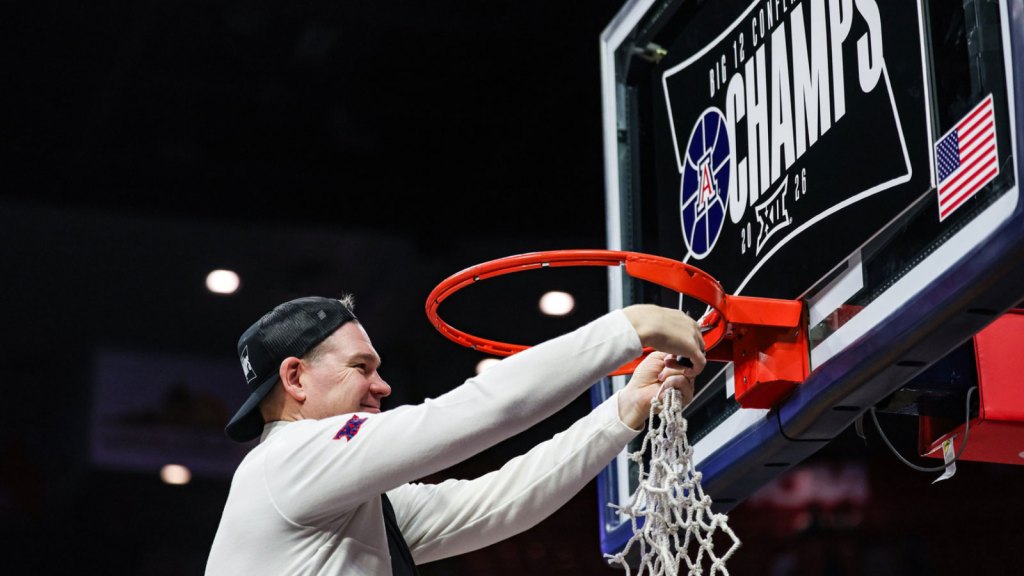
Under Tommy Lloyd, the Wildcats have finally achieved the perfect marriage of modern transition efficiency and elite defensive discipline. Here is why the road to the National Championship ends with a ladder and a pair of scissors for the Wildcats.
The Most Lethal Offense in the Tommy Lloyd Era
Tommy Lloyd's system has always been fast, but in 2025–26, it became surgical. Arizona had a 32–2 record in the regular season, mostly because their offense is one of the five best in the country in terms of Adjusted Efficiency. In the past, the Wildcats relied on a lot of shooting that could go cold. This year's team is built on great playmaking and strong inside play.
Brayden Burries, a freshman star, has been the catalyst. The 6-foot-4 guard has changed the meaning of “one-and-done” by leading the team in scoring and running an offense that averages more than 18 assists per game. But the frontcourt is the real nightmare for the other team. Between the bruising Tobe Awaka (who averaged a double-double in February) and the 7-foot-2 Motiejus Krivas, Arizona is shooting a blistering 54.7% on two-point attempts. They don't just beat you, they relentlessy pressure the rim until the defense collapses.
A Top-Five Two-Way Profile
History tells us that to win a National Championship, you must be elite on both ends of the floor. According to KenPom and NET rankings, Arizona is one of only two teams (alongside Duke) to rank in the top five for both Offensive and Defensive Efficiency.
The “soft” label that occasionally followed Arizona in years past has been erased by a defense that holds opponents to just 33.8% from beyond the arc. The addition of Koa Peat, a 6-foot-8 versatile forward with a 7-foot wingspan, has given Lloyd a “chess piece” capable of guarding positions 1 through 5. Arizona’s ability to switch everything without sacrificing rebounding, they currently rank 3rd nationally in rebounding margin, means they can survive the shooting droughts that typically doom high-seeded teams in March.
The Big 12 Crucible and Postseason Maturity
Perhaps the strongest argument for Arizona is their battle-tested nature. This was the Wildcats' second year in the Big 12, a conference that KenPom rated as the toughest in the country. Arizona didn't just survive it; they conquered it, finishing 16–2 in conference play and sweeping both the Big 12 regular-season and tournament titles.
Coach Tommy Lloyd has officially put an end to the doubts about his postseason ceiling. He has finally built a team with the right amount of experience after breaking the NCAA record for the most wins by a head coach in his first five seasons (144 and counting). With veteran leadership from Jaden Bradley, the team's “calm in the storm”, and the bench depth of international stars like Ivan Kharchenkov, this team has the “underappreciated calmness” required to navigate a six-game gauntlet.
Arizona enters the tournament on a nine-game winning streak, including a dominant run through the Big 12 Tournament in Kansas City. They are big enough to beat teams that play a lot of post, fast enough to outrun the SEC's best track stars, and have the lottery-level talent of Burries and Peat to finish off close games in the Final Four.
In a year where other top seeds like Duke and Florida are dealing with late-season injuries and inconsistency, Arizona is peaking at the exact right moment. The numbers don't lie: this is the most complete team in the nation. On April 6, expect the desert to be painted red as the Wildcats finally bring a second banner back to the McKale Center.