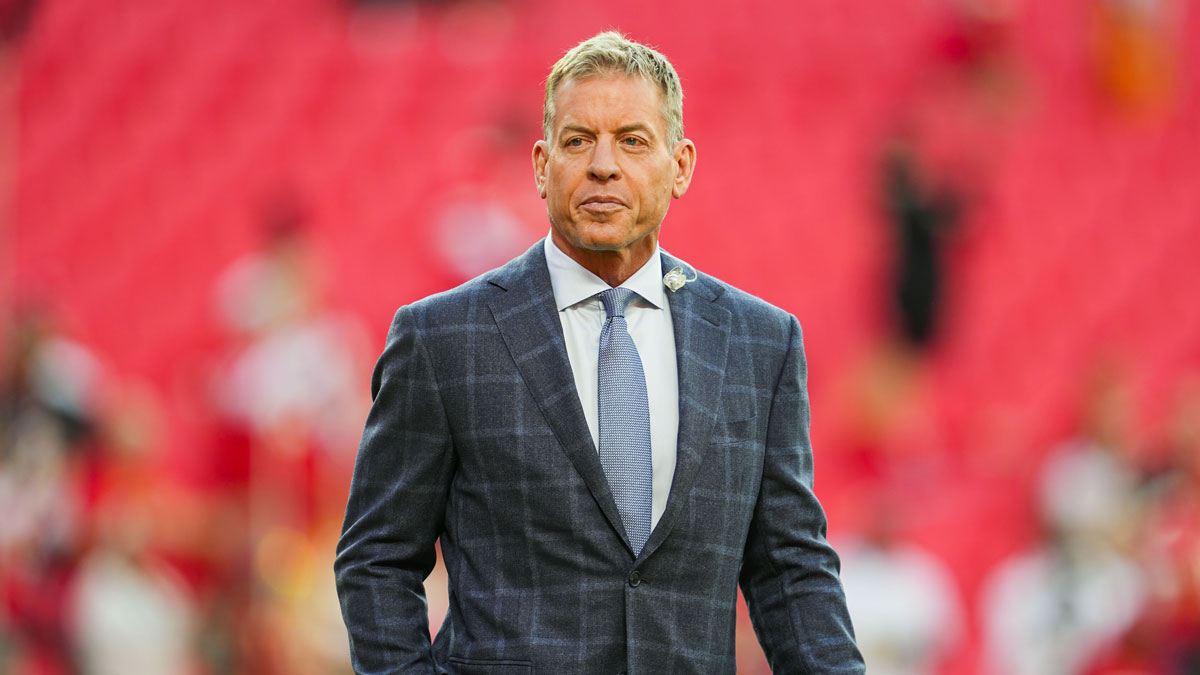
Troy Aikman has never been shy about speaking his mind, and the Hall of Fame quarterback sparked another buzz of the widely discussed college football issue this week after criticizing the current landscape of NIL during a recent appearance on Sports Media with Richard Deitsch. Aikman shared his own experience funding a UCLA Bruins athlete who later transferred without so much as a thank-you.
What began as a conversation about Lane Kiffin’s messy Ole Miss exit soon shifted toward player movement and NIL. The legendary field general revealed that he personally contributed NIL money to a UCLA player, only to feel burned by the outcome.
“I gave money to a kid, I won't mention who,” Aikman said. “I've done it one time at UCLA, never met the young man. He was there a year, he left after the year. I wrote a sizable check, and he went to another school. I didn't even get so much as a thank you note. So, it's one of those deals, to where I'm done with NIL. I want to see UCLA be successful, but I'm done with it.”
Aikman did not identify the player, but his comments immediately fueled speculation pointed to Oregon quarterback Dante Moore, who started five games for the Bruins as a true freshman in 2023 before entering the portal and joining the Ducks the following offseason.
After redshirting behind Dillon Gabriel in 2024, Moore broke out as Oregon’s starter this year, leading the No. 5 Ducks to an 11-1 record and a spot in the College Football Playoff.
Aikman, who famously transferred from Oklahoma to UCLA in 1986 after losing his starting job in Norman due to an injury, said he firmly supports player mobility, especially when coaches freely leave for new roles. But he argued that NIL needs more structure when players accept donor money and then immediately bolt for another school.
His frustration reflects a growing tension among major donors who feel the system enables players to chase bigger offers with no obligations to those who initially supported them.
Aikman’s comments may foreshadow a larger reckoning for how universities, collectives and boosters navigate NIL expectations ahead.