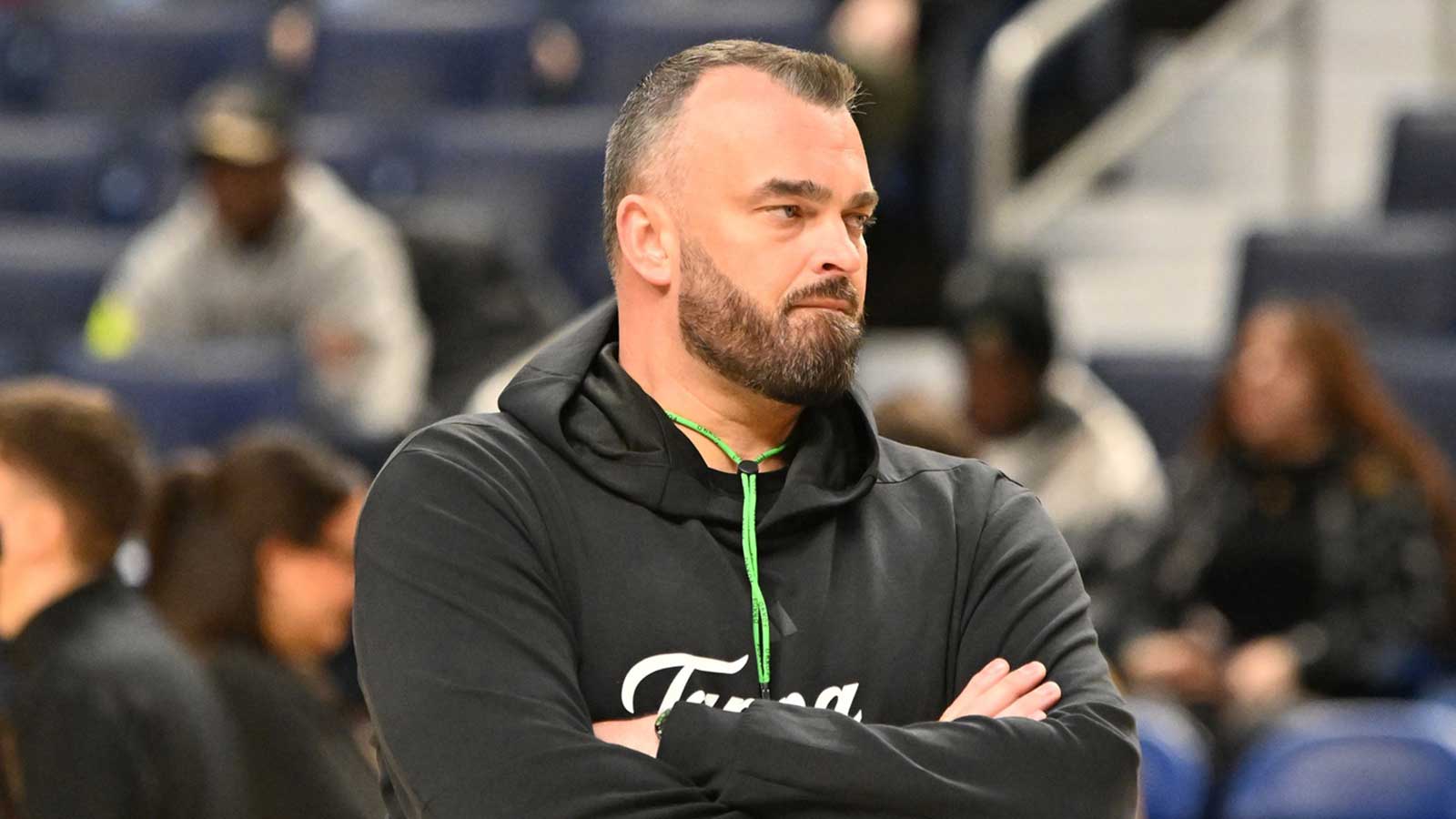

For most of the 2025-2026 college basketball season, Michigan has looked unstoppable. However, following a late-season injury to point guard L.J. Cason, the Wolverines need to lean on what has worked between forward Yaxel Lendeborg and center Aday Mara if they are going to reach the 2026 March Madness Final Four.
Despite only averaging 8.4 points per game and coming off the bench in all 28 appearances, Cason has been one of Michigan's most important players all season. The Wolverines punished teams with their depth, with Cason leading the charge as an elite scorer, facilitator and defender off the bench. The sophomore from Lakeland, Florida, would be a locked-in starter and a potential all-conference guard for nearly any other program in the country.
Since his season-ending ACL injury, the road has been anything but smooth. Michigan won its next four games by an average of five points before completely imploding in an 80-72 loss to Purdue in the Big Ten Tournament Championship Game. The Wolverines have found life much more difficult without an elite ball-handler coming off the bench to keep them in high gear throughout.
Cason's injury has forced Dusty May to brainstorm. He tried using do-it-all sixth man Roddy Gayle Jr. as his de facto backup point guard, resulting in 18 turnovers against Iowa in Michigan's first game without Cason. May has given All-American forward Yaxel Lendeborg more facilitating opportunities, which worked at times, but can also limit his scoring ability.
May has also experimented with using freshman Trey McKenney as his primary ball-handler, but he found his real answer during March Madness opening weekend. If Michigan is going on another Final Four run, Mara has to continue to be a playmaker with the ball in his hands.
Michigan's Final Four fate rests on Aday Mara's shoulders
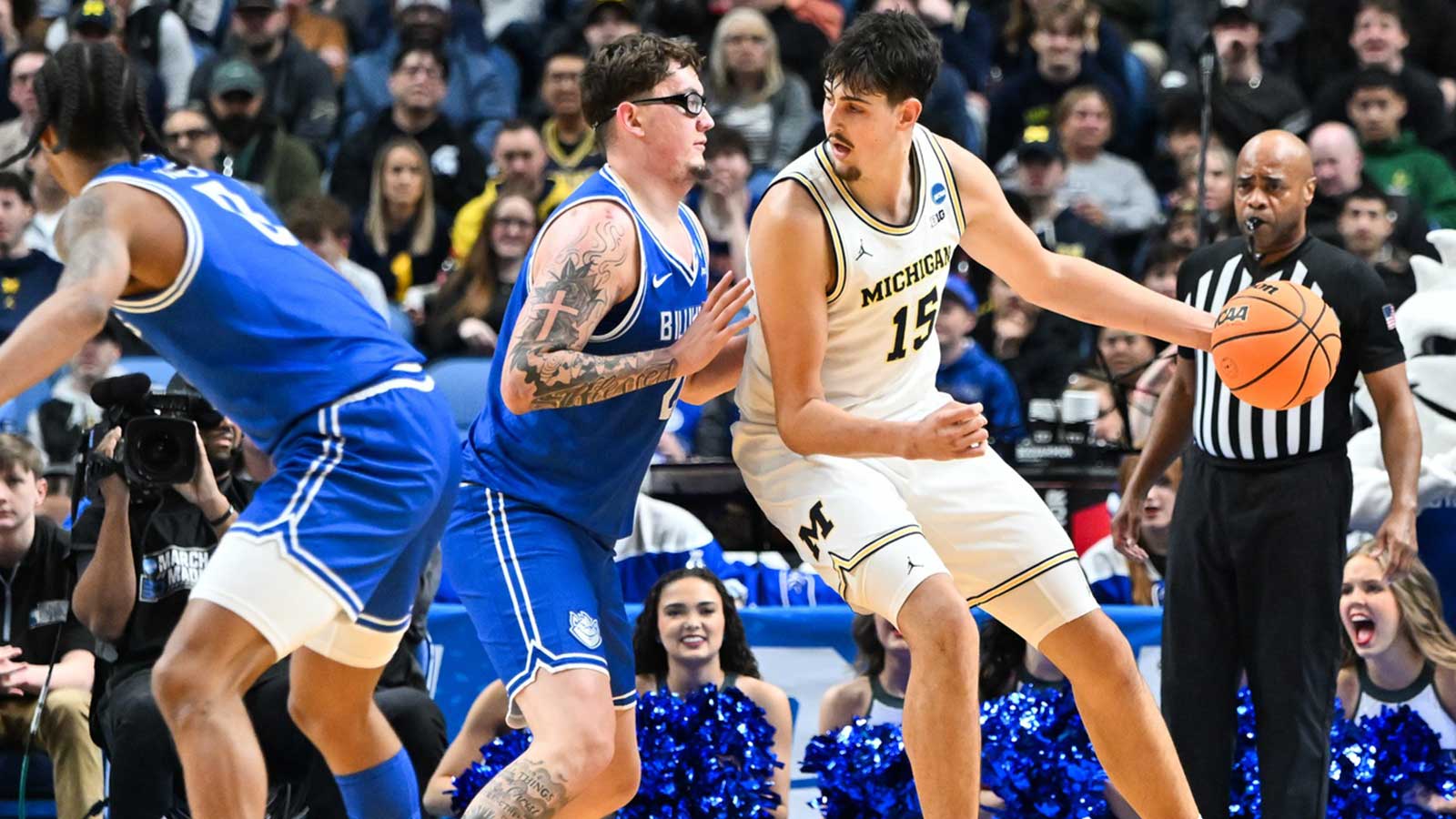
After limping to the finish line without Cason, Michigan has found something with Mara over the first two rounds of March Madness.
Mara, the 2026 Big Ten Defensive Player of the Year, has arguably been Michigan's second-most-important player all season, behind Lendeborg. The 7-foot-3 Spaniard is one of the best two-way players in the country, pairing smooth back-to-basket scoring with elite rim protection. His 2.7 blocks per game are the third-most in the country, only trailing UC Irvine's Kyle Evans and Virginia's Ugonna Onyenso.
However, it has been Mara's playmaking that has led Michigan back to its dominant winning ways in March Madness. The junior has 11 assists through the first two rounds — six against Howard and five against Saint Louis — his most in any two-game stretch this season. Mara has turned the ball over just twice in that span, creating an elite 11-2 turnover ratio.
Mara tends to touch the ball on most of Michigan's possessions, but May has begun to use him as a point guard, even when floor general Elliot Cadeau is on the court. Not in a ball-handling sense, but Mara has been looking to find his teammates more in the first half before feasting on his own opportunities as the games progress.
Michigan cannot force-feed the ball to Mara and ask him to run the show on every trip down the court — turnovers can be an issue for him whenever that happens. But nobody creates easier points for them in a pinch, and the Wolverines have quickly become the best backdoor-cutting team in the country whenever Mara works the high post.
If Michigan is going to return to the Final Four, Mara has to continue to lead it on both ends of the court. The team will still only go as far as Lendeborg takes it, but Mara has been the player the Wolverines get the ball to whenever they find themselves in trouble. He also continues to anchor their elite paint defense on virtually every possession.