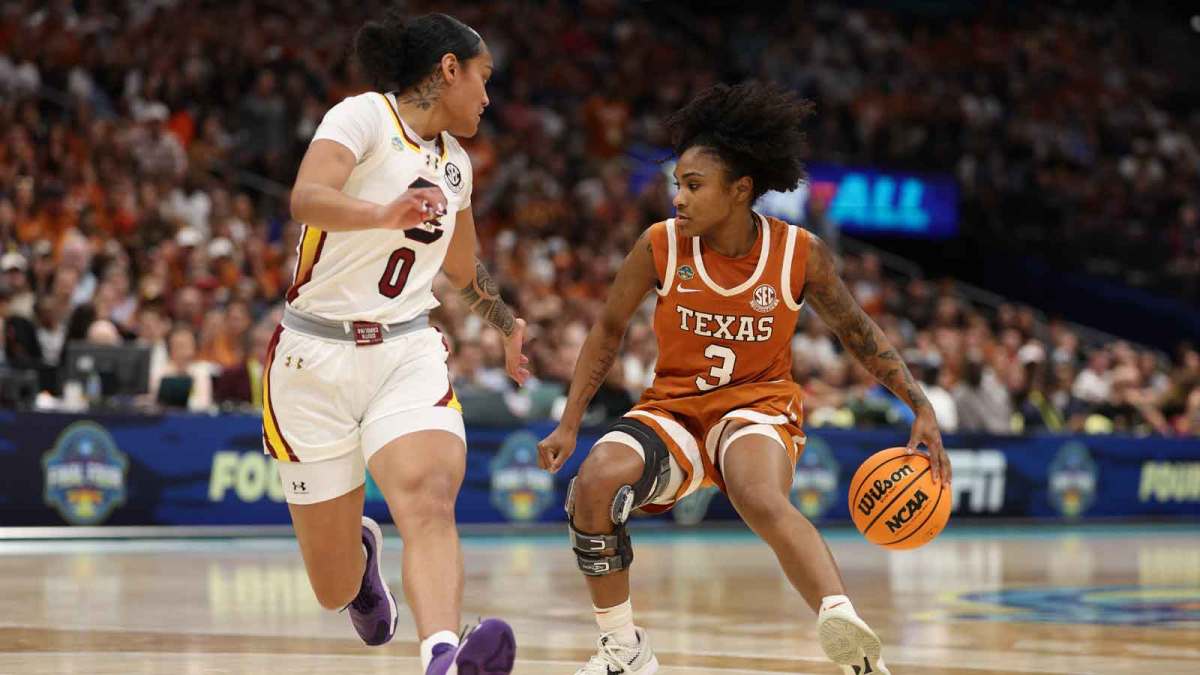
Every women’s college basketball season begins with the same collection of unknowns. There are questions surrounding chemistry, player development, rotations, and how highly touted freshmen or impactful transfers will adapt to the national stage.
But by early December, the fog usually begins to lift. Patterns emerge. Rotations stabilize. Elite teams reveal themselves through a combination of talent, discipline, identity, and, in many cases, the battle scars from early-season tests. The 2025-26 NCAA campaign has reached that exact checkpoint, and it arrived there with a mix of expected dominance, unexpected surges, and a growing middle tier that is more dynamic — and arguably more dangerous — than in most recent seasons.
UConn has asserted itself in the only way it knows how: By overwhelming teams with speed, depth, and an almost football-level physicality on defense. Texas continues its ascent as a modern power, led by emerging phenoms and a defense that refuses to let opposing offenses catch their breath. LSU has reasserted its position among the nation’s elite, while South Carolina and UCLA, despite tiny stumbles, remain fixtures at the top of the sport.
But beyond those predictable pillars, December has delivered something else: A landscape dense with teams capable of not just earning tournament bids but of winning tournament games. Programs like Iowa State, Vanderbilt, Oklahoma State, and Nebraska have crafted their own narratives — some are building on unexpected cohesion, others have emerging new stars, while some are slowly and deliberately rebuilding once-major programs.
This week's power rankings don't only reflect the win-loss records of the previous week, but also the lived reality of this early part of the season. The momentum, leadership, identity formation, and the on-court product suggest where these teams stand right now. By this point in early December, there is a clearer sense of who belongs at the top, who is surging, who is dangerous, and who still has something to prove.
1. UConn (9-0, =)
we have THE Azzi Fudd on our team pic.twitter.com/ugSHN9BtAy
— UConn Women’s Basketball (@UConnWBB) December 8, 2025
There is dominance, and then there is UConn dominance — an entirely different category of basketball excellence. Blowouts are common early in the season, but the Huskies’ 102-35 dismantling of DePaul was not merely a large-margin win; it was a surgical display of pressure, tempo control, and depth that few teams in the nation can match. UConn women's basketball forces opponents into chaos then punishes them with transition scoring and relentless ball pressure.
The most dangerous element of this team is its bench, which is basically a unit that would start for half the teams in the top 25. It’s not often that a No. 1 team in December looks like it could be even better by March, but UConn’s ceiling is nowhere near reached. The Huskies remain the gold standard and the team every opponent measures itself against.
2. Texas (10-0, =)
Texas women's basketball stands precisely where a team with elite defense, efficient guard play, and rising stars belongs — firmly in the No. 2 spot. The Longhorns' resume features wins over multiple formidable ranked opponents, and their on-court demeanor reflects seasoned confidence.
Breya Cunningham has given Texas a new dimension as an interior threat who can score efficiently, defend the rim, and rebound at an elite level. The Longhorns’ identity, however, still begins on the defensive end. They grind opponents into low-percentage possessions, closing out with discipline while contesting everything. If any team can challenge UConn head-to-head on neutral ground at this point, it’s this Texas squad.
3. LSU (10-0, +2)
LSU women's basketball’s overall trajectory this season firmly pushes them into the top three. The Tigers' offensive arsenal remains among the most versatile in the country, with a deep rotation capable of scoring in the paint, from mid-range and beyond the arc.
Kate Koval’s emergence as a dominant interior force gives LSU a balance it lacked last season. Combine that with a strong perimeter attack and a bench that has begun to find its rhythm, and LSU looks every bit the championship contender it aims to be.
The Tigers' potential may be the highest of any team not named UConn. If they maintain a stable defense and avoid lapses, their place among the top three should feel secure.
4. South Carolina (9-1, -1)
South Carolina women's basketball remains the model of elite stability, claiming 21 straight wins over ACC opponents. The Gamecocks have the length, switching ability, and rotational depth to suffocate opponents for four quarters. Ta’Niya Latson’s offensive leap adds another layer, making the Gamecocks capable of taking over games when their defense inevitably drags opponents into the mud.
They only slid down because LSU rose in the power rankings, as the Gamecocks' one early loss does not diminish their potential. If anything, it sharpened South Carolina's focus, and recent performances show a team playing with the urgency of a group expecting to be on the sport’s biggest stage once again.
5. UCLA (9-1, -1)
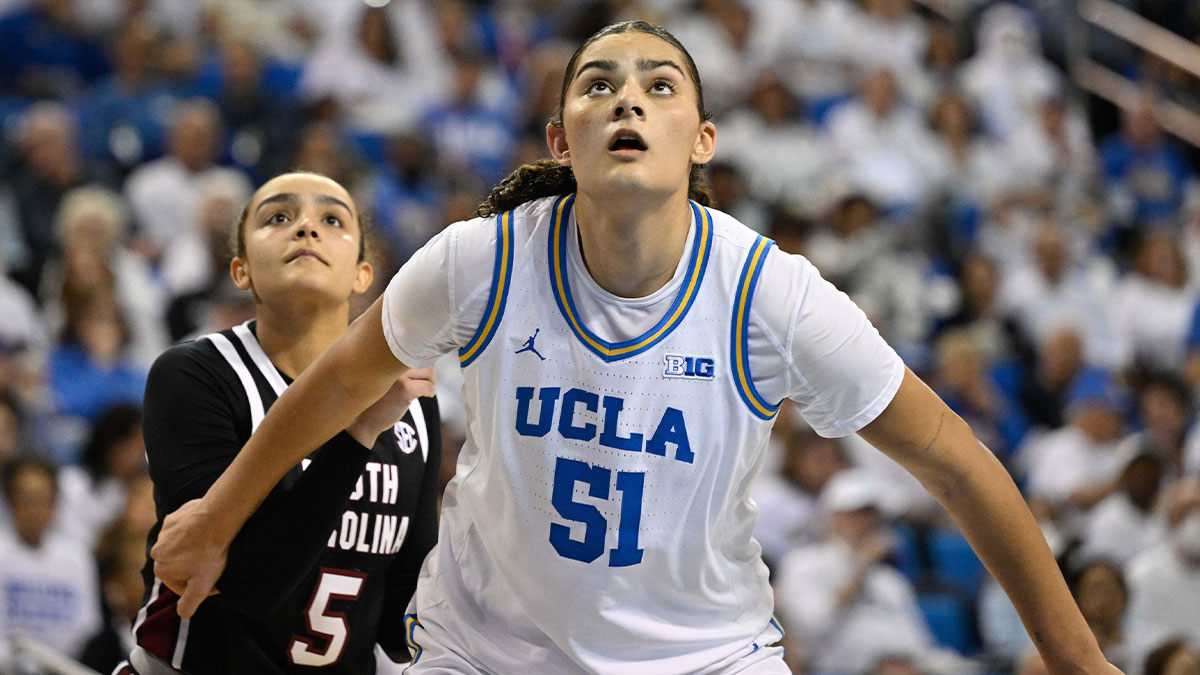
UCLA rounds out the top five with a combination of polish and depth. The Bruins are not the flashiest team near the top of the rankings, but they may be the most balanced. Their backcourt is steady, their wings versatile, and their interior defense quietly elite.
They don’t simply win games. The Bruins manage them, controlling tempo and forcing opponents into mismatches. UCLA lacks a defining early-season win, but based on consistency, basketball IQ, and defensive discipline, its high position feels unquestioned.
6. Maryland (11-0, +1)
Maryland’s undefeated start is not a fluke — it’s a testament to resilience. Their double-overtime victory over Minnesota this month exemplified the Terrappins' collective toughness, especially with injuries forcing players, like Saylor Poffenbarger, into bigger minutes.
This is a team built around trust and execution. The Terrapins share the ball, defend without fouling, and rebound as a collective. Maryland does not have the top-heavy star power of the top five teams, but it has something nearly as valuable: A lineup that never disengages. In a year where the Big Ten is stacked beyond expectation, Maryland’s steadiness could carry the team deep into March.
7. Iowa State (10-0, +4)
A major mover up the board this week, Iowa State’s perfect start now comes with the ranking it deserves. The Cyclones' offense is fluid, with crisp ball movement and disciplined spacing unlocking multiple scoring options. Their defense, historically inconsistent, has taken a leap forward, especially on the perimeter.
The Cyclones do not merely play clean basketball — they play smart basketball. Turnovers are low, shot selection is measured, and the ability to force opponents into inefficient possessions has been the quiet key to the squad's rise. Iowa State hasn’t faced a gauntlet yet, but it has handled every obstacle with an impressive level of maturity and discipline. A top-10 ranking matches both the Cyclones' record and their on-court identity.
8. Michigan (8-1, =)
Michigan doesn't move up in the power rankings this week slightly due to Iowa State’s rise, but its profile remains strong. With a seasoned core and an efficient offensive mindset, the Wolverines do not beat themselves. Their offense is balanced across positions, and their half-court defense is elite in both structure and discipline.
In one of the deepest Big Ten seasons on record, Michigan looks like a team capable of sustaining success week after week, which is something not many programs in the conference can confidently say.
9. TCU (10-0, =)
TCU continues to surprise national observers with its undefeated start, but the Horned Frogs’ steadiness is no accident. Their half-court execution is among the cleanest in the country, and they rarely, if ever, give away possessions.
Star transfer Olivia Miles notched her seventh career triple-double in TCU's 95-40 win over UTEP to lead the team's methodical and efficient offense. Meanwhile, the Horned Frogs' defense is not suffocating, but it is sturdy and responsibility-driven.
The question for TCU is whether it can secure a statement win against a top-tier program as conference play gets underway. Until then, the team deservingly sits comfortably within the top 10 while still waiting for its signature moment.
10. Oklahoma (9-1, =)
Oklahoma’s offensive ceiling keeps it in the top 10. When the Sooners catch fire, especially from deep, they can run almost any team off the floor. Their defensive inconsistency remains the lingering concern, but their improved rebounding, emerging bench production, and ability to rely on Aaliyah Chavez give them multiple avenues to keep winning games.
If the Sooners can string together consistent defensive performances, they could climb even higher. But for now, Oklahoma's offensive firepower keeps it comfortably in the top-tier conversation.
11. Iowa (9-0, -5)
Iowa has continued to demonstrate how impressive its post-Caitlin-Clark era stability has been. The Hawkeyes' offense lacks the star-driven fireworks of previous seasons, but their system remains effective, driven by precision, timing, and the willingness to generate the extra pass.
The Hawkeyes' defense is improved, especially at the point of attack, and their rebounding has been a quiet strength. Despite maybe not having the ceiling of the top 10 teams, Iowa only slid because other teams had standout weeks that moved them up the rankings. There's no need to worry about the Hawkeyes, as their consistency should keep them firmly in the top 15 and possibly even the top 10.
12. Vanderbilt (9-0, +6)
Vanderbilt’s rise into the No. 12 slot is one of December’s best stories so far. Once a lower-tier SEC program, the Commodores have built themselves into a disciplined, balanced, and stout team that's on its longest winning streak to start a season since 2011-12.
The Commodores' undefeated record is not the product of a soft schedule; it’s the product of a group that knows exactly who it is. They defend hard, rebound with fury, and get scoring contributions from every section of their rotation. Vanderbilt's offensive identity is rooted in smart and efficient shot creation rather than reliance on a single star, and its current spot reflects both its performance and potential.
13. Baylor (9-1, +3)
Baylor’s defensive identity underpins everything it does. The Bears contest shots well, rotate effectively, and play with discipline. Their offense has shown flashes of brilliance, fueled by improved shooting and better interior spacing.
The Bears are not quite in top-10 form yet, but they carry all the markers of a team that will be far more dangerous in February than it is today.
14. North Carolina (9-2, -1)
North Carolina remains a high-ceiling but middling team. The Tar Heels' length and athleticism allow them to pressure opponents into bad shots, but their offensive lapses keep them from climbing higher. North Carolina has the talent of a borderline top-10 team but the resume of a mid-teens one.
15. Kentucky (10-1, +2)
Kentucky’s early-season performance rests on gritty defense and opportunistic scoring. The Wildcats' ability to turn defense into offense keeps them in games even when half-court scoring stalls. They have the physicality to challenge elite opponents, but they need more offensive consistency to climb in the rankings.
16. USC (7-2, + 7)
USC women's basketball remains one of the most intriguing teams in the country for a simple reason: Its ceiling is still a mystery. When the Trojans are locked in defensively, they can suffocate opponents and turn games into transition showcases. Their offense, built around pace, spacing, and dynamic guard play, can overwhelm teams early before the game is sealed. USC is outperforming preseason expectations, but now that the bar has risen, can it still measure up?
But USC is both dangerous enough to beat anyone and inconsistent enough to lose to teams they should be competitive against. The Trojans rose because of their conference play-opening upset win over previously undefeated Washington, but their next opponent is arguably the nation's best team in UConn. For now, they sit at No. 16 as a squad that some might view as unsettling to face, but the Trojans' ability to beat top-seeded teams should not be fully trusted.
17. Ole Miss (8-1, -3)
Ole Miss has quietly built one of the most efficient defensive units in the SEC. The Rebels' pressure at the point of attack forces turnovers, and their interior rotations are among the best-coached in the conference. They are physical, disciplined, and unafraid to impose their style on opponents.
But offensively, Ole Miss is still a work in progress. The team generates enough scoring through transition and second-chance opportunities, but its half-court execution can become predictable, particularly when facing teams equipped to neutralize their first scoring option.
The Rebels had to battle back from a 19-point deficit against Notre Dame last week, but they still faced their first loss of the season in a narrow 61-60 defeat at the hands of Kansas State — both versus teams that are below Ole Miss' caliber. In a year where the SEC is anything but forgiving, Ole Miss feels like the type of team that will suffer a defining upset before January is over.
18. Tennessee (6-2, -3)
Tennessee women's basketball’s early season has been a mix of impressive highs and concerning lows. The Lady Vols possess the physicality and prowess to challenge elite teams, which are traits that have long defined the identity of the program. But the struggle for Tennessee has been offensive consistency.
The Lady Vols can look like a top-10 team in one quarter and an unranked one in the next. Their offense occasionally stalls against disciplined defenses, and their perimeter shooting remains streaky. Their performance this week is a perfect example, as the team hit a season-low 34.7% of its shots against Stanford despite pulling out a 65-62 victory.
Still, their athleticism and interior presence give them a high enough floor to remain firmly in the top 20. If Tennessee can stabilize its shooting and reduce turnovers, it has the physical blueprint to climb the power rankings quickly.
19. Oklahoma State (10-1, +3)
Oklahoma State took a well-earned jump in this week's rankings. Its disciplined approach to both ends of the floor has made them one of the more pleasant surprises of December, especially after the Cowgirls put up a program-record 133 points on Saturday.
The Cowgirls don’t try to out-talent opponents, but they do out-execute them. Their transition defense is among the best in the Big 12, and their half-court sets are crisp and purposeful. Oklahoma State may not have the star power of the top-15 teams, but it has a top-15 understanding of what type of team it is.
20. Washington (8-1, =)
Washington is one of the stealthier teams in the rankings. It doesn’t command national attention or rely on explosive scoring runs and overwhelming size. Instead, the Huskies have been winning through organization, patience, and structure.
Their half-court offense is deliberate, generating high-quality shots rather than relying on sheer talent. Defensively, they’re fundamentally sound, closing out with discipline, protecting the rim effectively, and rarely giving up second-chance opportunities. The Huskies have even produced a couple of noteworthy early-season wins already.
However, this was not the case on Sunday against USC when Washington fell for the first time this year. The Huskies may not leap off the screen when you watch them, but their impressive consistency usually wins games, and those winning ways should return when they take on Green Bay this weekend.
21. Nebraska (9-0)
Nebraska’s undefeated start demands recognition in the power rankings after a 101-83 victory over Penn State. The Cornhuskers' offensive communication and spacing have been excellent, and their ability to take away the paint forces opponents to take difficult contested jumpers.
The Cornhuskers are the type of December team that can either become a February sensation or fade into the noise. For now, they sit exactly where they belong as a rising, respected, and dangerous squad.
22. Louisville (8-3, -1)
Louisville slides slightly to make room for teams with hotter early-season momentum after losing to yet another top-five team in South Carolina. But the Cardinals still possess the athleticism and perimeter firepower to beat most teams in the country on the right night, which they proved with a 94-43 bounce-back win over New Hampshire. What they need now is cohesion and more consistency against top opponents.
23. Michigan State (8-1, -4)
Michigan State slides down the rankings after losing its first game 78-64 to unranked Wisconsin. The Spartans don’t tend to overwhelm opponents, but they usually don’t collapse under pressure either. In a stacked Big Ten, returning to its consistency is Michigan State's greatest strength and its ticket to remaining in the top 25.
24. Ohio State (7-1)
Ohio State is one of the most offensively capable teams outside the top 15, having just logged its largest win in program history with a 98-point margin over Niagara. But its defensive inconsistencies keep it from climbing higher.
When the Buckeyes are clicking offensively, they can score in bunches, stretching defenses with perimeter shooting and attacking aggressively off the dribble. Their spacing is excellent, and their guards can dictate tempo against most opponents.
Their issue, however, can come on the defensive end. Rotations can lag, pick-and-roll coverage is inconsistent, and opponents with strong interior presence often find success attacking them in the paint.
Still, the Buckeyes’ offensive firepower gives them a high ceiling, and their pace makes them one of the most entertaining teams in the country. If they tighten up their defensive structure even slightly, they could easily enter the top 20 conversation.
25. Notre Dame (6-2, =)
Notre Dame’s defensive identity was fairly questioned this week after blowing a 19-point lead to Ole Miss. The Irish usually guard with toughness, rotate with purpose, and rarely give up uncontested shots inside the arc, and their ability to slow down opposing stars and dictate pace would keep them competitive even when their own offense struggles.
But this team, while showing potential, is clearly still a work in progress. Notre Dame women's basketball can fall into scoring droughts, particularly when opponents neutralize their primary scoring options. Their ball movement can be strong, but the Irish can also lack consistent scoring.
These traits just manifested in the largest blown lead in the program's history. Still, the Irish are well-coached, disciplined, and defensively elite, which all translate reliably into the grind of conference play. Notre Dame can reclaim its reputation as a team no one wants to face, even at No. 25.
As we enter mid-December, the shape of the season is starting to sharpen but remains far from finalized. UConn looks like a juggernaut, Texas a worthy challenger, and LSU a dangerous contender capable of beating anyone on any given night. But beyond the top five, the board is wide open.
Maryland is standing out in the Big Ten. Iowa State has earned national respect. Vanderbilt and Nebraska are shaking up old assumptions about who can potentially break into the top of the rankings. Meanwhile, Oklahoma State is proving that good, consistent basketball still carries weight in a sport that can often be driven by star power.
Even if a hierarchy is forming, the story is far from finished. Conference play, where weaknesses are exposed and strengths are forged, is just getting underway. If early December has shown us anything, it’s that this season is deeper, more competitive, and more unpredictable than most, which is an ideal setup for the months of drama to come.
What we have now is a snapshot of who belongs where. What we will have by March is anyone’s guess.