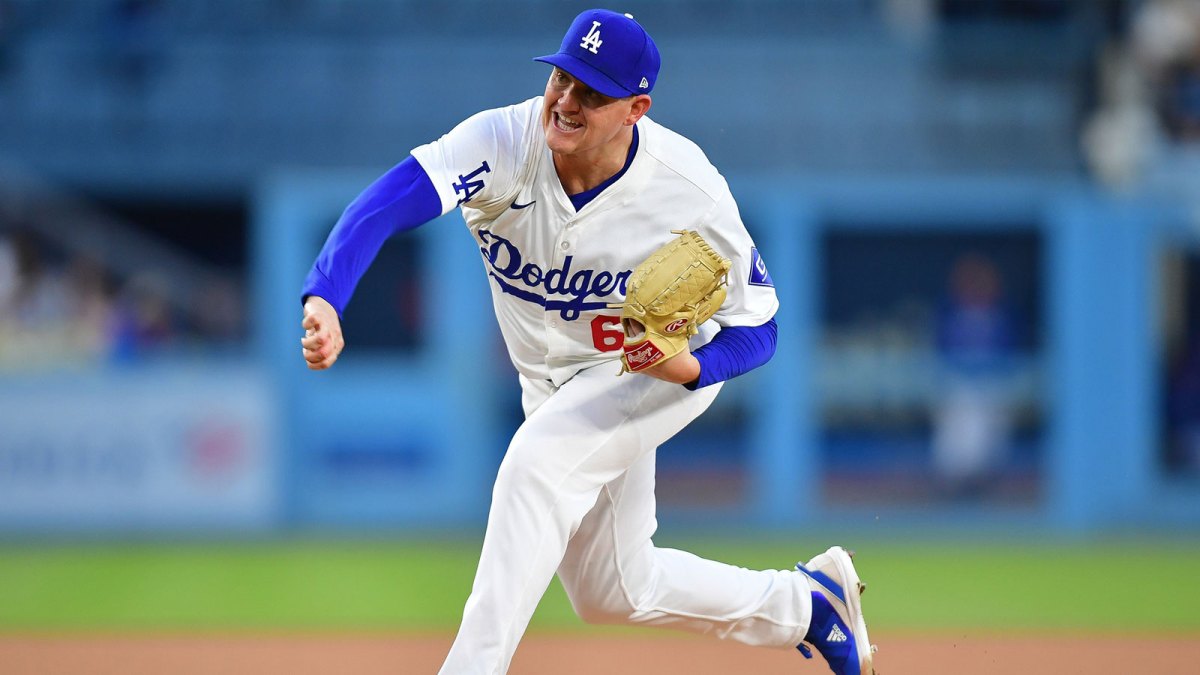
The Los Angeles Dodgers head into camp with championship expectations, yet trade rumors continue to surface as the opening day roster comes into focus. One name that deserves serious discussion is Kyle Hurt. For the Dodgers, moving Hurt before Opening Day could be a proactive decision rooted in timing and risk management.
Hurt’s raw ability is real. He generated buzz with a dominant strikeout surge in 2023 and flashed swing-and-miss stuff during his brief MLB appearances. Still, the club must evaluate more than upside. They must assess durability, role clarity, and long-term roster value as they finalize the roster ahead of Opening Day 2026.
Injury history defines this conversation. Hurt dealt with right shoulder inflammation in April 2024. A few months later, he suffered a torn UCL that required Tommy John surgery, ending his season. That combination of shoulder trouble and major elbow reconstruction creates legitimate concern for any contender relying on stable pitching depth.
The Dodgers cannot ignore that timeline. Tommy John surgery often requires a full year or more of recovery, and command can lag even after velocity returns. For a team in win-now mode, every 40-man roster spot carries weight. Banking on a fully healthy and immediately effective version of Hurt involves real uncertainty.
Role limitation adds another layer. Hurt no longer projects as a starting option within the organization. Instead, he profiles as a bullpen arm competing for a job on the Opening Day roster. When a pitcher transitions from potential starter to relief only, his surplus value decreases, especially on a roster packed with power arms.
This is where the move becomes logical rather than just speculative. The Dodgers consistently develop hard-throwing relievers with strikeout potential. That pipeline reduces the need to hold onto a volatile arm returning from Tommy John surgery. In contrast, another club might view the 27-year-old as a worthwhile upside play.
Surface numbers also inflate perception. Hurt owns a sparkling 1.04 ERA and a 1.04 WHIP across 8.2 MLB innings. Those figures look dominant in a stat line. However, such a small sample provides limited predictive value, particularly for a pitcher coming off major surgery and previous shoulder concerns.
Timing strengthens the case to act before Opening Day. Spring training often fuels optimism around returning pitchers. Radar readings, sharp breaking balls, and positive health reports can elevate trade value quickly. Once the regular season begins, early struggles or workload limitations could diminish that value just as fast.
Age and competitive window matter as well. Hurt enters his late twenties while still trying to reestablish durability after Tommy John surgery. The Dodgers, meanwhile, operate with championship urgency. They need dependable innings now, not extended developmental timelines or cautious usage plans.
Ultimately, the decision hinges on effective asset management. The Dodgers have built one of baseball’s deepest pitching pipelines, and that depth allows them to make calculated moves with players who still carry upside but also significant risk. Hurt fits that profile perfectly.
Trading him before Opening Day would not be an indictment of his talent. Instead, it would reflect the reality of roster construction on a championship contender. Another organization could afford to wait on the upside. The Dodgers may not have that luxury.
If Los Angeles believes its pitching development pipeline will continue producing reliable bullpen arms, the smartest move may be to convert the promising right-hander's potential into immediate value. Acting now, while optimism around his recovery still exists, could allow the Dodgers to strengthen another area of the roster while avoiding the uncertainty that comes with another long rehab timeline.
For a team striving to three-peat, making such a calculated decision often determines whether they maintain depth or maximize their chances of winning another championship.