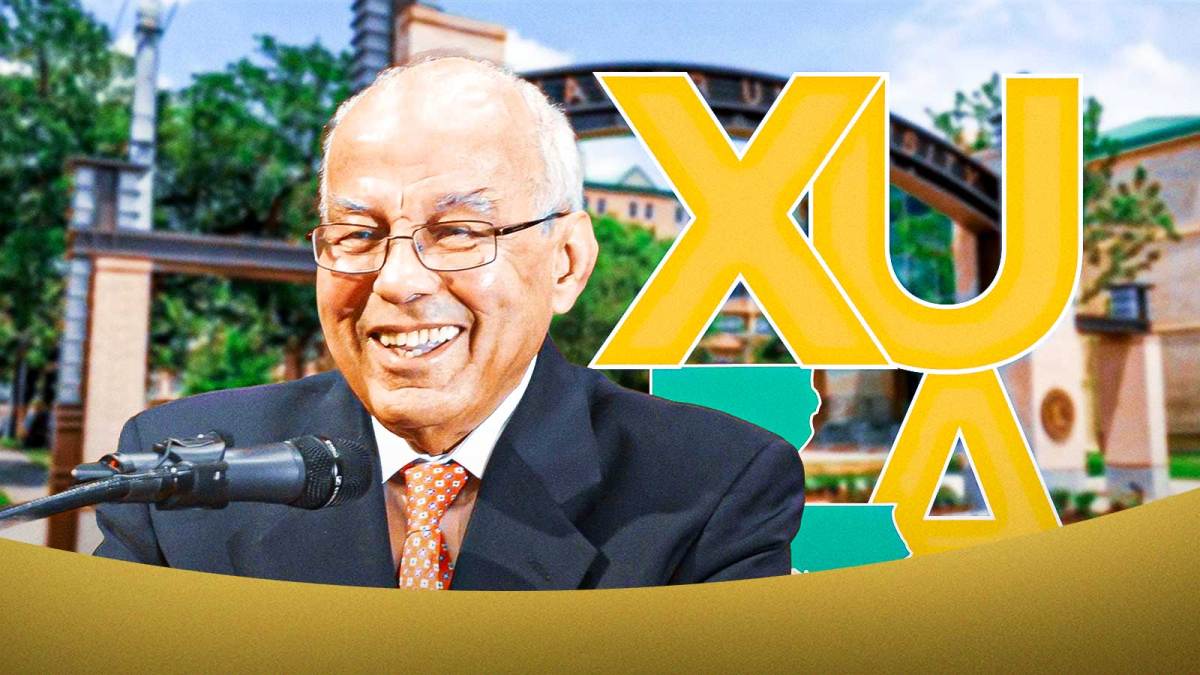
Norman C. Francis, the trailblazing civil rights advocate who led Xavier University of Louisiana for nearly five decades and became one of the most influential figures in American higher education, passed away earlier this week at the age of 94.
Francis, who served as president of the nation’s only historically Black and Catholic university from 1968 to 2015, was widely credited with transforming Xavier into a national leader in the production of Black graduates in the sciences and pre-medical fields. His tenure made him one of the longest-serving university presidents in U.S. history and established him as a respected voice on civil rights, education policy, and equity in higher education.
“His impact is immeasurable,” said Dr. Michael Francis, his son. “He would do anything for his family, the Xavier family and the Louisiana family.”
A steadfast advocate for justice, Francis welcomed some of history’s most consequential figures to campus. In 1961, he provided housing for Freedom Riders after they were attacked by a white supremacist mob in Alabama. In 1987, Pope John Paul II visited Xavier to address Catholic universities nationwide, and in 2006, then-Illinois Senator Barack Obama delivered the university’s commencement address.
Francis’ relationship with Xavier began long before his presidency. After receiving support from the Sisters of the Blessed Sacrament, he enrolled at the university at age 17 on scholarship. Demonstrating early leadership, he was elected student body president and graduated with honors in 1952. He went on to become the first Black student admitted to Loyola University New Orleans College of Law. Because of segregation, he was barred from living on Loyola’s campus and instead resided in a dormitory at Xavier.
Following law school, Francis served in the U.S. Army’s Third Armored Division and later worked with the U.S. Justice Department on efforts to desegregate federal agencies, particularly in Southern cities. Though he built a successful legal career, Francis ultimately turned to education as his primary vehicle for change.
“I made a decision that education was going to be the answer for me because as I looked at the struggle for African Americans, I knew we weren’t going to make it if we just kept showing up in courtrooms defending ourselves against whatever the circumstances,” he said in a 1992 interview.
He returned to Xavier in 1957 as dean of men, further establishing himself as a civil rights advocate during a pivotal era. A few years later, he made history again as Xavier’s first lay and first Black president. Under his leadership, the university expanded its academic offerings, strengthened its national profile, and became widely recognized as one of the nation’s leading HBCUs.
Over the course of his distinguished career, Francis received 42 honorary doctorate degrees and numerous accolades, including the Presidential Medal of Freedom, one of the nation’s highest civilian honors.
Norman C. Francis leaves behind a legacy defined not only by longevity but also by transformation. Through his unwavering belief in education as a tool for liberation, he reshaped institutions, opened doors for generations of students, and helped redefine what leadership in higher education could look like. His life’s work stands as a testament to the enduring power of faith, scholarship, and service—and to the profound impact one leader can have on a university, a city, and a nation.