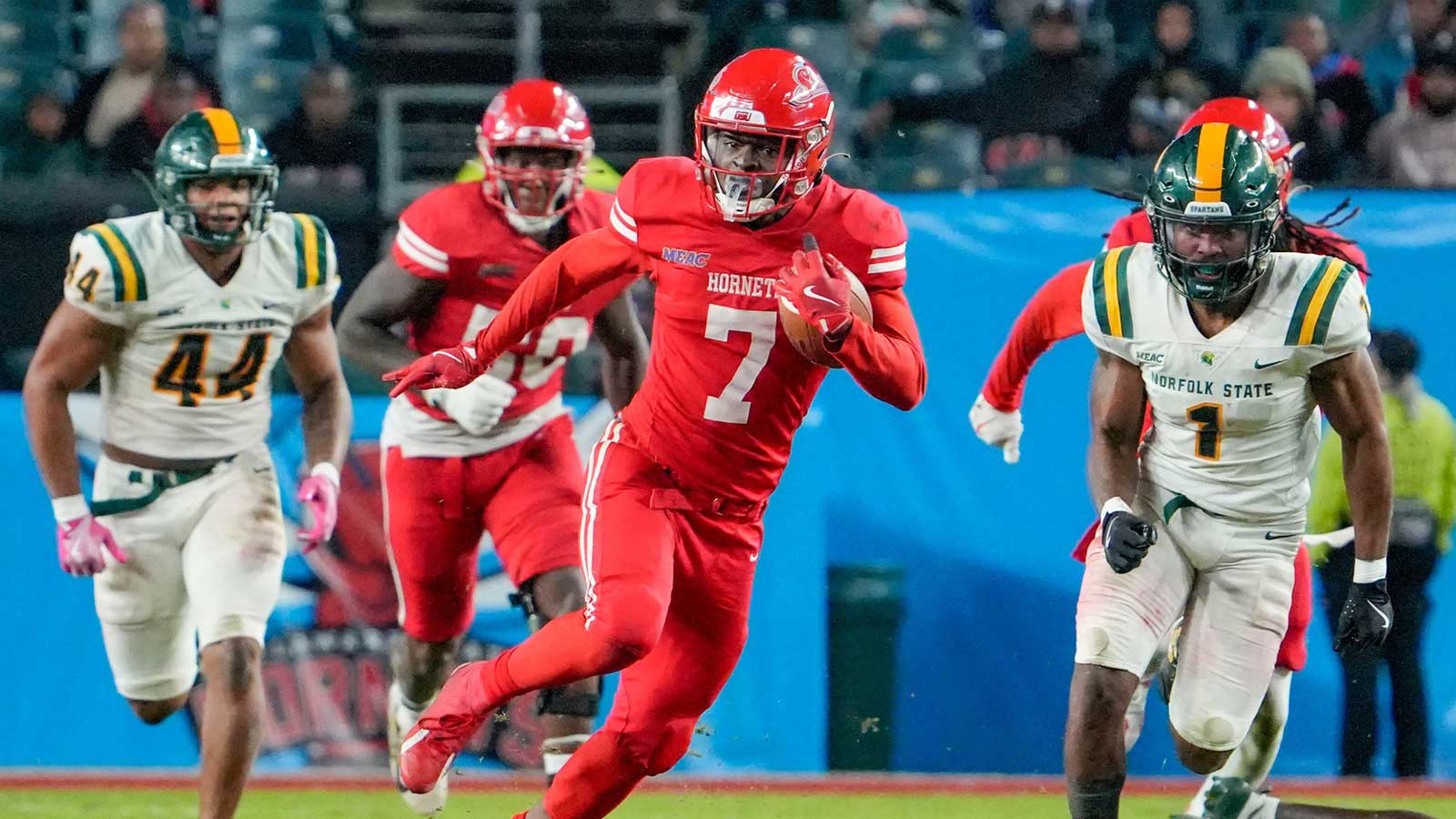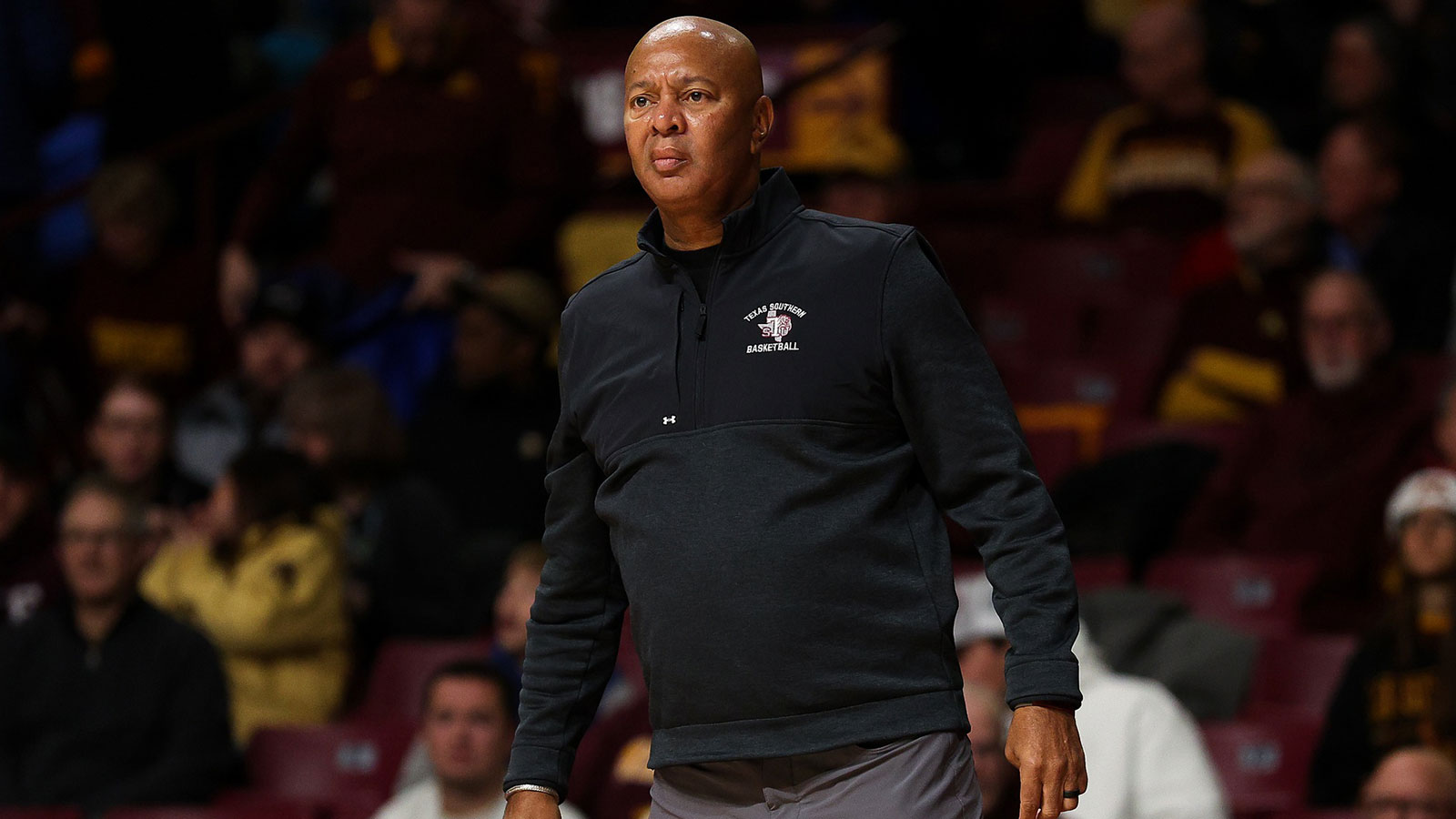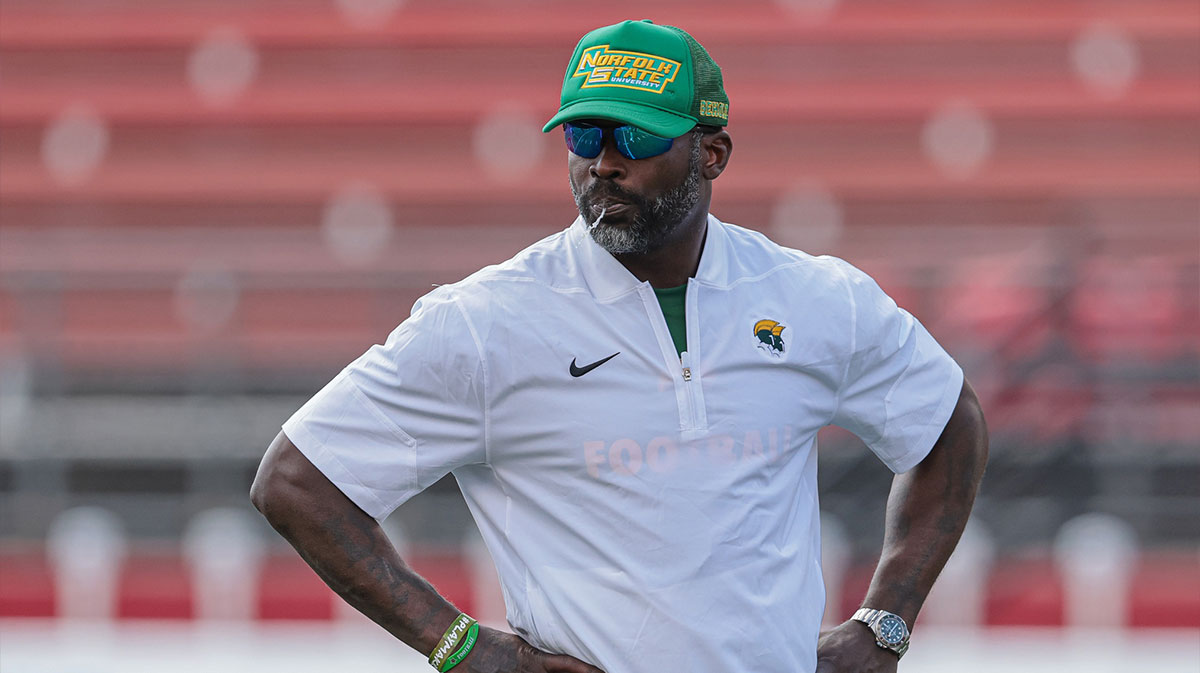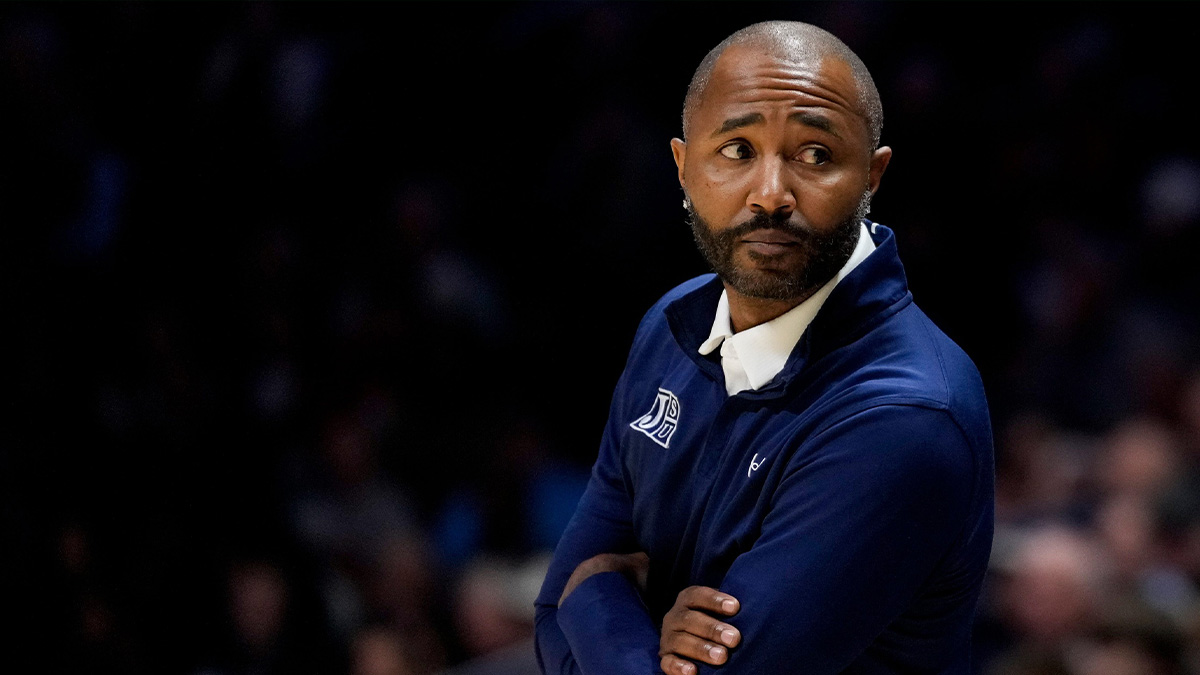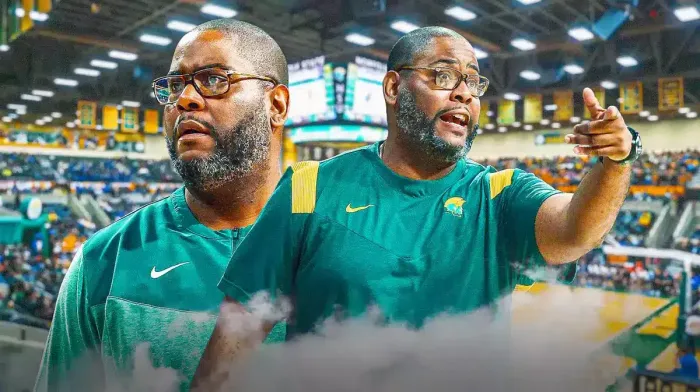
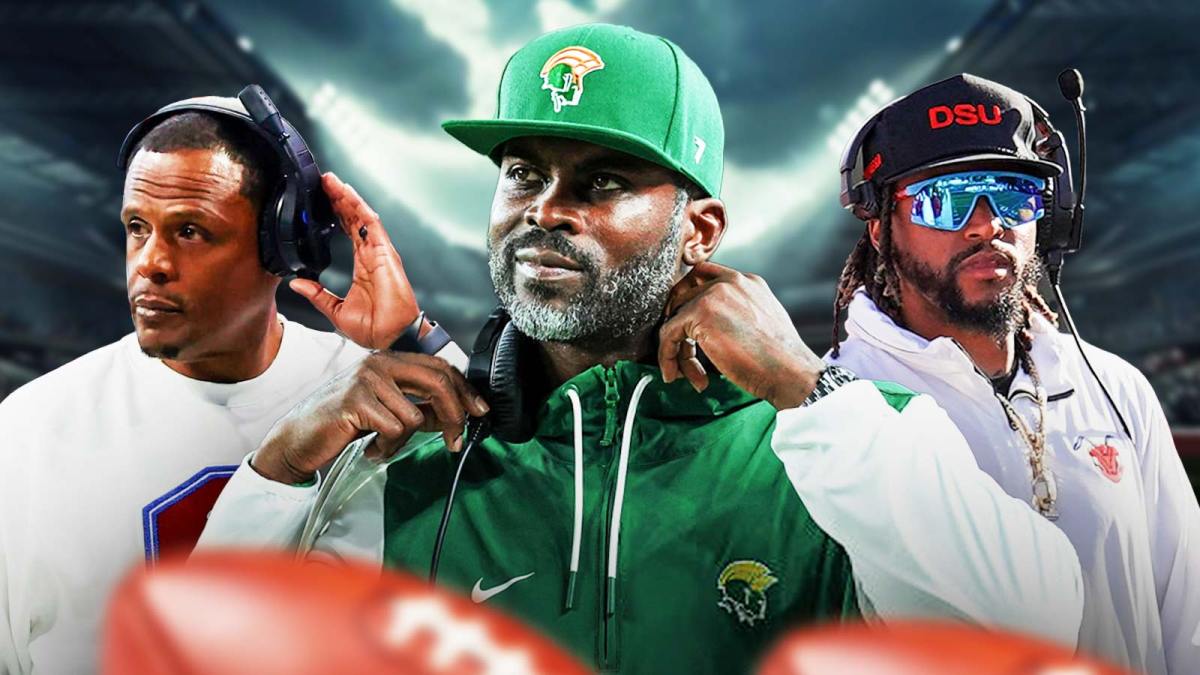
On Saturday, following Chennis Berry and South Carolina State's remarkable victory over Tremaine Jackson and Prairie View A&M, Berry addressed the media in the Celebration Bowl post-game press conference. He was candid, direct, and far more pointed in his remarks than he normally is during media availability. He specifically spoke about how it appeared that on the weekly MEAC coaches' calls, the former NFL players turned coaches—Michael Vick and DeSean Jackson—received significantly more attention than he and the other “non-celebrity” HBCU coaches.
“Now, I'm gonna say this before y'all start talking. You know, I keep receipts now, so, you know, all through the season we had those conference calls. Nobody wasn't asking me any questions. It was always directed to the two NFL guys, you know, and I'll sit there and get one or two questions and, they get 20 or 30,
He continued, “So I'm gonna say that there's good football coaches that come through HBCU. That's right, we can coach. 'cause we had to get it out the mud. So I'm gonna say that with a proud, proud chest. There's a lot of really, really good football coaches. And again, I got great relationships with all of 'em. But I remember I keep receipts and that motivated me.”
My immediate inclination after hearing the clip of Berry’s comments was to agree with him as a member of the media. I believe that as media members, we often have a penchant for chasing the “shiny” news story. We are constantly trying to raise viewership numbers for our websites and clicks for our podcasts, YouTube channels, and other media ventures. In chasing this audience, we aren't always covering the sport of HBCU football (or HBCU athletics in general) in a holistic enough fashion. There are some who do it well, but I think that oftentimes we get lazy in our approach because we only focus on what we know “works.”
Looking At The Man In The Mirror
Berry's comments made me think about an issue I was confronted with a few weeks ago while managing the HBCU Pulse Instagram page. Following South Carolina State’s MEAC championship-clinching victory over Delaware State, I looked at the box score as I prepared the article recap. I saw that despite Delaware State losing, they put up an insane number of total offensive and rushing yards against a very stout South Carolina State defense. I thought that stat was important to point out. I also knew that our audience on social media was really fired up about DeSean Jackson and following his journey as a former NFL star.
Before I posted the graphic I had made about Chennis Berry and his dominance in HBCU football, I posted about Delaware State losing but putting up a crazy amount of yards. Our audience wasn't happy, specifically MEAC and South Carolina State alumni. They believed that to the victor go the spoils, and that we should have posted about South Carolina State’s victory first. To them, posting about DeSean Jackson before the championship win was a symptom of prioritizing celebrity culture over non-celebrity coaches.
I received a lot of specific criticism from a person I encountered and bonded with years ago as a student leader, someone I once explained the creed and expectations of HBCU Pulse to. She saw me growing the company into what it is today, and her critique hurt. At that time, I had shared that I wanted HBCU Pulse to be an outlet that supports smaller institutions. As a graduate of Fort Valley State University, I know that we are often overlooked in the national spotlight. The shadow cast by Florida A&M, North Carolina A&T, and Howard University is often large. When you’re in the same state as Morehouse and Spelman, a lot of people aren't checking for Fort Valley in the way that I think they should.
When I started HBCU Pulse, I wanted to get attention for schools like Fort Valley, Albany State, Benedict, Fayetteville State, Bennett, and Claflin. South Carolina State was a school that I often felt didn't get the media attention it deserved. I shared that creed with my peers, but I also shared my passion for storytelling. I wanted to tell the authentic stories of HBCU life and expose our emerging audience to the beauty of it—realities that aren't limited to just one school. However, we have to mold that creed into a capitalistic digital media culture that demands likes and clicks to supplement our resources.
The comments persisted throughout that weekend, and it hurt because I felt as if my intentions were being mischaracterized, especially on a public platform by someone I personally know, when I thought our connection would’ve led to a private conversation. While I waited to put up the South Carolina State graphic, I put up the DeSean Jackson post first. I’ve been clear about my stance on celebrity culture in HBCU life. I’ve often said I believe the “experiment” is failing.
Conversely, I have been one of the biggest champions of Chennis Berry, from his time at Benedict to his rise as the reigning Celebration Bowl champion at South Carolina State. I’ve talked about it in countless articles, on HBCU Pulse Radio on SiriusXM, our podcast, and YouTube channel.
It is disheartening when that level of advocacy isn't seen because people limit their view to social media. And even still, when I finally put up the post about Chennis Berry being 28-0 in conference play over the past four seasons, something I was always going to do, the DeSean Jackson post still received more likes and engagement. So that further exacerbated the need to “feed the beast.” Give the people what they want, right?
The delicate dance of media engagement
It is a conundrum. As a media member, I want to tell the holistic story of HBCU life, but I also have the demand of figuring out what the audience wants so they continue to engage. I say this not to elicit pity, but to highlight the crossroads we often find ourselves in within a niche media market like HBCU sports. We can be better, and we should strive to be better. I’m not blaming or absolving fans who only engage with content about former NFL players as coaches, but I believe the word we have to strive for is effort.
We have to make the effort to holistically showcase HBCU life. That’s not just on the print journalists, the podcasters, the YouTubers, the audio space hosts, or the radio personalities. It is incumbent upon all of us to be ethical in our coverage and judicious in shining a light on the brilliance of HBCU culture and sports as a whole. It has to be give and take amongst the producers of said content and the consumers.
That is why I think Chennis Berry was dead-on with what he said. I don’t believe he was specifically calling out DeSean Jackson or Michael Vick. On the contrary, I believe he was saying: “Spotlight them and us,” because there is something special happening here, too. As we move into this new year, we have to take that into account.
The Deion Sanders “effect” isn't coming back
At some point as media members, we have to be honest: The “Deion Sanders Effect” is not coming back. That moment in time between 2020 and 2022 was special in HBCU culture, and HBCU-owned and focused media thrived because of it.
Deion Sanders at Jackson State was very much the story for a lot of us. We were all able to grow our subscribers, generate revenue, and achieve a level of fame in this space because everyone was focused on what Coach Prime was doing. From him flipping Travis Hunter from Florida State to Jackson State, to Shedeur Sanders being his starting quarterback, it was non-stop. We had the drama with Nick Saban accusing Jackson State of paying Travis Hunter $1 million in NIL money, and the constant speculation about Deion's future—whether he was going to South Florida, Georgia Tech, or Colorado. And let’s not forget that night we found out he was going to Colorado and the hoopla the next 24 hours was.
Ultimately, he went to Colorado, but that level of attention was tied to a once-in-a-generation athlete akin to Michael Jordan, DeSean Jackson, or Michael Vick. Sanders is polarizing in a way that only a handful of athletes are. Because of that, he commands a spector of attention that no one else can. Even with DeSean Jackson finishing an 8-4 season with the best rushing team in the FCS at Delaware State, he just didn't bring that same level of viral gravity that Deion did. And that’s okay.
The big challenge for HBCU media as we go into this next season—especially with Marshall Faulk now taking over as the head coach of Southern—is figured out how to cover the phenomenon of the celebrity coach while also highlighting the coaches who aren't “celebrities.” Many great coaches in this space don't come with a massive pre-existing fan base or an NFL pedigree. Even if they are former NFL guys, they might not have the same name ID as a Michael Vick or a Marshall Faulk.
I believe that is exactly what Chennis Berry was saying in his comments. I don't think it was disrespectful. I don't think Chennis Berry, who was just down 21-0 and had people questioning his coaching acumen before that comeback, was “hating” on DeSean Jackson or Michael Vick. That’s not his MO. I think it’s a calling card to the media to give that same level of attention to the South Carolina State, North Carolina Central, Jackson State, and Prairie View A&M’s of the world. We need to help put those coaches' names in bright lights, too.
There are so many stories of greatness in HBCU football and so many elite coaches. As HBCU media, we are tasked with figuring out how to cover this world holistically while also sustaining our businesses. We can stand to do a better job at it. So shout out to Chennis Berry; what he said was true, and people need to stop making it into something that it’s not.