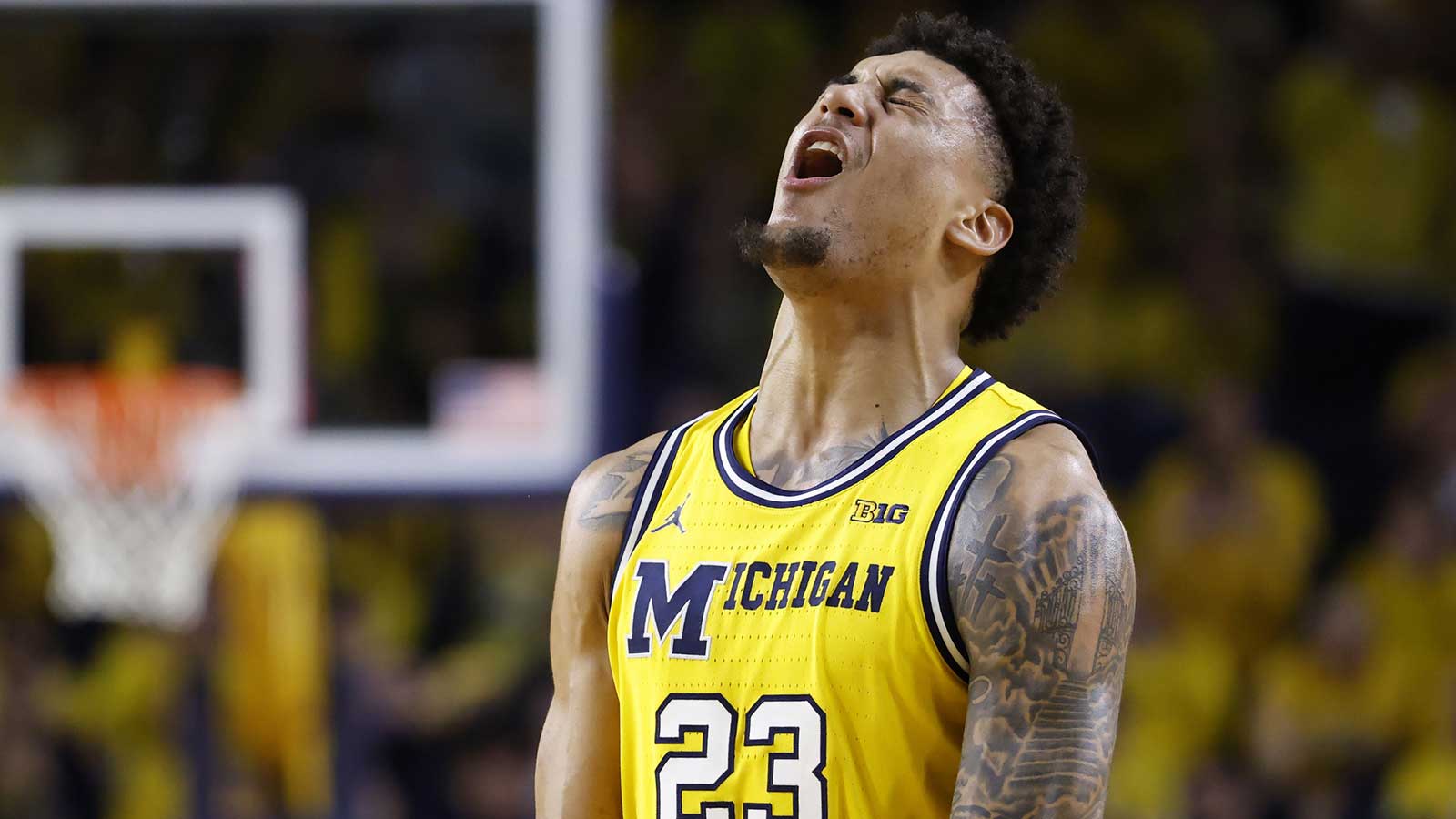
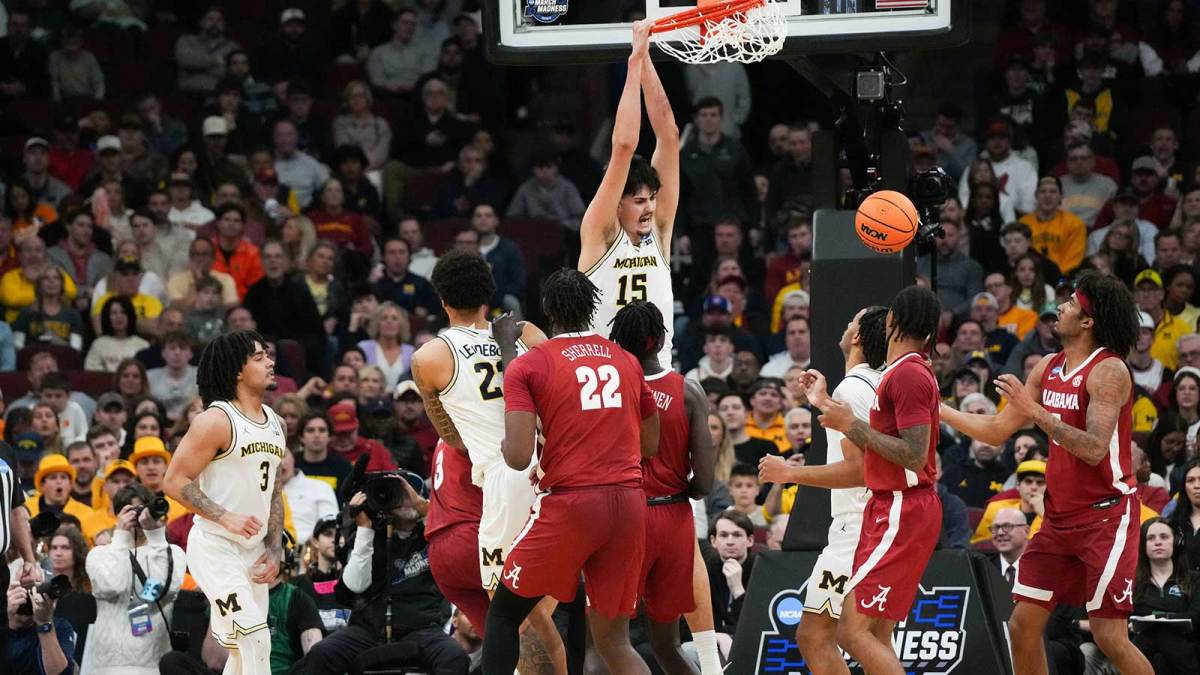
Alabama basketball entered its Sweet 16 matchup vs. Michigan riding momentum, but the Crimson Tide’s NCAA Tournament run unraveled after a narrow halftime lead. What looked like a winnable game turned into a second‑half collapse defined by lost physicality, defensive breakdowns, and an offense that lost its identity when it mattered most.
The Crimson Tide controlled stretches early, yet their inability to adjust became the nail in the coffin. This Alabama basketball loss cannot fall on one player, as the entire team struggled collectively in the second half. Michigan stayed composed, stuck to its identity, and steadily executed, while Alabama faded at the very moment execution and toughness were supposed to peak.
Physicality and Rebounding Set the Tone
Alabama lost this game on the glass—decisively. Michigan dominated the boards 46–32, seizing control of the physical battle after halftime and never relinquishing it.
The Tide’s frontcourt failed to respond to increased pressure, forcing sophomore standout Labaron Philon to lead the team in rebounding—an imbalance that underscored a deeper structural issue. Michigan’s size, effort, and positioning created second-chance opportunities on critical possessions, shifting both momentum and control.
Those rebounds translated directly into points. Quick putbacks and transition opportunities kept Alabama on its heels, while extended defensive possessions wore the Tide down.
Alabama entered halftime in control, but conceding five offensive rebounds in the opening minutes of the second half erased that advantage almost instantly. From that point forward, the Wolverines dictated the pace, energy, and tone.
Defensive Breakdowns Fueled Michigan’s Surge
Alabama had no answer for Michigan’s offensive rhythm. The Wolverines erupted for 90 points, shot 50 percent from the field, and knocked down 48 percentof their looks from beyond the arc.
This was a clinic in spacing and execution. Michigan consistently created open looks through simple ball screens, exposing Alabama’s slow rotations and poor communication. Too often, multiple defenders chased the ball, leaving shooters unattended on the perimeter.
The Wolverines capitalized with 13 made three-pointers—many of these looks left uncontested.
More troubling was Alabama’s offense and failure to adjust. Whether switching or dropping coverage, nothing disrupted Michigan’s flow. The Wolverines generated clean looks early in the shot clock and operated without resistance.
As Michigan’s confidence grew, the Crimson Tide defensive discipline deteriorated. Once that rhythm took hold, the Tide never regained control.
Offensive Composure Disappeared Late
Alabama’s offense collapsed in the second half. After scoring 49 points before the break, the Tide managed just 28 after halftime—a stark reversal that mirrored its loss of composure.
Philon delivered a sensational performance, dropping 35 points, but the offense became increasingly predictable. Possessions devolved into contested three-pointers and rushed, low-quality shots early in the clock.
Compounding the issue, Alabama lost control of tempo. Long misses fueled Michigan’s transition game, accelerating the Wolverines’ second-half surge. As the game sped up, Alabama’s decision-making deteriorated.
A Self-Inflicted Ending
This loss will not be remembered as a case of Michigan simply outplaying Alabama—it will be remembered as a game the Crimson Tide let slip away.
They lost the physical battle, failed to defend with discipline, and abandoned their offensive structure. And when adversity hit, they had no counter.
In March, it has been proven time and time again talent alone is never enough. Alabama learned that the hard way as they head into the offseason.