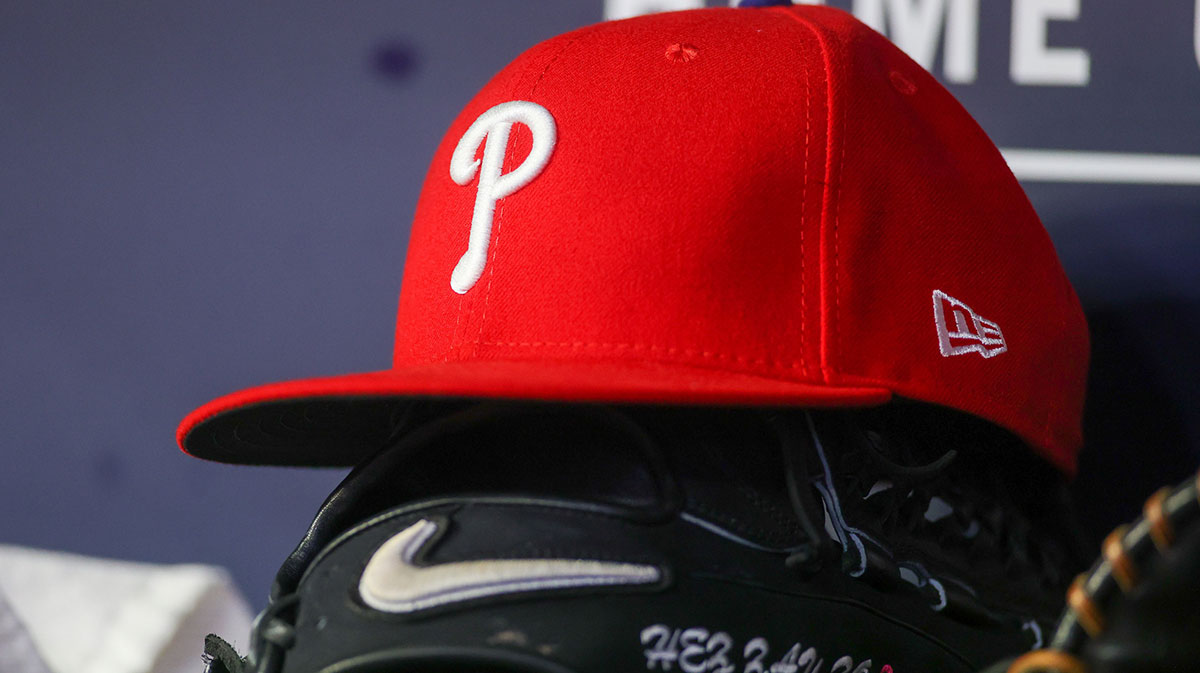
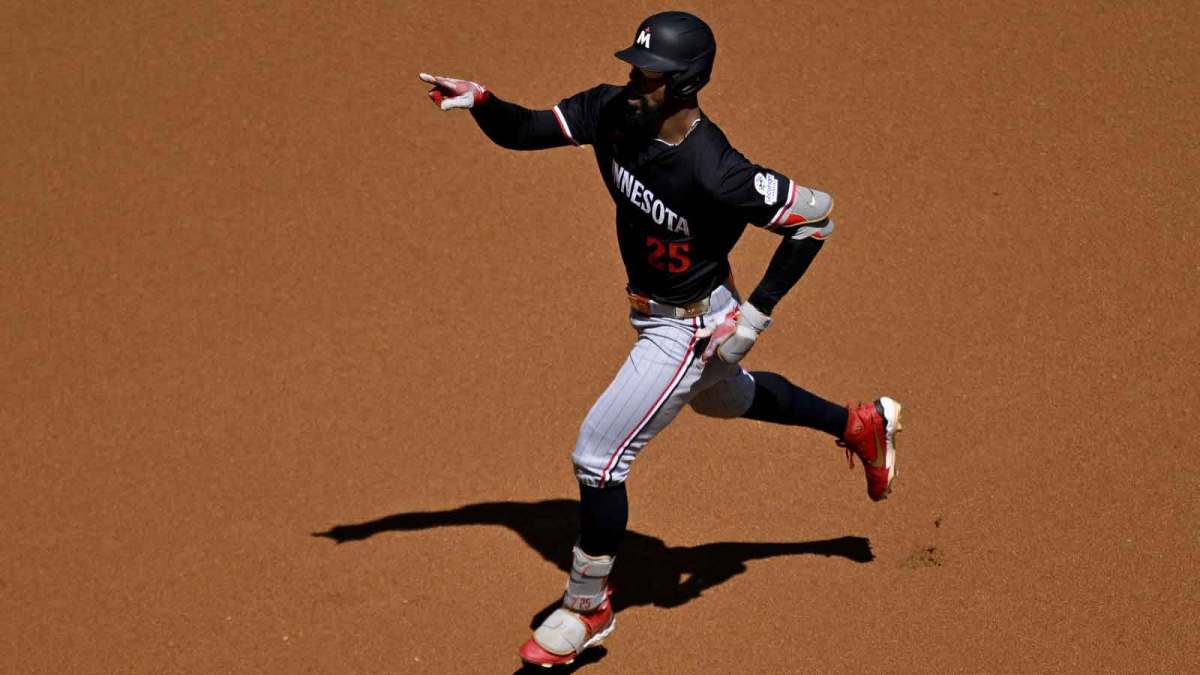
It’s no secret that the Philadelphia Phillies are evaluating ways to upgrade their outfield this winter. Whether Byron Buxton has actually crossed their radar is unknown, but the concept of finding a dynamic center fielder is hardly foreign to a front office operating deep in win-now mode. The Minnesota Twins, meanwhile, are positioned very differently—focused on long-term roster flexibility and a strategic rebuild. This isn’t a rumor or a report. It’s a hypothetical scenario that imagines how a potential Buxton trade could make sense for both organizations.
For the Phillies, the case starts with urgency. Their window to chase a title is open right now, and recent seasons have shown how much the roster still cries out for a true center field anchor. Nick Castellanos is owed significant money for 2026 and comes off a season with a negative WAR and uneven play in the corner. The outfield as a group leaks runs, and that puts extra stress on the pitching staff. In that context, it is easy to see why Phillies trade rumors keep circling back to a premium defender on the grass.
Buxton fits that description as well as anyone. When healthy, he offers Gold Glove defense in center and real power at the plate, highlighted by a 2025 season with 35 home runs and strong underlying metrics. His deal pays $15 million per year through 2028, a manageable figure for a large-market team, and he holds a full no-trade clause through 2026. Recent reporting suggests he may waive it for a contender, which keeps his name in offseason conversations even if this scenario remains strictly hypothetical.
When breaking down this potential trade, the proposed package is where the entire idea begins to crystallize. Alec Bohm is entering his final year of arbitration, projected to earn just over $10 million in 2026, and he actually profiles as a clean fit for Minnesota. His consistent offensive approach, contact skills, and ability to handle both third base and first base make him an ideal bridge option for a Twins team seeking reliable, controllable production during the early stages of its roster reset. Bohm gives them a stable middle-order bat who can hold down a corner spot while younger pieces continue to develop, which adds real, immediate value to this hypothetical framework.
The rest of the offer leans on upside. Aidan Miller, the Phillies’ No. 2 prospect and a top-100 talent, brings real power potential and the versatility to play either spot on the left side. He’s projected to reach the majors by 2027, fitting the Twins’ long-term timeline. Griff McGarry adds a high-risk, high-reward arm with big velocity and swing-and-miss stuff that Minnesota could look to refine. Together with Bohm’s immediate value, Miller and McGarry form a hypothetical Buxton trade package that feels realistic while still allowing the Phillies to keep elite pitching prospects like Andrew Painter and Mick Abel.
To understand why the Twins might even consider moving a player of this stature, the 2025 deadline has to be the starting point. The front office executed a full reset, trading 11 players and clearing substantial salary commitments, including the long-term money once tied to Carlos Correa and valuable reliever Jhoan Duran. The club’s projected 2026 payroll is expected to fall well below its recent levels, and ownership has indicated a desire to maintain that leaner structure. Moving the $15 million owed annually to Buxton would reinforce that shift and give the organization even more financial flexibility as it continues to reshape the roster.
In the end, this kind of hypothetical deal highlights how timing and organizational direction can create a rare moment where both sides have something meaningful to gain. The Phillies would secure the impact defender and dynamic athlete their lineup has lacked, while the Twins would deepen their talent pool and strengthen a long-term plan already in motion. Nothing here suggests real negotiations, but the framework illustrates how a Buxton move could make practical baseball sense under the right circumstances. Sometimes the most compelling offseason ideas are the ones that simply line up with logic, need, and opportunity.