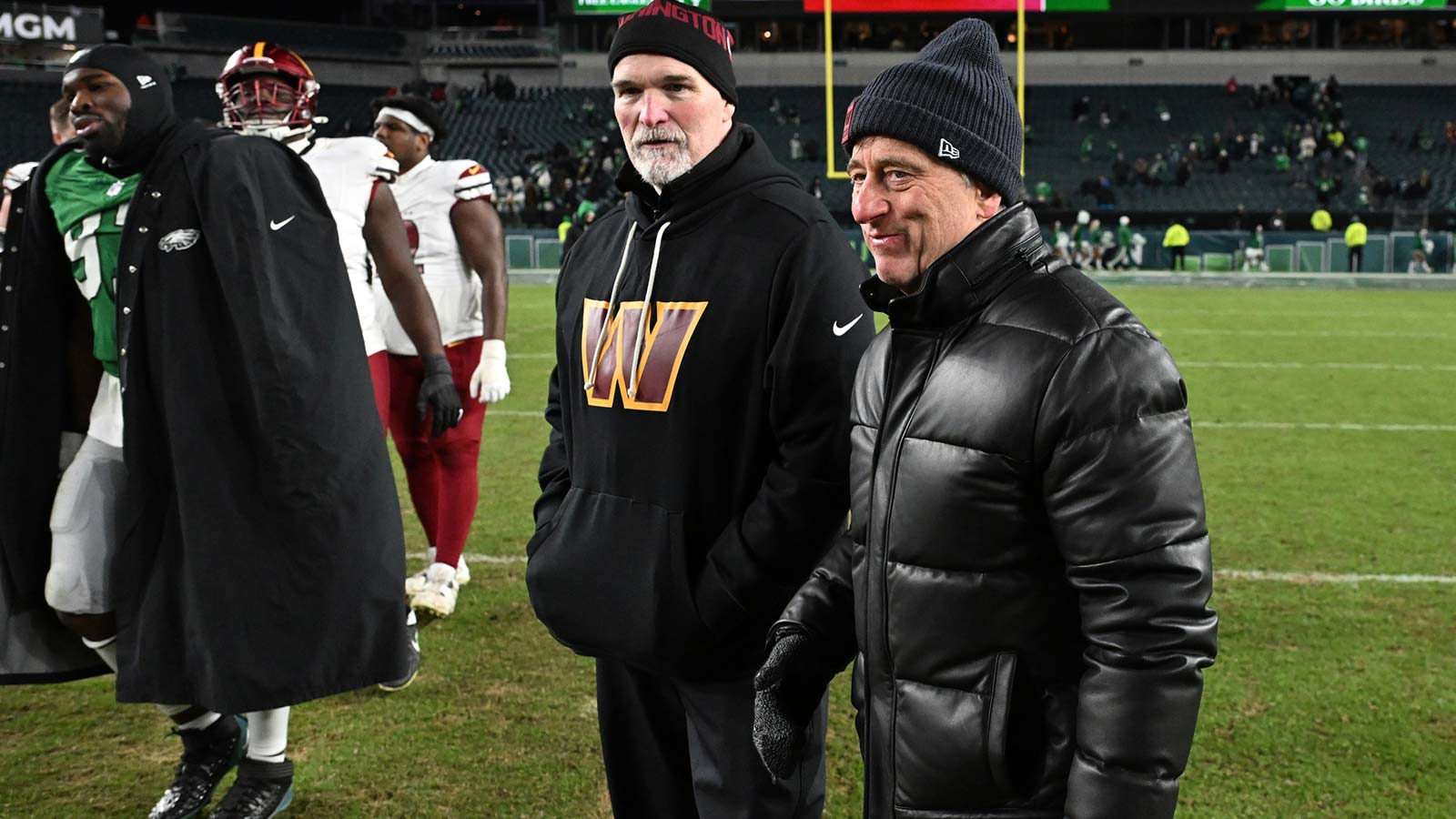
While the Washington Commanders mourn the recent passing of a legend, current head coach Dan Quinn is trying to stay off the hot seat. But who knows what the future will hold? The past had a surprise twist that changed everything as two 1979 fumbles destroyed Washington — and started a dynasty.
In the 1970s, the Commanders franchise, then under a different nickname, produced a regular NFL contender with five seasons of double-digit wins. And the 1979 season seemed to set the stage for a move into elite franchise status.
The team entered the final week of the season with a record of 10-5. That was the same mark as the rival Dallas Cowboys. These teams would meet in Dallas with the NFC East title at stake in the final game of the regular season.
Everything went the Commanders’ way right from the start. Who could have imagined the devastating outcome would prove to be a critical turning point — in a positive way — in the history of the Washington franchise?
The game that slipped through Washington's hands
After a Mark Moseley field goal broke the ice, Joe Theismann’s 1-yard scoring run gave Washington a 10-0 lead. Then, early in the second quarter, Theismann hit Benny Malone for a 55-yard scoring strike. It was 17-0, and the Commanders were on their way.
However, the Cowboys got a 1-yard touchdown run from Ron Springs. And with 1:48 left on the clock, the Cowboys drove 83 yards. They capped things off with a 26-yard pass from Roger Staubach to Preston Pearson. It was 17-14 at halftime, and the game was on.
Dallas took the lead in the third quarter, but the Commanders responded in the fourth quarter. Moseley hit a field goal before a Mark Murphy interception set up a short field. John Riggins’ 1-yard scoring run made it 27-21 in favor of the Commanders.
The Cowboys went three and out, and Riggins responded with a 66-yard scoring run to make it 34-21 with 6:54 left in the game.
Washington stopped the Cowboys again on downs and had a chance to wrap up the game with two or three first downs.
The fumbles that changed history
If the Commanders held on for the win, they would have been the NFC East champions and the No. 1 seed for the NFC playoffs. Jack Pardee, who would go on to win NFL coach of the year honors, would have been the toast of Washington.
But on second and five from the Dallas 43, Riggins fumbled. He had lost just one fumble all season. And this one wasn't it. Somehow, despite Dallas picking up the loose ball for a split-second, the Commanders got it back.
However, Riggins exited the game. Was it a coaching decision by Pardee? What history will tell is that the Commanders put the ball in the hands of Riggins' backup, Clarence Harmon. He fumbled, too. And the Commanders didn’t recover this one.
The Cowboys drove down the field, scoring on a 26-yard pass from Staubach to Ron Springs to make it 34-28.
Washington had a second chance to put the game away. But a terrific tackle by Larry Cole on Riggins stopped a third-and-short play. Dallas got the ball back, and Staubach’s 8-yard scoring strike to Tony Hill with 39 seconds left put the Cowboys in front, 35-34.
The Commanders drove to the Cowboys’ 42-yard line, but the clock hit zero before a timeout was called.
How this changed franchise history
There were two parts. First, Riggins held out the next season because of a contract dispute. If the Commanders had made the playoffs, they would have had a legitimate shot to reach the Super Bowl. The 1979 NFC title game between the Los Angeles Rams and Tampa Bay Buccaneers was one of the weakest in NFL history.
And if the Commanders had reached the Super Bowl, perhaps they would have been more inclined to pay Riggins the salary he wanted. Riggins wound up sitting out the 1980 season. Washington didn’t come close to having a 1,000-yard rusher, and predictably had a mediocre 6-10 season.
Second, Pardee remained as the Commanders’ head coach, but mostly in a lame-duck role. The crushing loss to the Cowboys went a long way toward sealing his fate.
Midway through the following season, owner Jack Kent Cooke stated that Pardee’s fate would be decided at the end of the year. Pardee acknowledged that put the handwriting on the wall, according to upi.com.
‘What kind of a commitment are you going to get out of (the players), day to day or long term, when they don't know if you are going to be here next year?' Pardee asked before the final game of the season.
At the end of the year, Pardee added, “There is no way a coach or a team can win here right now. Things have got to be squared away, whether I'm here or not. And Cooke will straighten them out, I'm sure. He doesn't want to lose.”
Washington brought in a young head coach
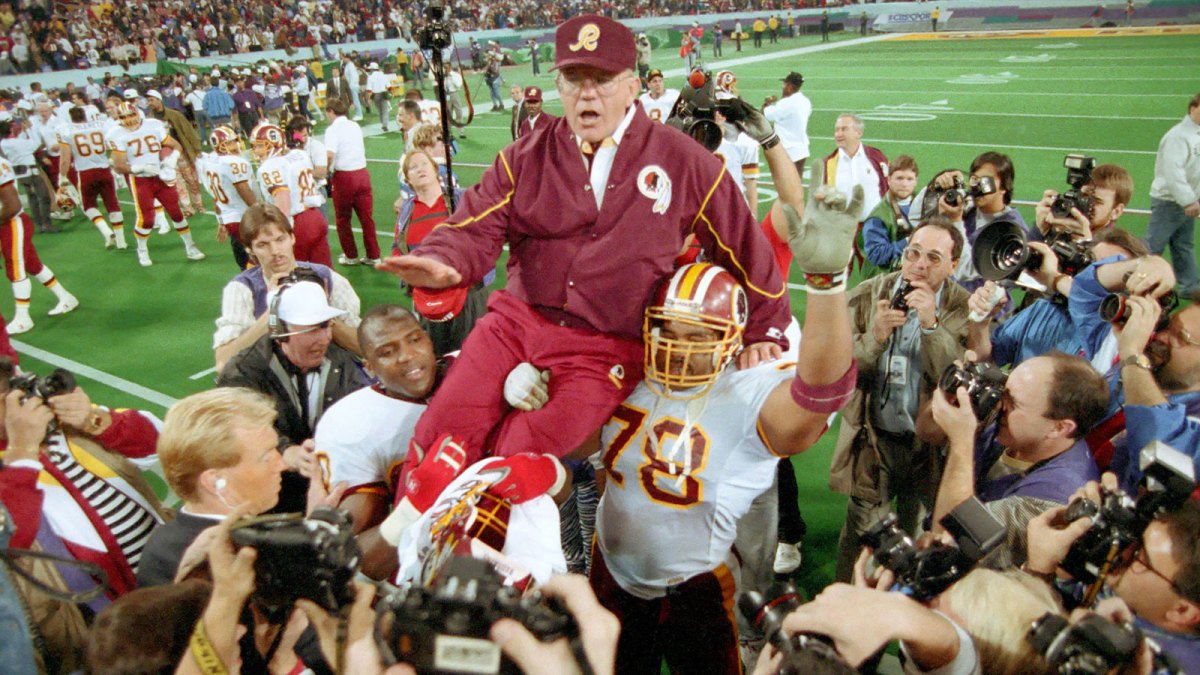
With Pardee gone, Washington turned things over to an up-and-coming young coach. Joe Gibbs, then 40 years old, took over.
Gibbs went 0-5 to start his NFL head coach career. But his teams went 30-6 from there to the end of the 1983 season. That included a Super Bowl title and a second Super Bowl appearance.
The Commanders would go on to win the Super Bowl in the 1987 and 1991 seasons. And the three Super Bowl titles can be traced back to the fumbles by Riggins and Harmon.
If Pardee remained as the Washington head coach, Gibbs would likely have landed with another organization. Commanders’ general manager Bobby Bethard, as usual, was ahead of the curve in hiring Gibbs.
But still, Gibbs’ offenses with the Chargers were No. 5 in the NFL in yards and No. 2 in points in 1979. And in 1980, they were No. 1 in yards and No. 4 in points. Gibbs was headed for an NFL head coaching job, and the fumbles opened the door for him in Washington.