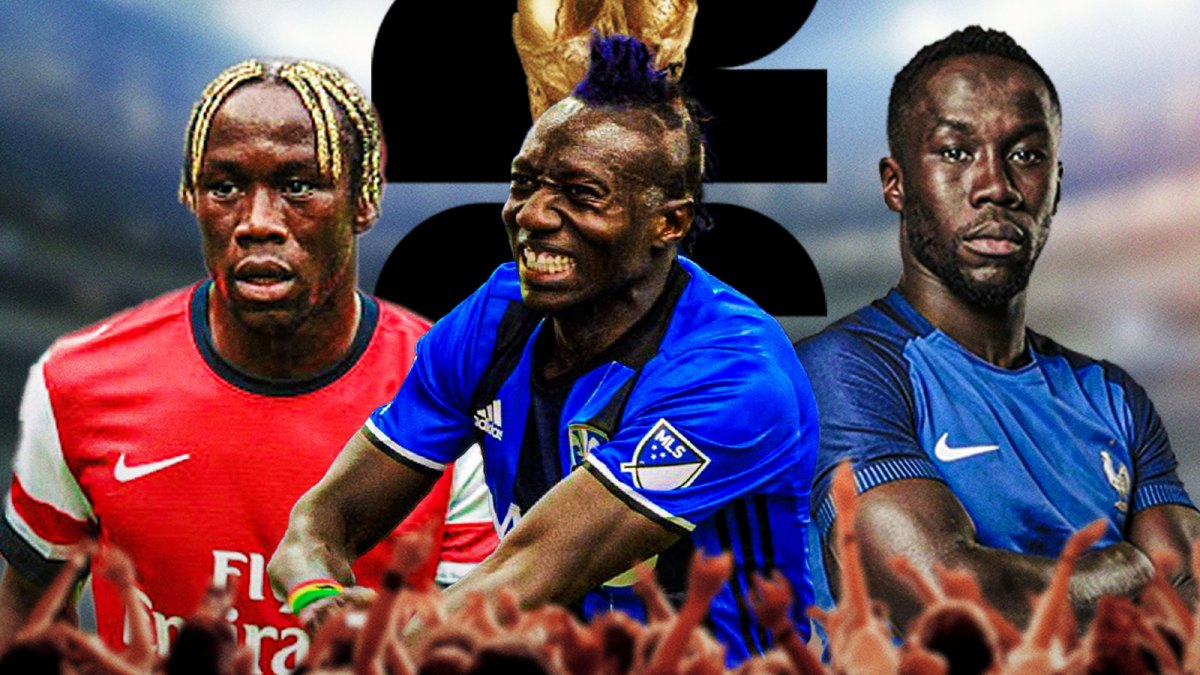
Even if his sense of geography was a bit off when he first started his professional soccer journey, Bacary Sagna has never been afraid of a new challenge. Auxerre, Arsenal, and Manchester City are easy to find for any Frenchman. Benevento is a bit off of Serie A's beaten path now, but it is known throughout the continent. However, the path from the FIFA World Cup stage to the Montreal Impact (MLS) was anything but a straight line. The same goes for his support of rule changes inspired by former manager Arsene Wenger.
In fact, Sagna recalled that his first task after receiving interest from the Quebec-based club was locating it on a map.
“First of all, I actually didn’t originally know where Montreal was! I thought it was on the West side,” Sagna laughed, “rather than the East.”
A bit of GPS confusion did little to deter the former France national team defender, who leaned on trusted connections while weighing a move across the Atlantic.
“I remember speaking to Rod Fanni, who played for Charlton and Marseille, about life in the MLS and the experience. It was inspiring to see David Beckham, Steven Gerrard, and Ashley Cole transfer to the USA. I have always been interested in the American sports too,” Sagna explained to ClutchPoints. “A big factor was the coach, Remi Garde, who was French and had played for Arsenal like myself. I was actually very close to signing for Atlanta in 2017/18, but it was too early for me at the time, and I went to Italy instead. But Montreal submitted an offer for me years later, and I figured it was time for a change and a new experience.”
That decision placed Sagna among a growing wave of veteran European players who helped raise MLS’s competitive profile and global visibility. His tenure with the Montreal Impact may not have carried the same spotlight as his years in Europe, but it offered a unique blend of cultural immersion and football evolution that is being channeled back into the game.
French vet supports World Cup rules
While Sagna enjoyed his “adventure” in MLS, he is less enamored with how technology is currently policing the sport. Bacary argues that the Video Assistant Referee (VAR) system lacks the “feel” of the game, which is something he believes only former players can provide.
“We need more ex-players involved in officiating the game – as referees and VAR officials,” Sagna stressed. “VAR itself is good, but it’s the way that it’s used which causes the problems.”
To illustrate, Sagna pointed to the disconnect between watching a replay and feeling the reality of a contested play throughout the stands.
“For example, as a defender, if I pull a shirt and it’s shown in slow motion, it’s likely to be given as a foul or penalty,” Sagna noted. “But in reality, that shirt pull might not have enough force to bring the player down; you can’t recognise that in slow-motion replays. A player would know whether there’s enough force to warrant someone going down as a result of a shirt pull, which is why they should oversee those VAR decisions.”
Sagna is also an advocate for the high-profile offside adjustment proposed by Wenger, which would give the attacking player the benefit of the doubt if any part of their body that can legally score is level with the defender.
“I think Arsene Wenger’s proposed changes to how offsides are given are positive and should happen,” admitted Sagna. “You can’t give offside because of a few millimetres; it doesn’t make sense. It has to be clear-cut, and it’s almost impossible for the linesman to tell the difference between a few millimetres. Defenders can’t cheat offside anymore either.”
Erosion of the game’s flow is the core issue. The new rule acts as a remedy to the constant stoppages that have come to define the modern televised match.
“The game is stopped far too often nowadays, and too much time is spent analyzing decisions in real-time,” added Sagna. “With this new offside change, it would reduce the delay in games, which would benefit players and fans.”
Sagna's journey from the EPL through MLS underscores the league’s growing appeal to international players, while his critique of officiating highlights ongoing tensions between tradition and technology in modern football. Starting his managerial career with Banaat FC, a UAE women's club team, is just another unique challenge that will give him the experience and perspective to lead the way much the same as Wenger.
As the sport continues to evolve, voices like his will play an increasingly influential role in shaping how the game is played, judged, and understood. Most will get their first taste of the new era once the 2026 World Cup starts, and Sagna cannot wait for France's opening kick versus Senegal. That's why he is even doing some ramp-up work with the Covers.com World Cup betting site. There is no point in ignoring how gambling is becoming a bigger part of sports, especially in North America, and Sagna wants to see that done right as well.