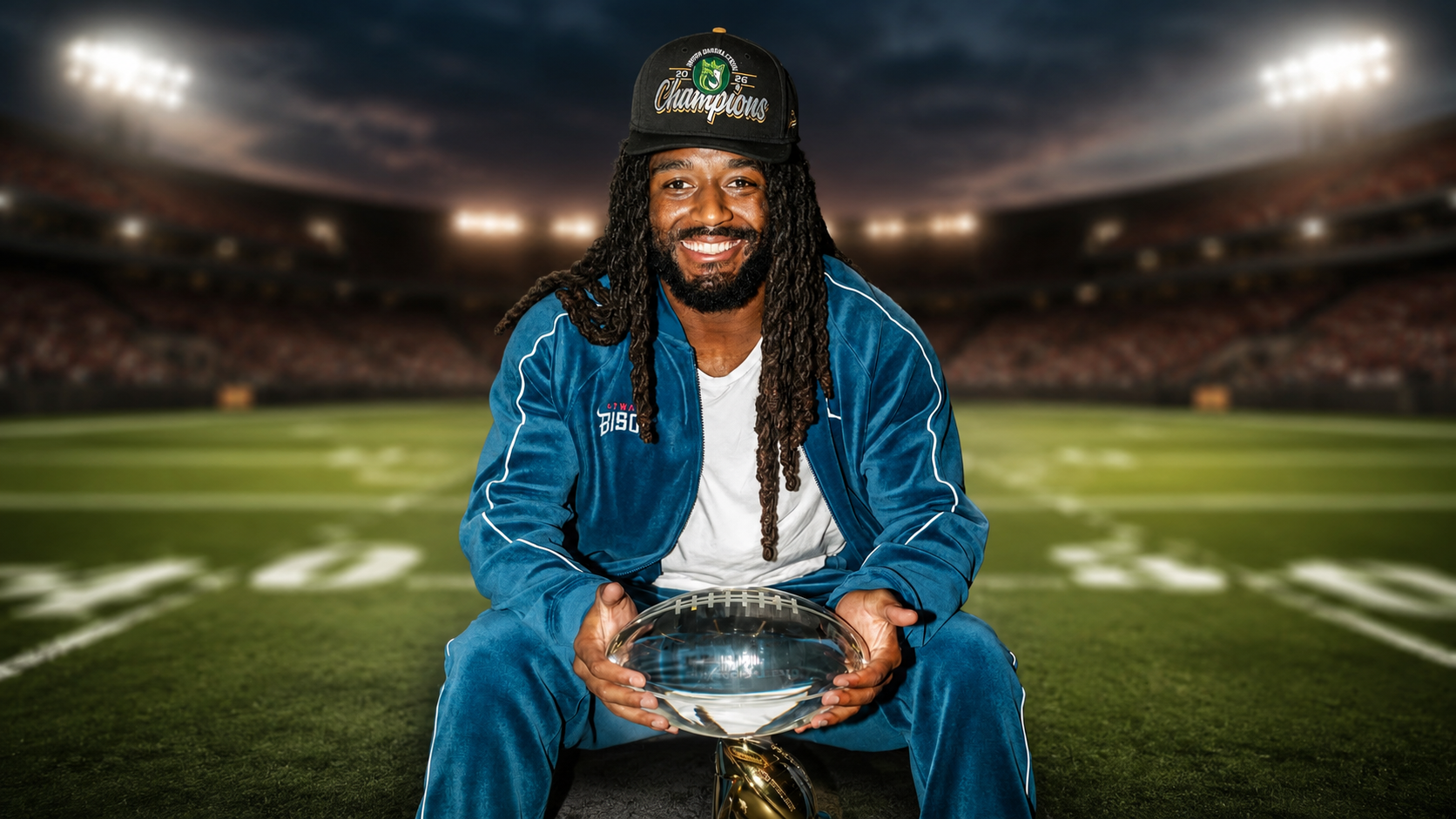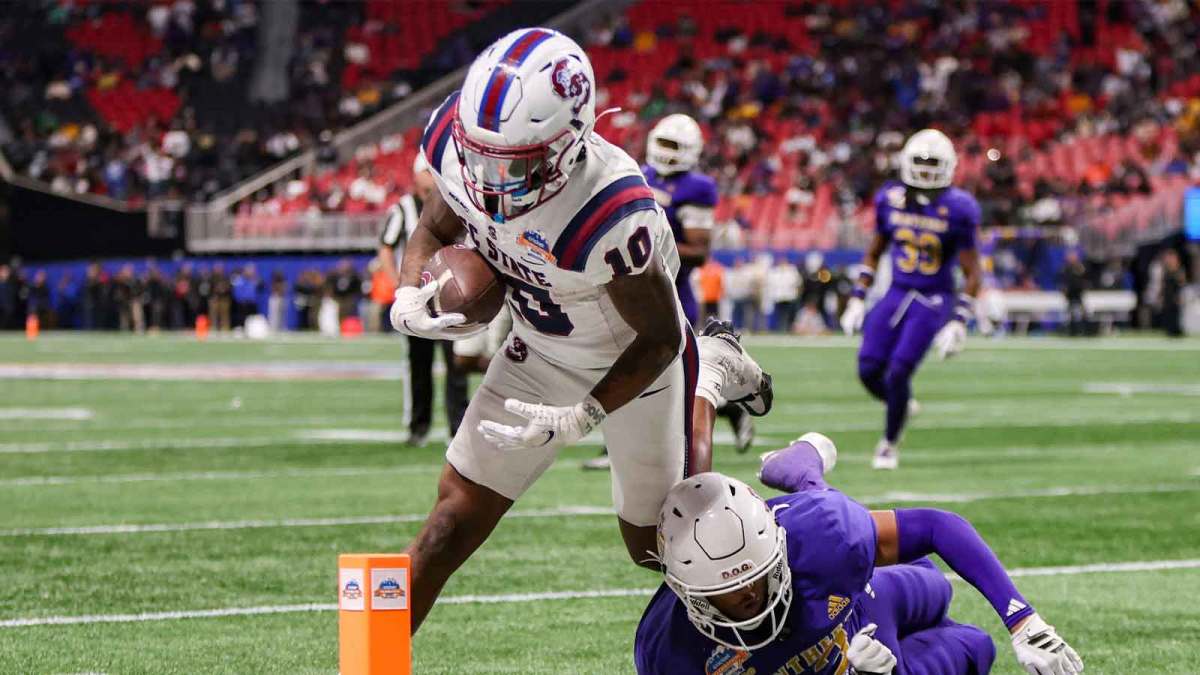
The Celebration Bowl was one of the best HBCU games ever. We saw South Carolina State come back from a 21-point deficit—where they were outscored 21-0 in the first half by Prairie View A&M—and the Panthers’ Cam Peters had the game of his life, accounting for five total touchdowns and throwing for 412 yards.
Meanwhile, South Carolina State lost its starting graduate transfer quarterback, William Adkins IV, but still pulled off a 21-point comeback with backup QB Ryan Stubblefield. The game also went to four overtimes to give Chennis Berry, who is one of the household names in HBCU football, his first national title, further cementing South Carolina State as one of the greatest college football programs in the country, one that has had success from the era of Willie Jeffries all the way to Buddy Pough and now Chennis Berry.
Yet, people are on Twitter talking about the Celebration Bowl attendance. They're talking about how this was the second-lowest-attended Celebration Bowl in the decade-long history of the game, as the matchup drew 26,703 attendees. The number is still significant, but it’s roughly 10,000 dip from 2024’s number when Jackson State beat South Carolina State.
Attendance was used as a narrative device before, during, and after the Celebration Bowl. It was used by some fans to assert that their team would’ve made the audience number better. Others immediately spun the 26,000+ attendance number as a symptom of a larger problem with the Celebration Bowl.
We're talking about ATTENDANCE?
I understand people bringing up attendance and fan and alumni banter when you're defending your team. In those moments, all bets are off, and you're going to say what you want to say. It's not uncommon to see sports fans talk about the popularity of their team and the ratings that their team brings when it comes to their games being on national television or the number of attendees. We hear that from Dallas Cowboys fans all the time in the NFL as they brand themselves as “America’s Team”. Lakers and Knicks fans talk about how they're the biggest brands in the NBA.
But the problem with the conversation around HBCU attendance, especially linked to the Celebration Bowl is that, in the HBCU community, we tend to turn everything into a systemic issue concerning HBCUs. We then use that narrative structure to try to come up with solutions to problems that don't actually persist. There were over 26,000 people at Mercedes-Benz Stadium on Saturday to watch Prairie View and South Carolina State vie for the HBCU National Championship, and the television viewership is going to be well over 1 million, if not more. That isn’t easy to do in the 2025 media landscape.
How are we acting as if this was a failure and something to improve? It was an amazing TV product, it was an amazing atmosphere in the arena, and we know that there's going to be more Celebration Bowls to come in the years to follow. This also gives HBCUs a unique opportunity among the FCS and among college football within itself. Why are we trying to find ways to attack it?
Attendance isn't the sole factor of the success of the Celebration Bowl within itself, especially in an era where you're getting a bunch of TV money and a prime spot because you’re on ABC and this is the start of bowl season. You have prime position over nearly every other college football game that's coming on at that time. You don't have NFL competition, like Celebration Bowls of the past had to fight against when they would be scheduled. The Celebration Bowl was the talked-about college football event of the start of Saturday, and it likely will continue to be discussed.
The Attendance Criticisms Sound Familiar and Outdated
I almost look at this new attendance argument, derivative of what was heard in the 80s and 90s from promoters and HBCU administrators. Research into the media landscape of HBCU sports bears this out. In that era, when cable was rising in prominence as a media distribution hub, BET was invented, and HBCU games were starting to be televised. HBCU football games were often aired on tape delay. This only occurred because of fear.
Classic promoters and HBCU administrators feared that if the game is nationally broadcast on BET, or another channel, it would deter people from going to the game. Some considered television viewership a “free ticket”. I've always argued that that was a short-sighted view of HBCU football, as well as the viability of the sport and the fans that HBCU sports and culture can attract.
If I live in Macon, Georgia, and I am a fan of Steve McNair and I want to see Howard versus Alcorn to see Steve McNair versus Jay Walker, why can't I watch it live on BET? I might not be able to attend due to other obligations, Or, I might not have the money, time, or resources to go to that game live. Why can't I see that game live on television? Why do i just have to be in-person to experience it?
I always thought that was an insane viewpoint when I would do my research on media distribution and especially the distribution of HBCU media. But I can give a bit of credence to the argument of in-person attendance versus media scale after what I’ve seen over the past few days about Celebration Bowl attendance. I’ve softened my stance on the mindsets of the old era of HBCU media as I process the absurdity of inventing a problem out of success.
The media deals that HBCUs used to get in the '90s pale in comparison to what the Celebration Bowl has provided as a monetary resource for the SWAC and the MEAC in this past decade. Because at the very least in the 80’s and 90’s, the gate from fans attending the games was very important and it was a huge measure of how HBCUs funded themselves. At that point in time, media rights deals were not as expansive. So I totally understand that.
But you're looking at a Celebration Bowl concept that pumps money into both participating institutions and, just because of participation, pumps money into both the SWAC and the MEAC, and it has sponsor integration all over it. I just don't understand why attendance is used seriously in conversations about the viability of the Celebration Bowl when it is not a problem at all.
I'm open to healthy constructive criticism
Do I believe that marketing for the Celebration Bowl could be a little bit better? Yes, I think it could. I’m not closed off to constructive criticism to make the event and product better. Do I think that attendance for the Celebration Bowl can be improved, although I don’t think it’s as big an issue as people are making it out to be? Yes, I do. The Celebration Bowl and ESPN Events do indeed need to integrate the city of Atlanta and the surrounding areas into the game. This event should be better integrated into the culture of the city, especially after a decade of its existence.
Do I think ESPN could show more love to the Celebration Bowl, especially since it's an exclusive ESPN event that kicks off bowl season? Yes, I think they absolutely could. I think that maybe Tiffany Greene and Jay Walker could show up on First Take and talk about the Cricket Celebration Bowl. Maybe First Take can do a live show from Atlanta on the Friday of Celebration Bowl week, as they do during their annual HBCU tour. Talk about on air and break down the matchup for one small segment.
To be even more expansive, the Celebration Bowl's promotion could be worked through Disney's chain of media entities to ensure that viewership and attendance are increased. Why not invite John Grant and the participating coaches on ABC’s Good Morning America? Why not have the coaches or notable HBCU alumni appear on The Pat McAfee Show or College Gameday? Why can't College Gameday make an appearance in Atlanta during the Celebration Bowl?
There are opportunities for the Celebration Bowl to grow, even with the event being 10 years old. I'm not saying that there's not a place to grow, but the continual harping on the attendance of the game, even in good faith, is the wrong way to go for an event of this magnitude, especially with the game we just experienced.
We have to stop treating everything in HBCU life as if it is a problem. Why can’t we, for once, talk about the product on the field? Why can’t we see the good in what we produce in HBCU life instead of always pivoting to negativity, not even healthy criticism? At some point, we have to stop this, or further risk providing self-inflicted damage to the sport of HBCU football and a rising cultural institution like the Celebration Bowl.