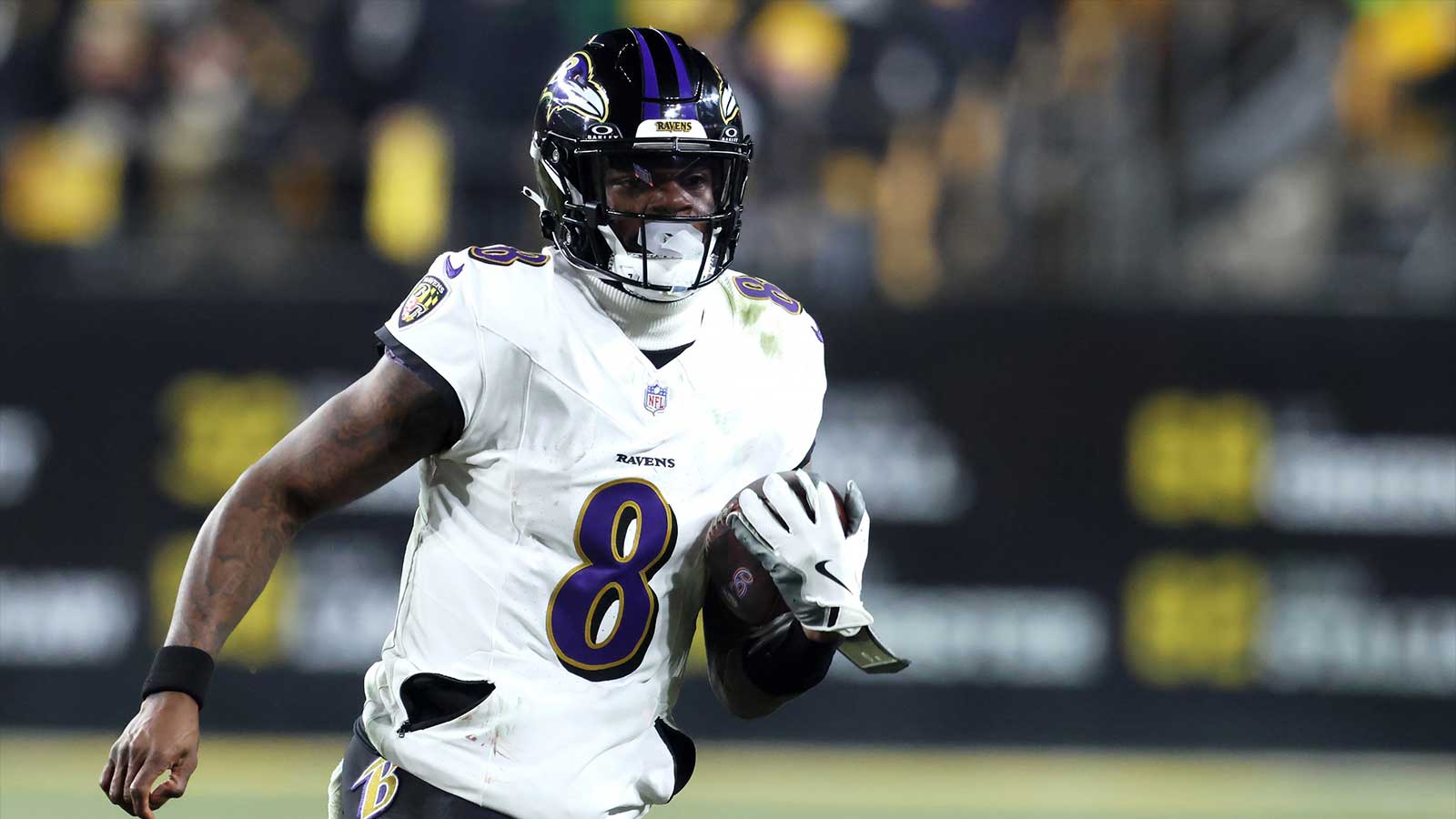
The Ravens have secured significant financial flexibility when Lamar Jackson agreed to a restructured contract that created approximately $40 million in cap space for 2026. This restructuring included a void year, a $49.95 million signing bonus, a base salary of $1.3 million, and a $750,000 workout bonus.
While this move didn't directly change the roster, it provided the Ravens with the flexibility to continue shaping the team before the draft.
The next phase of their offseason strategy became evident in the passing game when Baltimore hosted free agent tight end David Njoku following a loss of depth at that position, and this meeting provided an opportunity for the team to consider adding another established target for Jackson alongside Mark Andrews.
Although the visit did not guarantee a signing, it highlighted the fact that the Ravens are still exploring options rather than assuming that all meaningful decisions have already been made.
Baltimore’s position in the upcoming draft is particularly intriguing, and the team is on the clock at No. 14, especially after the Maxx Crosby trade attempt fell through, and they still hold 11 total draft picks.
This is enough leverage to draft strategically rather than simply making reactive choices, and free agency has improved certain aspects of the roster, especially with the return of guard John Simpson and the additional cap space from Jackson’s restructure, but it has also left the front office evaluating the same critical areas that have repeatedly appeared in credible mock drafts.
These include the offensive line following Tyler Linderbaum's departure, the edge rush, and the receiving corps.
OL Spencer Fano, Utah
Mel Kiper Jr. proposes that the Ravens select Spencer Fano, and his reasoning makes a lot of sense for a team looking to address multiple issues along the offensive line with one pick, and he notes that Fano has double-digit starts at both tackle positions and highlights that his 32⅛-inch arms could allow him to transition to an interior position at the next level.
He also mentions that teams worked him out at center during the combine, which means that Baltimore would not be drafting a tackle who has no place to play but instead, they would be acquiring a player capable of addressing several needs simultaneously, potentially replacing Linderbaum at center, joining John Simpson at guard, and providing valuable depth at tackle behind Ronnie Stanley and Roger Rosengarten.
This type of versatile profile tends to appeal to smart teams, as it addresses immediate needs without locking the roster into a rigid future.
There is also something characteristically Baltimore about this pick, and the franchise has a long history of valuing linemen who can perform multiple roles and thrive in a physical run game without becoming a liability in pass protection.
So, Fano fits this mold, and he is also not being viewed as a mere luxury addition or a backup plan; he is seen as a player who can step in and provide immediate options, which is crucial for a roster still aiming to contend rather than spending a year explaining why the offensive line requires more time to gel.
Kiper’s mock draft advocates for flexibility through toughness, a compelling argument within the organization.
EDGE T.J. Parker, Clemson
Field Yates takes a different approach with Baltimore’s first pick, pairing the Ravens with T.J. Parker at No. 45 in his new two-round mock draft, with a rationale that is hard to overlook.
He notes that general manager Eric DeCosta actively pursued both Trey Hendrickson and Maxx Crosby, highlighting the team's need for more depth at edge rusher, and describes Parker as a powerful, heavy-handed rusher, emphasizing that the appeal lies as much in his style as in his production.
Baltimore needs someone who can disrupt protections and maintain pressure for all four quarters rather than relying on just one or two stars.
Parker fits particularly well into the Ravens’ current setup, and a team with playoff aspirations can justify investing in edge players even after addressing other areas, as pressure depth can become critical faster than most positions.
Yates’ mock draft does not depict Parker as a top-10 talent who simply fell to the second round; instead, it presents him as the kind of edge rusher that a serious defense can build around, especially if it values power, toughness, and the ability to disrupt an offense's rhythm.
For a team that wants to keep games under Lamar Jackson's control rather than engaging in weekly shootouts, this logic is compelling.
WR Jordyn Tyson, Arizona State
In his most recent first-round mock draft, Tim Crean projects Jordyn Tyson to the Ravens, and this pick is backed by a compelling argument, especially regarding the Ravens' need for a strong offensive presence.
Crean suggests that Tyson could be a potential WR1 if the Ravens are comfortable with his injury history, and despite concerns about durability, Tyson's overall skill set keeps evaluators interested.
He measured 6 feet 2 inches tall and weighed 203 pounds, impressively completing 26 bench presses at the combine without showcasing his speed, and the broader context is that the Ravens have been searching for a reliable, larger receiving target to complement their current roster, and Tyson appears to fit that mold.
This connection is further highlighted after free agency, particularly following the visit from David Njoku, which indicates the Ravens are exploring ways to enhance the size and versatility of their passing game.
Tyson would serve as a boundary weapon that defenses must account for, helping to create space for other players without needing special schemes to involve him. So, Crean’s projection is appealing because it targets a specific type of receiver, a true game-changer that the Ravens have often lacked during critical moments.
OG Olaivavega Ioane, Penn State
Chad Reuter's four-round mock draft includes Olaivavega Ioane for the Ravens, a choice that Baltimore's coaching staff would likely appreciate.
Reuter describes Ioane as a dominant force in the run game, a solid pass protector, and a perfect partner for free-agent addition John Simpson, so this prospect addresses the Ravens' interior line concerns effectively.
With Tyler Linderbaum gone and last season’s guard play not meeting expectations, the Ravens know they cannot succeed if their interior line is weak. Ioane presents a straightforward solution with a player who aligns with the style of football Baltimore aims to play.
The appeal of Ioane is that the Ravens want to maintain their physicality, run the ball effectively, and provide Lamar Jackson with a more reliable offensive line than what he had in the past. He is also positioned as an interior blocker who can move defenders and sustain protection, which is precisely what a team with a specific offensive identity seeks.
Reuter's mock draft focuses not on fanciful predictions but rather on ensuring alignment with the Ravens' established approach.
This theme resonates across all the projections for the Ravens as they are not being viewed as a team in search of one dramatic solution, but they appear as a well-structured organization that understands which aspect of their roster requires a focused investment.
The salary cap space from Jackson’s restructure has provided more flexibility, and the Njoku visit suggests that the Ravens are still evaluating their passing game.
With ongoing concerns about the offensive line and pass rush, Baltimore is drafting from a position of clarity rather than desperation, and this clarity often leads to better decisions than those made in haste. With the talent already on their roster, one strong selection could effectively signal what the team prioritizes moving forward.