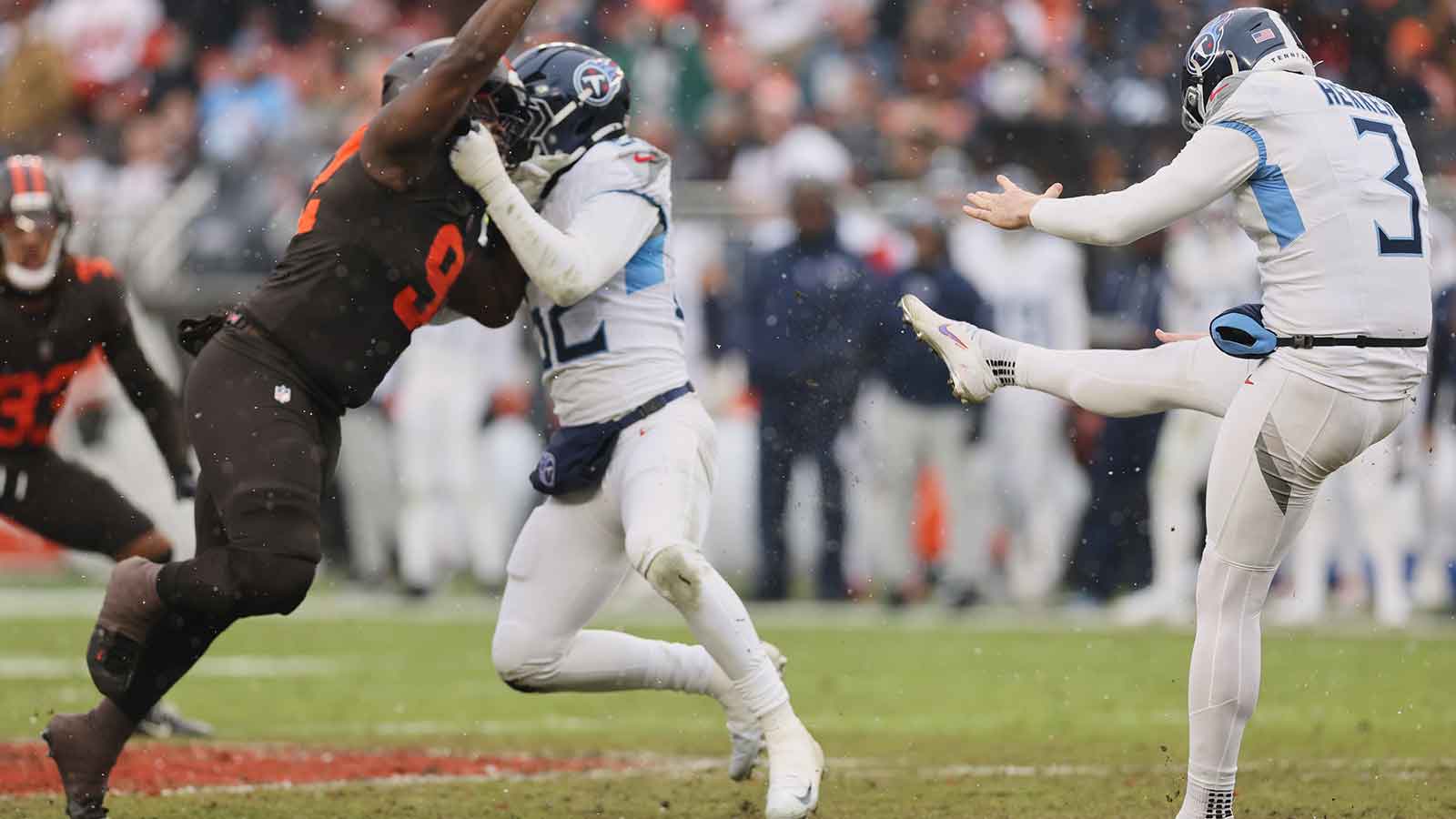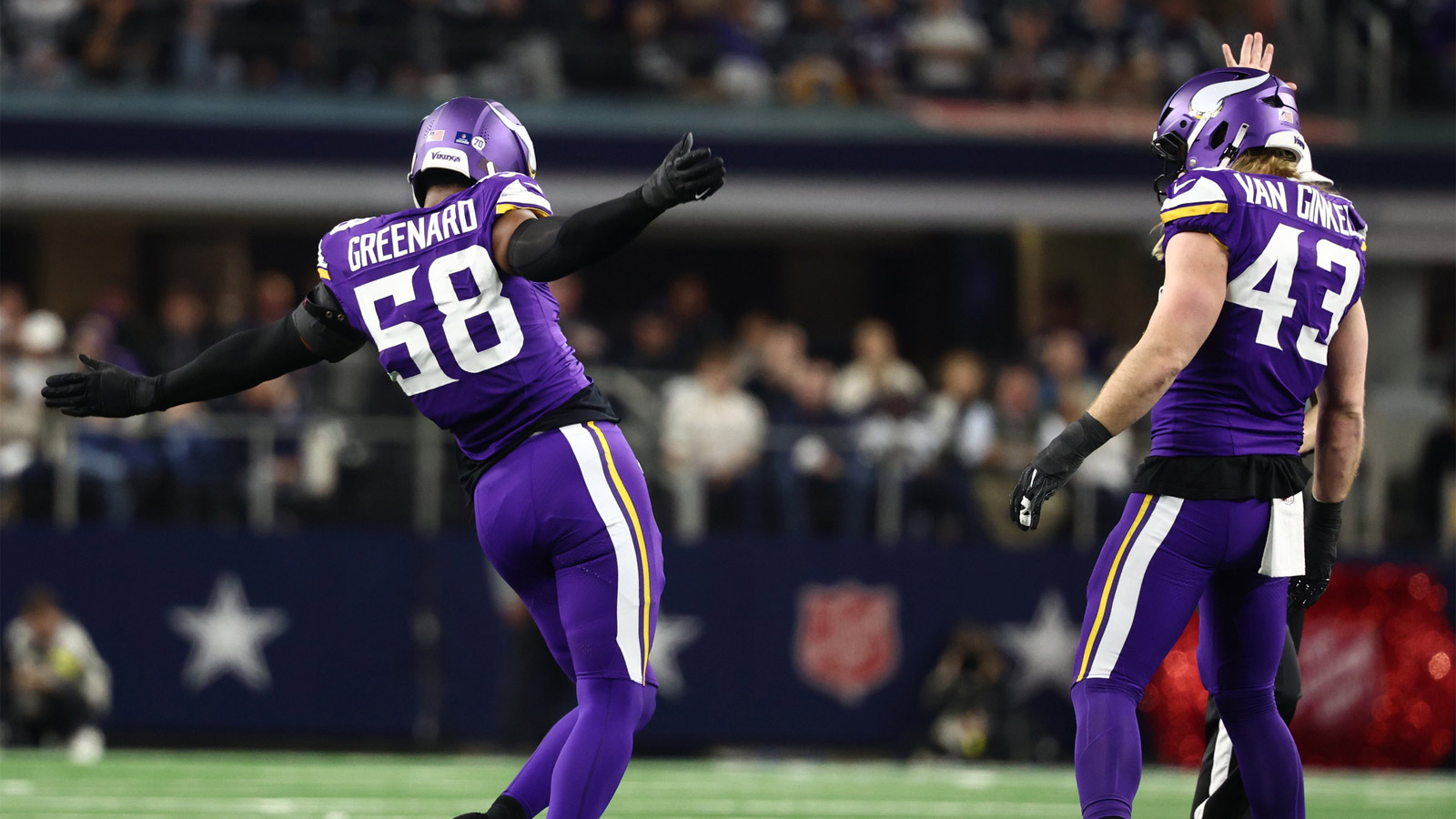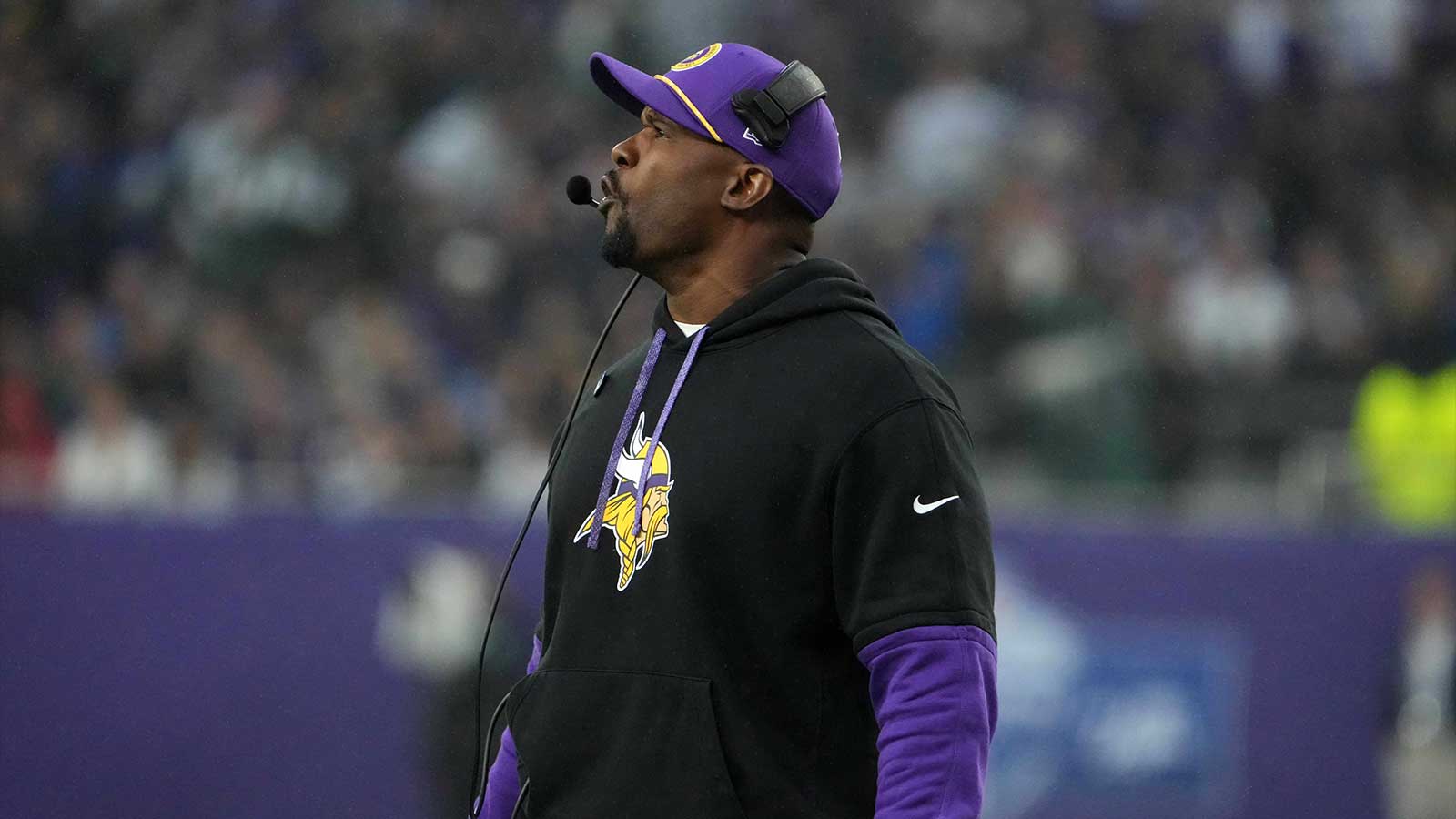
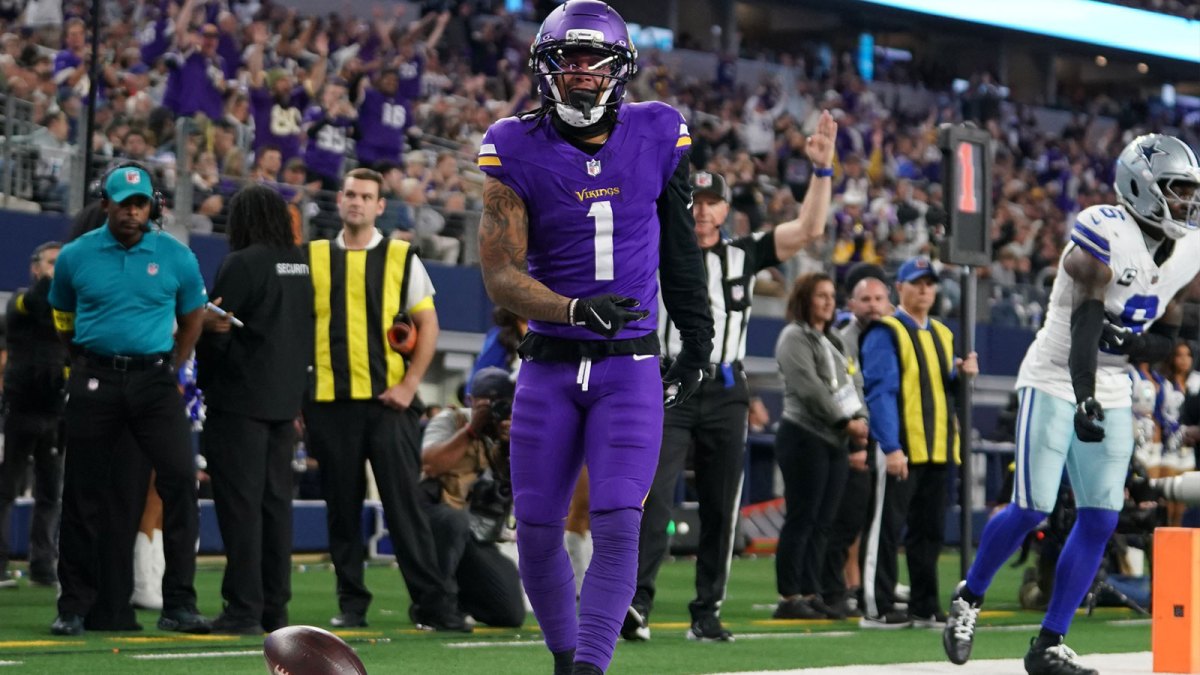
The Vikings addressed two immediate offseason concerns before the draft discussions took center stage when they signed four-time Pro Bowl punter Johnny Hekker to a one-year deal, providing the special teams unit with a decorated veteran who has a lengthy resume from his time with the Rams, along with significant hidden-yardage value.
They also re-signed Carson Wentz, ensuring that there is an experienced option in the quarterback room, and while these moves did not resolve every major question on the roster, they did solidify a couple of important positions and allowed the front office to think about the upcoming draft from a broader perspective.
This sets the stage for the idea of drafting Jeremiyah Love, as a recent mock draft suggested a bold move for Minnesota to jump from No. 18 to No. 11 overall, moving up to select the Notre Dame running back after strengthening their roster in free agency.
He brings explosiveness, receiving ability, and home-run potential to transform an offense with just one play, and whether this specific trade comes to fruition remains uncertain, but it creates a strong introduction to this overview because it highlights the tension surrounding Minnesota’s first-round choices. The Vikings can pursue offensive upside, but many in the mock-draft community still see a clear need for defense on this roster.
That tension starts with the draft board itself as they hold the No. 18 overall pick and enter the 2026 draft with nine total selections, giving them enough leverage to either stay put, move around, or target a specific player if they find someone they are excited about.
However, the signs from the roster cannot be ignored, and Harrison Smith's future remains uncertain following a roster move. The Vikings also released Jonathan Allen and Javon Hargrave, leaving a significant gap in the defensive front.
Despite the additions of useful veterans in free agency, discussions about the first round continue to revolve around premium positions like safety, cornerback, and defensive tackle.
This is where the most compelling logic lies after free agency; thus, many mock drafts feel less like random guesses and more like different perspectives on the same argument.
S Dillon Thieneman, Oregon
Crean’s case for Dillon Thieneman represents one of the clearest fits in the Vikings’ mock-draft dialogue.
Crean predicts that the Oregon safety will go to Minnesota at No. 18, relying heavily on his performance after the combine, and his argument notes that the safety class initially looked like it consisted of Caleb Downs and then a noticeable gap, but Thieneman’s impressive testing changed that dynamic.
With a 4.35-second 40-yard dash and a 41-inch vertical leap, he has reestablished himself as a strong first-round prospect. Crean believes Thieneman is the type of versatile, athletic defensive back that Brian Flores can effectively utilize.
This selection is about maintaining structure, and Smith has served as the tone-setter and organizer in the secondary for years, and Crean argues that Thieneman possesses the range, instincts, and versatility to take on some of that responsibility.
Though not as flashy as a trade-up for Love, this projection may be the most sensible option, and if Minnesota seeks a long-term solution at safety without overcomplicating matters, Crean’s logic is that they need to select the exceptional athlete who is also a natural fit for the scheme.
CB Avieon Terrell, Clemson
If the Vikings decide the secondary still needs improvement but prefer to address cornerback rather than safety, Max Chadwick’s mock draft selection of Avieon Terrell makes a lot of sense.
Chadwick reasons that Minnesota has ranked outside the top 15 in team PFF coverage grade for the past six seasons, and this trend indicates a persistent issue, one that often compels a front office to invest premium draft capital in the position.
Chadwick also highlights Terrell’s impressive 90.6 PFF overall grade over the last two seasons, ranking fifth among Power Five cornerbacks, providing a solid foundation for his projection.
For the Vikings, this presents a clear advantage. Although free agency has brought in James Pierre and Tavierre Thomas, these signings should not deter a team from selecting a real difference-maker if one is available.
Terrell would offer Flores another young, proven coverage piece, fitting the post-free-agency reality of the roster: the Vikings made enough moves to avoid desperation, but not enough to consider their coverage issues resolved.
DT Caleb Banks, Florida
Jordan Reid’s projection of Caleb Banks aligns closely with the decisions Minnesota made, and did not make, in free agency.
Reid predicts that the Vikings will select the Florida defensive tackle at No. 18, and he also points out that with Javon Hargrave expected to be released and Jonathan Allen also a candidate for departure, Minnesota will be left extremely thin on the interior defensive line.
Now that those releases have occurred, Reid's logic appears even more sound.
He describes Banks as a towering 6-foot-6, 327-pound player with an athletic profile that typically attracts Minnesota's attention.
Notably, he recorded a 32-inch vertical jump and a 5.04-second 40-yard dash at the combine, and the appeal of this choice is that while safety is a future need and cornerback remains a persistent structural requirement, defensive tackle is a position that demands immediate attention if neglected.
Reid acknowledges Banks' injury history, which often comes with a warning label, but still considers him an ideal fit for Brian Flores’ defense due to his combination of size and movement skills.
There’s also a traditional football perspective on this pick: if the middle of your defense becomes weak, the entire unit starts to decline. Selecting Banks would be a strategic first-round choice aimed at preventing that deterioration before it begins.
S Emmanuel McNeil-Warren, Toledo
Nate Davis takes a different approach compared to the Thieneman crowd, but his stance aligns with the overall consensus.
He has Minnesota selecting Emmanuel McNeil-Warren, the Toledo safety, and his reasoning centers on the crucial question of what happens in the post-Harrison Smith era.
Davis said that even if Smith returns, McNeil-Warren would still be a valuable addition as a complementary player with a comparable style, known for his penchant for big hits and ability to locate the ball.
This distinction is significant, and Thieneman is often seen as the smooth, schematic heir apparent, an ideal modern successor with great range and testing results.
In contrast, McNeil-Warren is viewed as a tone-setting presence, characterized by his physicality, length, and potential for splash plays.
Both paths lead to addressing the safety position, but they approach it differently.
From a roster construction standpoint, Davis’ mock draft is insightful because it highlights how strongly league analysts connect Minnesota to the safety position following free agency, and when multiple analysts focus on the same area of need, it usually indicates a genuine concern.
While McNeil-Warren may not be the most commonly predicted choice for the Vikings, he is certainly part of the conversation due to his unique profile as a first-round solution.
The broader story here is the nature of the consensus. Yes, the Vikings could potentially move up to select Jeremiyah Love, which would make their offense more dynamic if that opportunity arises.
However, once free agency concluded, the mock draft predictions consistently pointed to the same conclusion: Minnesota's most logical first-round move lies on the defensive side.
In summary, four mocks lead to four slightly different paths, but they all converge on one fundamental truth: following free agency, the Vikings appear to be a team whose smartest first-round decision is to bolster their defense, unless they choose to take a risk and pursue purely offensive talent.