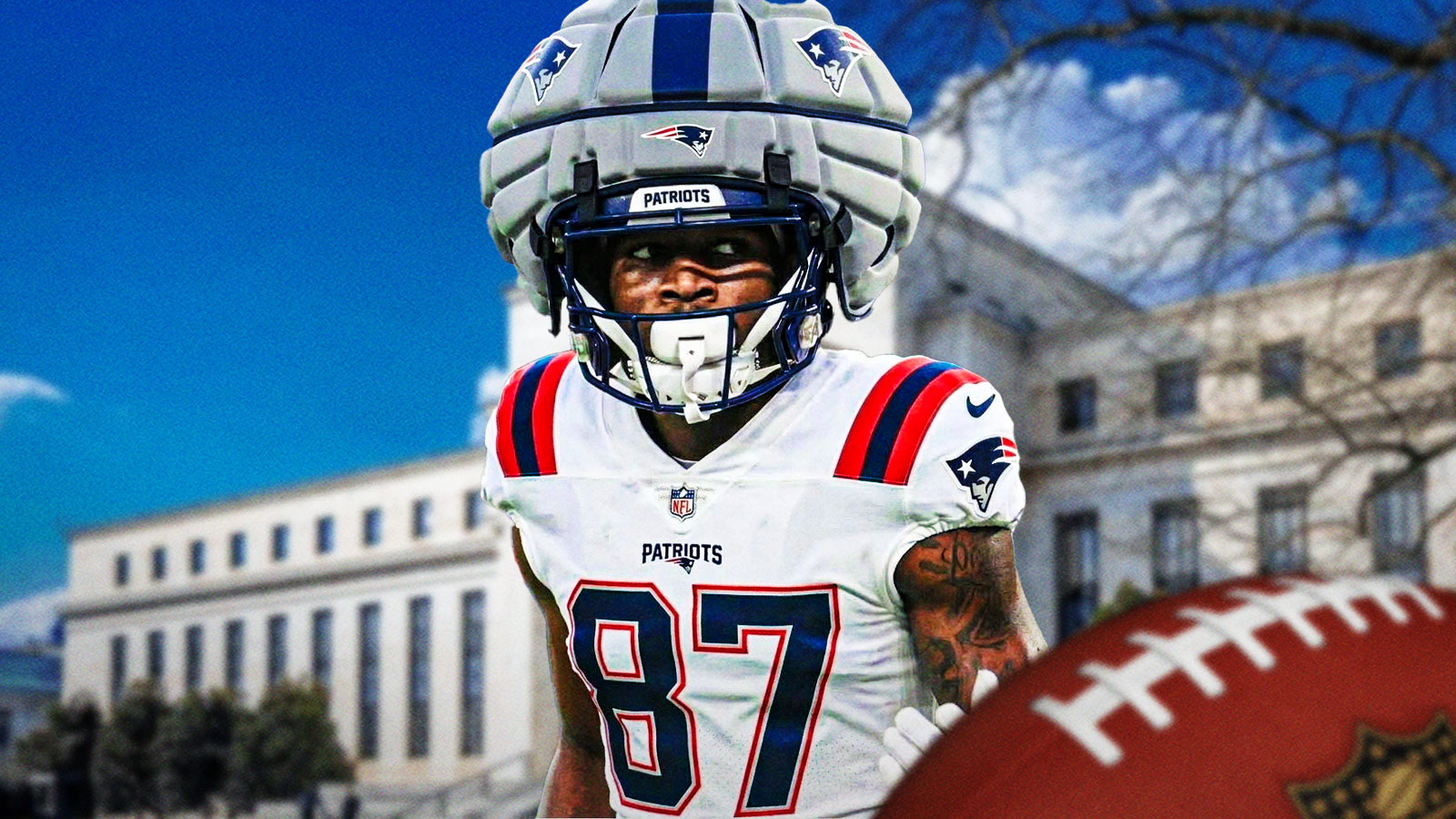
The Patriots have already made significant moves to enhance their roster, including signing Romeo Doubs to a four-year deal worth up to $80 million and adding cornerback Kindle Vildor on a one-year contract. Recent draft discussions indicate that many around the league believe New England is not finished reshaping the team, particularly on offense.
Mel Kiper Jr.’s latest projections suggest the Patriots could still be in the market for another impactful player, highlighting how the team is currently viewed: improved, tougher, deeper, and still looking for the right piece to elevate the roster.
This year's draft conversation surrounding New England is intriguing as they are operating without a sense of panic, a refreshing change from previous seasons, and the draft board is not entirely predictable. Under Mike Vrabel's leadership, they have already made significant investments at wide receiver, guard, defensive line, safety, and cornerback depth.
The consensus is that the Pats no longer have one pressing issue but instead possess the flexibility to define their identity rather than merely surviving.
KC Concepcion, WR, Texas A&M
Mel Kiper maintains that New England's draft strategy starts with the quarterback, and despite the Doubs signing, he projects KC Concepcion to the Patriots, viewing him as a receiver who offers something different, not just more of the same.
Kiper’s analysis highlights Concepcion's ability to stretch the field, create plays after the catch, and enhance the effectiveness of quick passes, and while Doubs improves the receiving corps, he doesn’t end the discussion. Concepcion would add speed, create separation, and relieve some of the pressure on Maye, making the offense more dynamic.
His choice reveals how outside observers still perceive the offense as better but not settled, which seems accurate. Concepcion is the kind of player who can simplify a quarterback’s job on first down, in quick plays, during broken plays, and potentially in the return game.
For a team focused on helping Maye transition from promising to formidable, this type of addition is necessary; it shows that the front office recognizes that one major receiver signing is not enough to complete the group.
Max Iheanachor, OT, Arizona State
Crean, in his recent roundup, projects Max Iheanachor to the Patriots at No. 31, emphasizing the long-term future of the offensive line more than immediate concerns. Crean believes that Will Campbell will eventually move to guard, making Iheanachor the better long-term solution at left tackle. This perspective remains valid even after the arrival of Alijah Vera-Tucker, as one veteran guard does not render left tackle planning irrelevant.
This stands out because they have made enough moves in free agency to avoid the urgency of drafting a receiver at all costs. With that pressure eased, selecting a tackle becomes much more feasible, and Iheanachor is not being considered here out of desperation; he represents a strategic choice from stable teams that look ahead at high-cost positions.
Left tackle is one of the most expensive positions to fill if not addressed internally, and this projection reflects a front office intent on placing Maye within a stable framework for years to come, rather than just patching together another season.
Kayden McDonald, DT, Ohio State
Jeremiah shifts the focus to the defensive front, projecting Ohio State tackle Kayden McDonald to the Patriots. This choice aligns closely with Vrabel’s preferences, as Jeremiah argues that McDonald would fortify the run defense while allowing the rest of the line to be more aggressive.
Players like McDonald are often undervalued by fans because they significantly impact the game by altering the front’s dynamics beyond just statistics, and despite the Patriots already investing in Dre’Mont Jones, adding another interior force aligns with a well-recognized team-building strategy: strengthen the defense to make it harder to move the ball and develop everything else from that foundation.
This call speaks to where the Patriots currently stand in their roster development. If they were still lacking competence across the board, this move might seem like an indulgence. However, that's not the case now, and it feels more like a strategic opportunity for the team to build upon a sturdy foundation.
Akheem Mesidor, EDGE, Miami
Justin Melo, Sports Illustrated
In Justin Melo’s post-free-agency mock draft, he projects that the New England Patriots will select Akheem Mesidor. This one also stands out as one that aligns closely with head coach Mike Vrabel's preferences, and Melo highlights Mesidor’s strong work ethic, effective pass-rush strategy, and mature playing style, all of which are traits coaches quickly come to trust.
The key aspect here is that Mesidor is not being described as a raw athlete needing extensive development; instead, he is portrayed as a defender who already knows how to apply pressure on quarterbacks and plays with the urgency that translates well to the field.
For a team that has reached the Super Bowl, this is super important because the Patriots do not need a lengthy development project and can benefit from a player who can contribute immediately.
There are many advantages to this approach, and the presence of established players like Harold Landry III and Dre'Mont Jones means that Mesidor would not have the pressure of leading the edge rush on his own from Day 1, which is often where these picks tend to mature best.
He would join a defense with seasoned veterans and a coaching staff that values aggressive, disciplined play. Melo's mock draft suggests that while another receiver would be beneficial, adding a defender who can make the front line more relentless aligns more closely with New England's winning strategy.
CJ Allen, LB, Georgia
Mike Renner opts for Georgia linebacker CJ Allen, which shifts the draft discussion away from more obvious choices.
His rationale centers around Allen’s temperament, and Renner describes him as a cultural fit for the Vrabel era: a physical linebacker who can also blitz effectively, and while this may not sound like an exciting first-round pick, it reveals much about the team's strategy.
The Patriost appears focused on strengthening their defense from the middle out, and Allen would contribute to that goal because he adds another tough, reliable second-level player who prioritizes effectiveness over flash.
This kind of selection often becomes clearer with reflection.
Not every first-round pick needs to be about highlight-reel potential; sometimes, it’s about ensuring the defense can get off the field, improve tackling, and add another player capable of affecting the quarterback from various angles.
Allen could provide that capability, and for a Patriots team that has already invested in strengthening its roster through free agency, Renner’s choice seems like a commitment to revamping the defense as the core of the team once again, rather than simply supporting the evolving offense.
What stands out most after free agency is the clarity of the Patriots’ draft strategy.
One approach focuses on developing the offense around the quarterback, while another aims to solidify the line protecting him, and the defensive options suggest the team wants to be difficult to run against, hard to block, and challenging to compete with over four quarters.
This is a more favorable draft position for New England than it has seen in recent years, indicating that the front office is no longer just responding to immediate issues.
Instead, they are strategically deciding which segments of a rising team should receive the next significant investment, generally when a contender starts drafting like one.