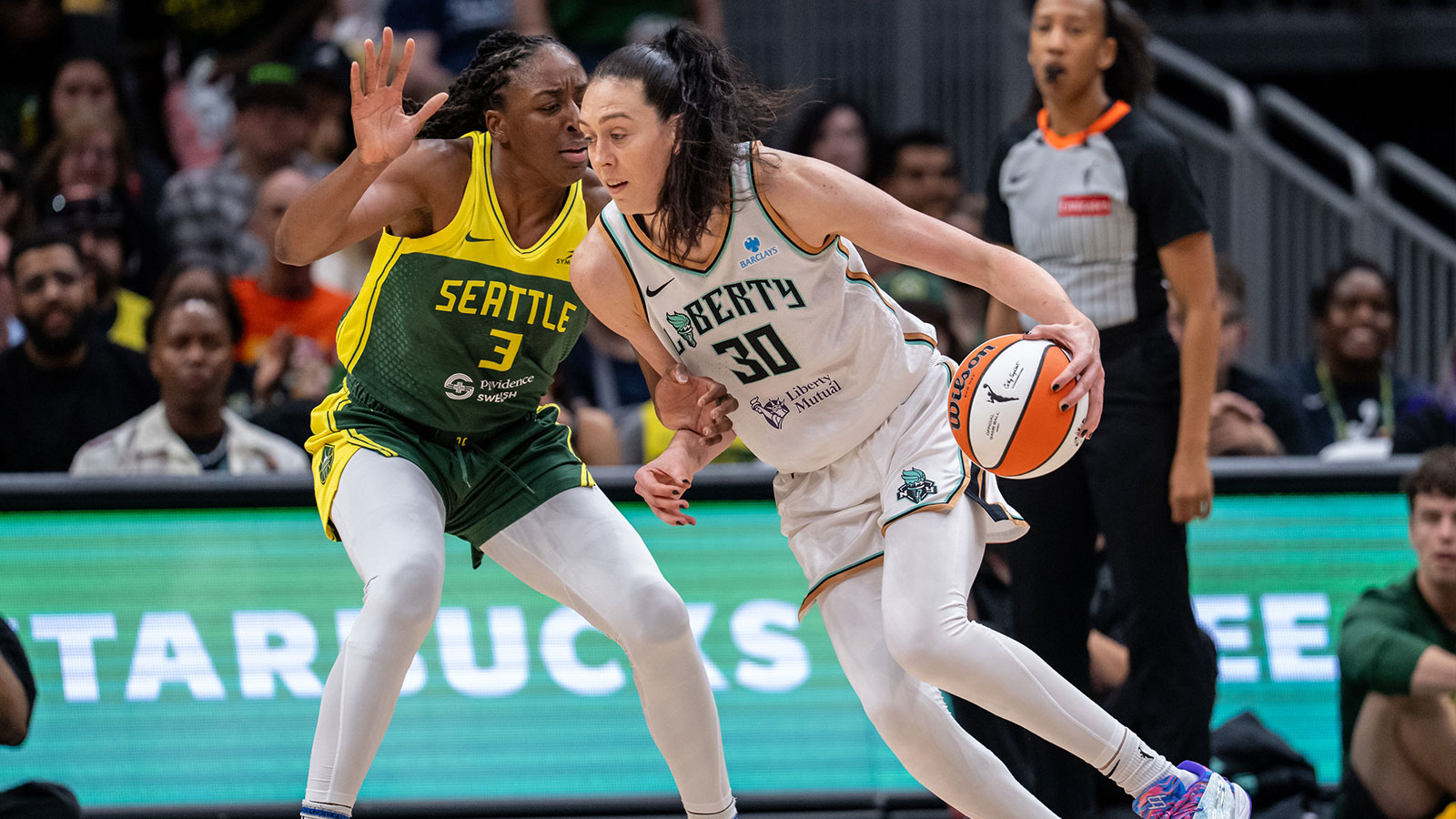

The WNBA’s 2026 expansion, introducing the Portland Fire and Toronto Tempo, presents a historic moment for the league. With teams only able to protect five players each, the expansion draft will test franchises’ long-term planning, roster construction strategies, and evaluation of both immediate contributors and high-upside talent.
Each franchise faces difficult decisions about who is truly indispensable, weighing factors such as star power, positional scarcity, versatility, age, and fit with organizational identity. Let's take a look at a team-by-team analysis of the five players most likely to be protected, with detailed explanations for each.
Atlanta Dream
Rhyne Howard is Atlanta’s clear cornerstone. Her combination of scoring versatility, elite defense, and ability to guard multiple perimeter positions makes her indispensable. Howard can create offense both on the ball and off it, stretching defenses with her shooting while remaining a threat in isolation situations. Beyond statistics, she sets the competitive tone for the roster, influencing effort levels and accountability across the team. Losing Howard would disrupt both Atlanta’s immediate performance and long-term trajectory.
Allisha Gray complements Howard by providing stability and defensive excellence. Gray’s defensive ability allows Atlanta to switch seamlessly, and her steady scoring output makes her a reliable secondary option. Her veteran presence also helps younger teammates navigate high-pressure situations, which is especially valuable during playoff runs. Exposing Gray would leave Atlanta vulnerable to losing a player whose value extends beyond the stat sheet.
Isobel Borlase represents long-term upside. As a young guard with international experience, Borlase offers scoring instincts, playmaking potential, and the ability to grow into a more significant role. Expansion teams often target players with Borlase’s profile because they are under team control and have untapped upside, making her protection a priority.
Nia Coffey is valued for her versatility. She contributes across multiple positions, defends larger players despite being undersized, and can fill various lineup gaps. Coffey’s adaptability makes her difficult to replace and highly desirable to expansion franchises, necessitating protection.
Te-Hina Paopao rounds out Atlanta’s protected five due to her shooting gravity and developmental potential. Young shooters who can stretch defenses are in high demand, and Paopao’s ability to space the floor elevates the effectiveness of Atlanta’s primary scorers. Protecting her ensures the Dream retain a critical offensive tool for the future.
Chicago Sky
Angel Reese embodies Chicago’s identity. Her relentless approach to rebounding and defense sets the tone for the team. Reese’s ability to dominate the glass, guard multiple positions, and impact games without needing high usage makes her invaluable. Her competitive fire shapes the team’s culture, ensuring accountability and toughness across the roster.
Kamilla Cardoso anchors Chicago’s interior defense. Her size, rim protection, and efficiency in the paint make her a foundation for both defense and offense. True centers with Cardoso’s combination of physical tools, shot-blocking instincts, and rebounding prowess are rare, and exposing her would weaken Chicago’s interior immediately.
Rebecca Allen brings elite 3-and-D capabilities. She spaces the floor, allowing Chicago’s interior scorers to operate more freely, while simultaneously guarding top wings and contributing defensively. Expansion teams highly value players who can score efficiently while providing defensive stability, making Allen a natural protection candidate.
Michaela Onyenwere contributes athleticism, versatility, and dependable rotation minutes. She can guard multiple positions and provides scoring and energy off the bench, which increases her value. Her adaptability allows Chicago to maintain performance even if rotations are disrupted, justifying her protection.
Ajša Sivka represents future potential. International forwards often develop into high-impact contributors over time. Sivka’s length, skillset, and positional versatility make her a long-term asset worth protecting, even if her immediate statistical contribution is modest.
Connecticut Sun
Aaliyah Edwards is Connecticut’s most important frontcourt piece. Her defensive presence, efficiency in scoring, and rebounding ability allow the Sun to control the paint. Edwards fits the franchise’s emphasis on physicality and defense, making her protection vital to maintaining the team’s identity.
Marina Mabrey provides offensive creation and a scoring edge. She can generate offense independently when necessary, which is particularly valuable in high-pressure situations. Guards capable of breaking down defenses are prime targets in expansion drafts, and protecting Mabrey ensures the Sun maintain a reliable offensive option.
Aneesah Morrow is protected because of her rebounding instincts and interior scoring potential. Expansion teams often pursue young, productive forwards and centers. Retaining Morrow safeguards a player with significant long-term upside and ensures continuity in the frontcourt.
Saniya Rivers embodies defensive versatility. Her ability to guard multiple positions allows the Sun to switch schemes effectively and counter opposing lineups. Modern WNBA defenses prize players like Rivers, who can defend without limiting offensive options.
Olivia Nelson-Ododa offers reliability and system familiarity. Rotation bigs are frequently undervalued in expansion contexts, but losing one can destabilize lineups. Her protection ensures the Sun maintain structural integrity and frontcourt depth.
Dallas Wings
Paige Bueckers is the undisputed cornerstone of Dallas. She combines elite scoring efficiency with defensive instincts and high basketball IQ, elevating teammates around her. Bueckers’ presence dictates opponent defensive schemes and defines the Wings’ style of play, making her protection non-negotiable.
Diamond Miller offers athleticism, two-way versatility, and scoring upside. She can play multiple positions, defend at a high level, and contribute in transition. Expansion teams covet players with Miller’s combination of youth, physical tools, and immediate impact.
Maddy Siegrist provides efficient scoring and versatility. She complements high-usage stars by providing reliable output without requiring a primary role. Her ability to fit seamlessly into multiple lineup configurations increases her value.
Luisa Geiselsöder adds size, frontcourt flexibility, and international experience. She can contribute immediately while still developing into a more central role, making her a strategic asset to protect.
Aziaha James represents developmental upside. Guards with shot creation ability and room to grow are foundational to long-term planning. Protecting James preserves the Wings’ ability to maintain roster continuity over multiple seasons.
Golden State Valkyries
Veronica Burton anchors the Valkyries’ defense and provides leadership on and off the court. Her on-ball pressure, court awareness, and communication skills make her indispensable. Burton sets the tone for the team, ensuring accountability across the roster.
Tiffany Hayes provides veteran scoring and professionalism. Her ability to stabilize young rosters and contribute in high-pressure situations makes her protection essential. Hayes is valued for both her on-court production and off-court mentorship.
Temi Fagbenle contributes energy, defensive versatility, and offensive efficiency. Her ability to impact both ends of the floor makes her a core rotational piece and a natural protection candidate.
Janelle Salaün represents wing potential. Young, skilled forwards with length and athleticism are attractive to expansion teams, and retaining Salaün ensures the Valkyries preserve their developmental trajectory.
Kayla Thornton offers defensive adaptability and experience. Her ability to guard multiple positions and provide scoring when needed makes her an invaluable depth piece.
Indiana Fever
Caitlin Clark is the face of the Fever. Her long-range shooting, playmaking ability, and leadership define Indiana’s offensive identity. Protecting Clark is essential for maintaining continuity and future competitiveness.
Aliyah Boston provides elite interior defense and efficiency. She forms a dominant pairing with Clark, controlling the paint on both ends and anchoring the team’s defensive schemes.
Kelsey Mitchell is Indiana’s most reliable secondary scorer. Her ability to create shots and space the floor is crucial for maintaining offensive balance around Clark.
Lexie Hull offers defensive versatility and developmental upside. She can guard multiple positions and contribute on both ends, providing the Fever with flexibility in future rotations.
Sydney Colson provides veteran leadership and championship experience. Her presence stabilizes a young roster, ensuring accountability and composure in high-pressure games.
Las Vegas Aces
A’ja Wilson anchors the Aces as the league’s premier frontcourt player. Her scoring, rebounding, and defensive dominance make her the foundation of the franchise. Losing Wilson would be catastrophic both competitively and culturally.
Chelsea Gray is the team’s clear floor general. Her composure, passing, and leadership orchestrate the offense at every level of competition, making her indispensable.
Jackie Young bridges the present and future. Her two-way versatility allows her to contribute in multiple roles, and her development trajectory promises continued value over the coming seasons.
NaLyssa Smith provides frontcourt depth and youth. Her athleticism, rebounding, and defensive potential make her a natural asset to retain for both current success and long-term planning.
Cheyenne Parker-Tyus brings a combination of interior scoring, defensive toughness, and veteran leadership. On offense, she excels in scoring efficiently in the post and can stretch the floor with mid-range jumpers, providing versatility that allows the Aces to run multiple offensive sets. Defensively, Parker-Tyus uses her strength and agility to guard multiple frontcourt positions, offering rim protection and rebounding while anchoring key defensive rotations.
Los Angeles Sparks
Kelsey Plum is the central figure in the Sparks’ offensive architecture. She is an elite scorer who can create her own shot from anywhere on the court, whether through step-back jumpers, drives to the basket, or precise pull-up 3-pointers. Beyond her scoring, Plum possesses exceptional court vision, consistently finding teammates in optimal positions for high-percentage shots. Her leadership is also vital: She organizes the offense, sets the pace, and makes in-game adjustments that few players can replicate.
In an expansion draft scenario, Plum would be a top priority for protection because she is irreplaceable as both a primary offensive engine and a team leader. Losing her would force the Sparks to reconstruct their offensive philosophy entirely, as few players in the league combine scoring, playmaking, and leadership at her level.
Cameron Brink provides the Sparks with invaluable frontcourt versatility. Standing at 6-foot-4, she offers rim protection and rebounding while simultaneously providing spacing and shooting ability that modern WNBA lineups demand. Brink can defend both traditional post players and more agile forwards due to her mobility, allowing Los Angeles to switch seamlessly in pick-and-roll situations.
Offensively, Brink can finish around the rim, roll effectively in pick-and-roll sets, and contribute mid-range scoring when necessary. Expansion teams would see her as a multi-dimensional big who could anchor both offense and defense, making her protection crucial to maintaining LA’s structural integrity and long-term competitiveness.
Rickea Jackson is a dynamic wing capable of scoring, defending, and creating opportunities in transition. Her athleticism allows her to attack the basket aggressively, while her perimeter shooting keeps defenses honest. Jackson’s defensive versatility is equally important: She can guard multiple positions on the wing and provide energy on both ends of the floor.
Jackson's combination of youth, potential, and immediate impact makes her a prime candidate for expansion-team targeting if left unprotected. Protecting Jackson ensures the Sparks retain a player capable of contributing across multiple lineups and maintaining defensive balance while still offering offensive firepower.
Dearica Hamby brings toughness, experience, and leadership to the Sparks. Her veteran presence helps anchor the locker room and guides younger players navigating professional growth. On the court, Hamby’s versatility allows her to defend multiple positions, contribute efficiently in the post, and provide timely scoring when needed.
Hamby's ability to adapt to various roles in different rotations gives LA a reliable stabilizer, which is especially important when it comes to roster adjustments or injuries. Exposing Hamby would risk losing both a high-impact rotational player and a cultural leader, which is why she is a natural protection choice.
Julie Allemand offers elite playmaking and floor management in the backcourt. Her ability to orchestrate the offense, control tempo, and read defenses makes her indispensable, particularly in lineups where scoring options may be limited.
Allemand is also a capable shooter and can contribute defensively against opposing guards, providing balance to the Sparks’ backcourt rotations. Expansion teams typically value skilled point guards with floor vision and decision-making ability, so protecting Allemand ensures LA retains both strategic control on offense and a stabilizing influence on the floor.
Minnesota Lynx
Napheesa Collier is the linchpin of Minnesota’s roster. Her elite two-way skill set, which combines interior scoring, perimeter mobility, and defensive instincts, makes her irreplaceable. Collier’s leadership extends beyond the court, setting professional standards for younger players and ensuring that the team maintains competitive intensity in every game. Losing her would force Minnesota to rebuild its identity from the inside out.
Kayla McBride provides elite shooting and scoring versatility. She can operate both as a primary option in small-ball lineups and as a complementary scorer alongside stars. McBride’s ability to stretch defenses and create opportunities for teammates makes her a critical component of Minnesota’s offensive schemes. Expansion teams would covet her perimeter shooting, so protection is essential.
Courtney Williams adds toughness, athleticism, and defensive versatility. She can guard multiple positions and contribute in transition, which is vital in a league increasingly reliant on switch-heavy defenses. Williams also brings secondary scoring and floor spacing, ensuring that Minnesota’s offense remains dynamic even when primary stars are under pressure.
Natisha Hiedeman stabilizes the backcourt with her shooting, perimeter defense, and basketball IQ. She provides a balance of scoring and defense that allows Minnesota to rotate guards without a drop-off in quality. Her adaptability in different lineup combinations increases her value, making her a must-protect player.
DiJonai Carrington offers elite perimeter defense and scoring efficiency. Her ability to create off the dribble while maintaining strong defensive positioning makes her invaluable. Carrington’s presence allows Minnesota to maintain competitive defensive matchups against opposing wings, and exposing her would create a significant vulnerability.
New York Liberty
Sabrina Ionescu serves as the offensive engine of the Liberty. Her combination of court vision, three-level scoring, and leadership makes her indispensable. Ionescu dictates the pace and creates opportunities for teammates, while her presence alone requires defensive attention from opponents. Protecting her ensures New York retains a central figure capable of shaping team identity for years.
Natasha Cloud is the defensive anchor for New York’s perimeter. Her ability to pressure ball handlers, anticipate passing lanes, and switch across positions makes her a cornerstone of the team’s defensive schemes. Cloud’s leadership and communication on the court allow the Liberty to execute complex defensive rotations effectively, making her exposure too risky.
Emma Meesseman provides scoring efficiency and frontcourt versatility. Her ability to stretch the floor, rebound, and guard multiple positions creates matchup problems for opponents. Meesseman’s international experience and polished skill set make her an anchor both offensively and defensively, ensuring stability in high-pressure situations.
Kennedy Burke contributes elite wing defense and secondary scoring. She can guard multiple positions and is capable of hitting timely perimeter shots. Burke’s ability to fill gaps on both ends of the floor gives the Liberty flexibility in rotations, making her protection a strategic priority.
Leonie Fiebich represents long-term potential. Her combination of length, shooting, and defensive upside ensures that New York maintains a developmental piece with high future value. Expansion teams often target young, high-upside forwards, so protecting Fiebich preserves both continuity and future competitiveness.
Phoenix Mercury
Alyssa Thomas anchors the Mercury’s frontcourt with unmatched versatility. She can score inside and outside, create plays for teammates, and defend multiple positions. Thomas’s rebounding and floor-spacing abilities make her the linchpin of Phoenix’s schemes on both ends, and losing her would destabilize the roster immediately.
Satou Sabally provides star-level scoring and athleticism. Her combination of length, shooting, and defensive mobility allows her to impact games in multiple ways. Sabally’s youth and upside make her an ideal long-term building block for Phoenix, and exposing her in an expansion draft would be highly risky.
Natasha Mack serves as the defensive anchor in the paint. Her shot-blocking, rim protection, and ability to defend pick-and-rolls ensure the Mercury maintain structural integrity on defense. Mack’s presence allows perimeter defenders to play aggressively without fear of leaving the rim unprotected, making her protection critical.
Sami Whitcomb contributes shooting and veteran leadership. Her ability to stretch defenses from beyond the arc enhances offensive spacing, while her experience ensures younger teammates have a model for professionalism and preparation. Whitcomb’s combination of skill and mentorship makes her indispensable.
Kathryn Westbeld adds floor spacing and reliable perimeter shooting. Her ability to knock down open shots complements Phoenix’s interior-focused stars and ensures the offense remains balanced. Protecting Westbeld safeguards both efficiency and lineup flexibility.
Seattle Storm
Ezi Magbegor anchors Seattle’s interior defense. Her rim protection, rebounding, and ability to alter shots provide structural stability. Magbegor also contributes offensively in the post and in transition, allowing Seattle to maintain a balanced attack. Expansion teams would target her size and defensive impact, making protection essential.
Gabby Williams disrupts opposing offenses with elite perimeter defense and athleticism. She can guard multiple positions and contribute in transition, creating matchup difficulties for opponents. Williams’s experience and two-way skill set make her a core piece for Seattle’s competitive timeline.
Brittany Sykes provides additional perimeter defense and scoring versatility. She can switch across multiple positions and hit timely shots, maintaining Seattle’s flexibility in rotations. Protecting Sykes ensures the Storm retain both stability and scoring depth on the wing.
Nika Mühl represents developmental potential. As a skilled guard with playmaking ability and shooting range, she offers future upside and continuity. Expansion teams often target younger guards, so retaining Mühl preserves a foundational piece for Seattle’s evolving roster.
Dominique Malonga contributes athleticism and length in the frontcourt. Her ability to defend multiple positions, rebound effectively, and stretch the floor gives Seattle options in lineups that require switching and spacing. Malonga’s protection ensures structural integrity and developmental continuity.
Washington Mystics
Shakira Austin anchors Washington’s frontcourt with her size, rebounding, and defensive versatility. Her ability to protect the rim and score efficiently both inside and out makes her indispensable. Austin represents both immediate impact and long-term foundational stability.
Georgia Amoore can shape the backcourt with scoring, playmaking, and leadership once she recovers from her ACL injury. Her ability to create for herself and others will allow Washington to run multiple offensive schemes effectively.
Sonia Citron provides perimeter scoring, defensive flexibility, and basketball IQ. She can guard multiple positions and contribute offensively in a variety of roles, making her an ideal protection candidate for maintaining team balance.
Kiki Iriafen offers defensive versatility and frontcourt depth. Her ability to guard several positions and contribute rebounds and interior scoring gives Washington structural flexibility. Protecting Iriafen prevents a gap in both defense and rotation stability.
Jacy Sheldon contributes explosiveness, perimeter defense, and potential as a developing guard. Her speed, energy, and athleticism make her an attractive asset for expansion teams, so retaining her ensures Washington preserves a high-upside rotational piece.
The 2026 WNBA expansion draft will challenge each franchise to define its identity through hard choices. Protecting only five players forces teams to prioritize versatility, long-term value, and irreplaceable skill sets. Across the league, the projected protected players reveal both current competitive priorities and future planning strategies.
From cornerstones like Howard, Clark, and Collier to developmental talents such as Amoore and Malonga, the decisions highlight who teams view as central to sustaining success. The expansion draft is not just about talent redistribution — it is a mirror of each franchise’s vision for the next era of the WNBA.