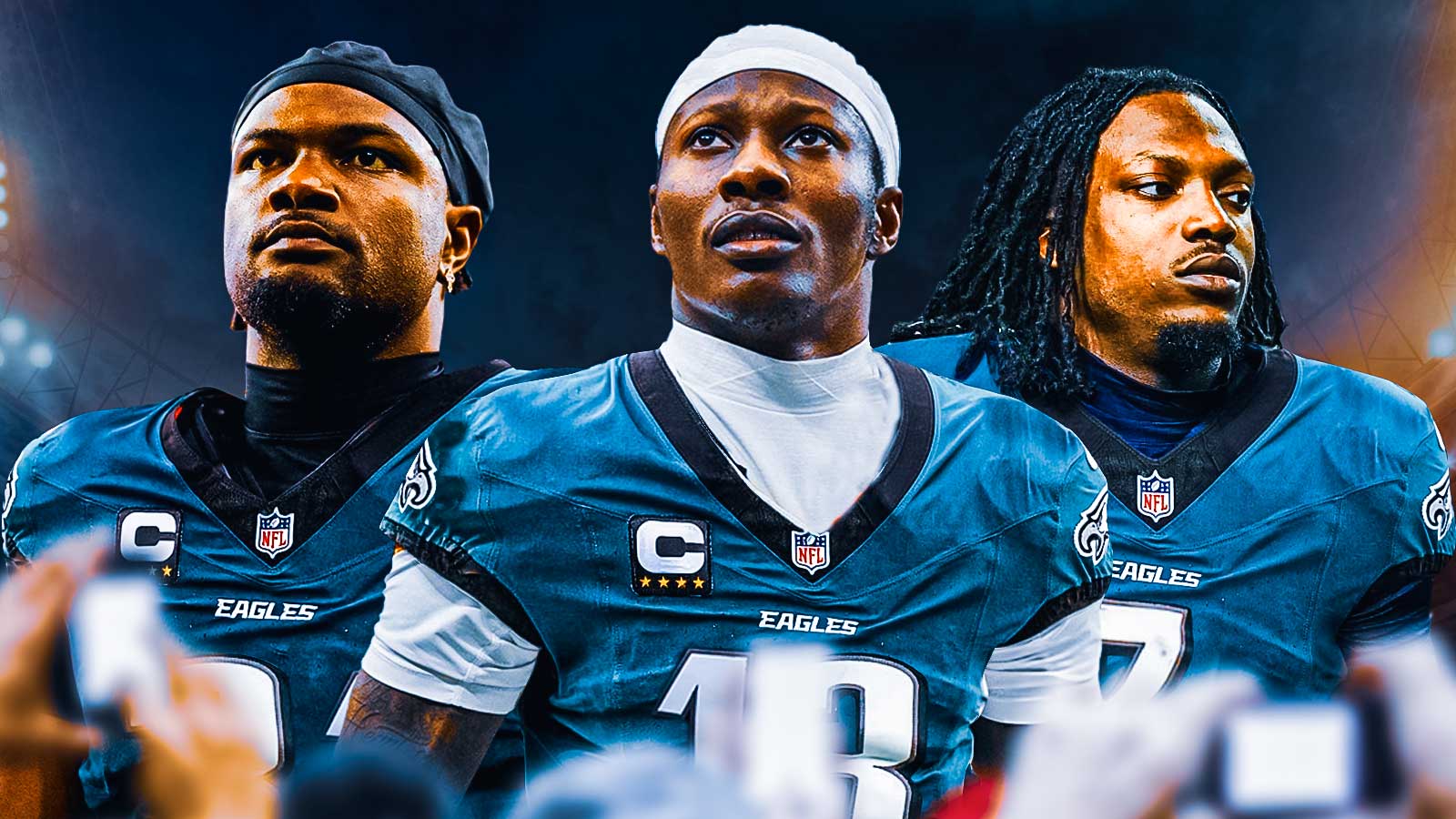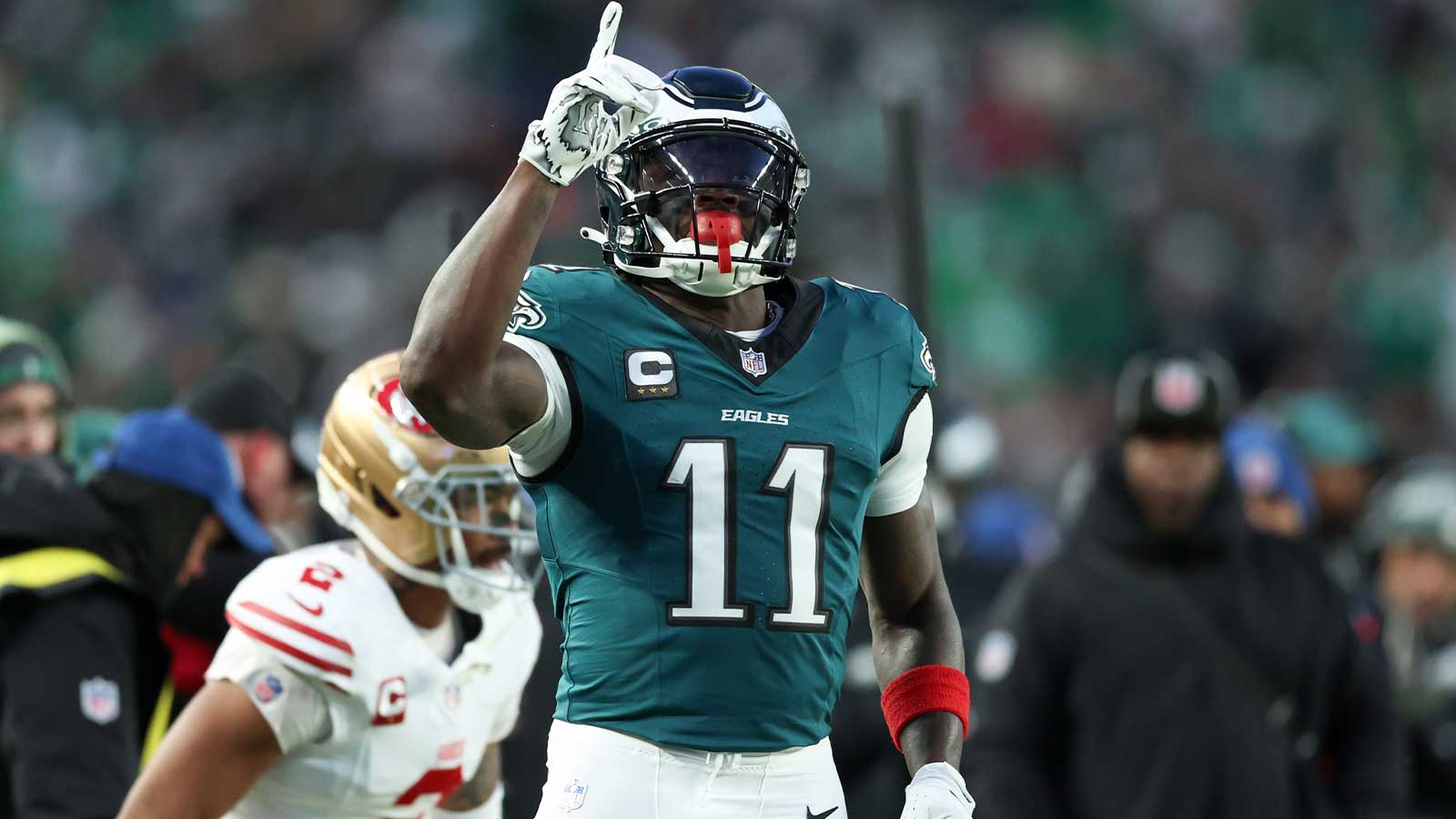
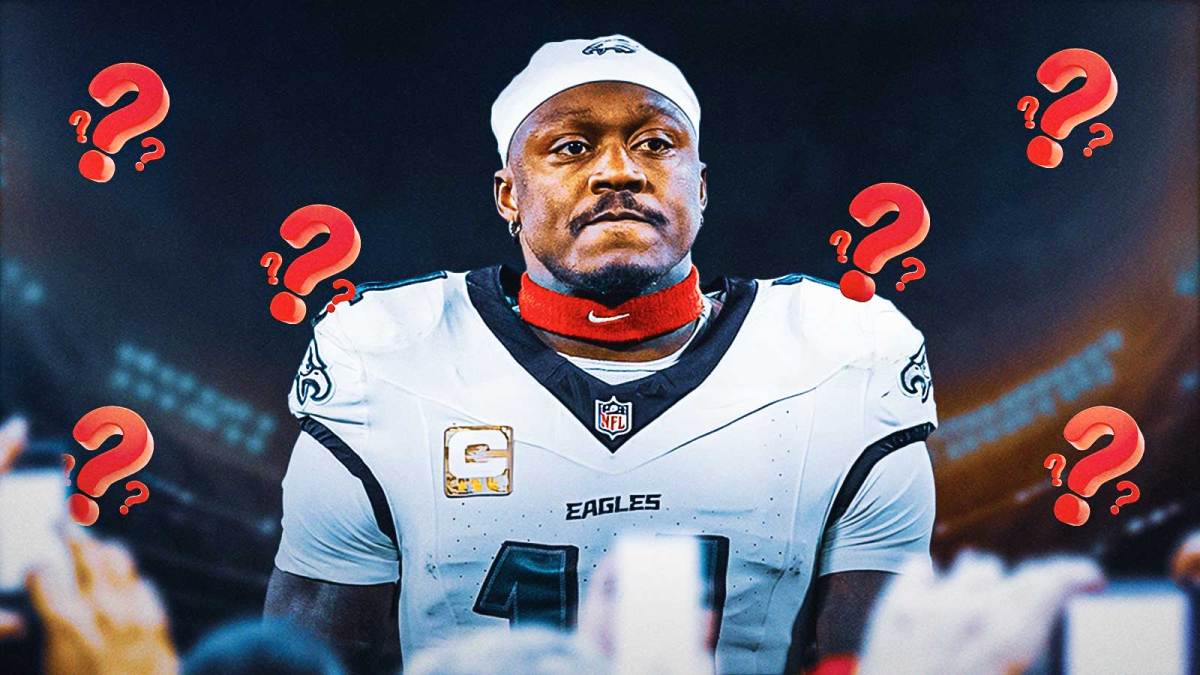
Every NFL offseason has its lightning-rod storyline. This year, that storyline could center on AJ Brown. The Philadelphia Eagles’ physically dominant WR1 has been one of the league’s most feared matchup nightmares. However, the aftermath of Philadelphia’s abrupt playoff exit has shifted the conversation from contention to calculation. Friction within the building and the financial mechanics of a star-studded roster have combined to create a scenario that once felt unthinkable. What if the Eagles actually explored dealing Brown? If they do, the market would be immediate, aggressive, and fueled by contenders desperate for an alpha receiver.
Dominance and dysfunction
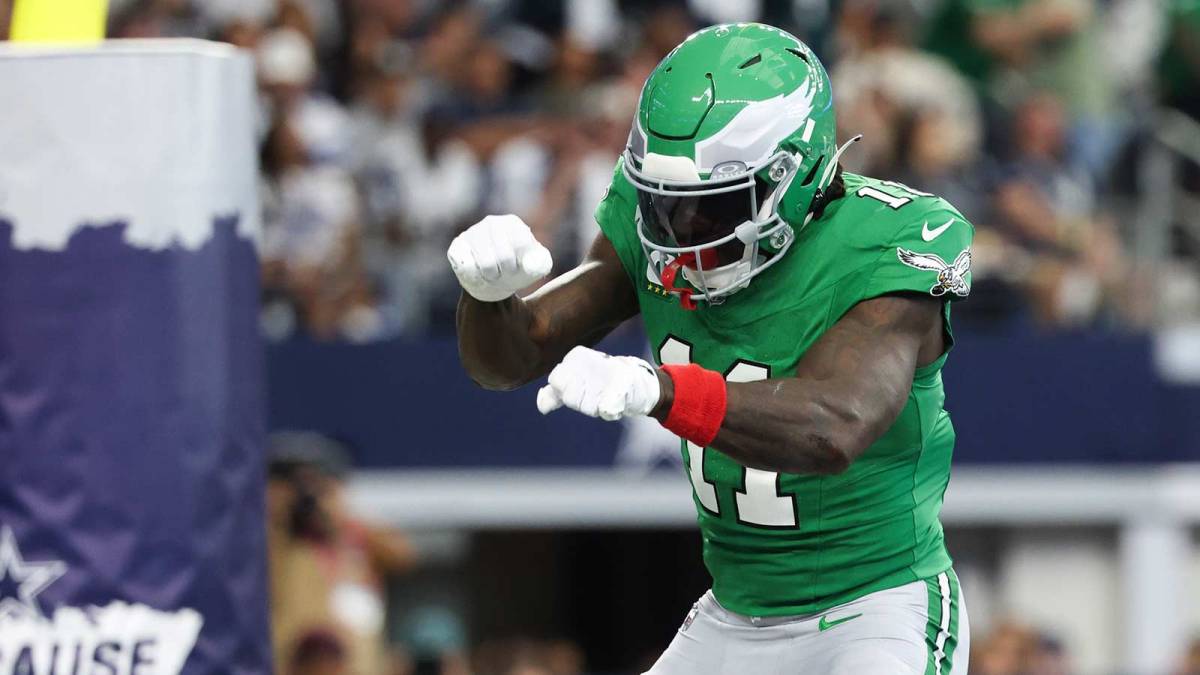
The Eagles’ 2025 campaign embodied contradiction. They had historic success paired with lingering tension. On paper, an 11-6 record and NFC East crown signaled sustained dominance. By repeating as division champions, Philadelphia accomplished something the franchise hadn’t done since the early-2000s Donovan McNabb era.
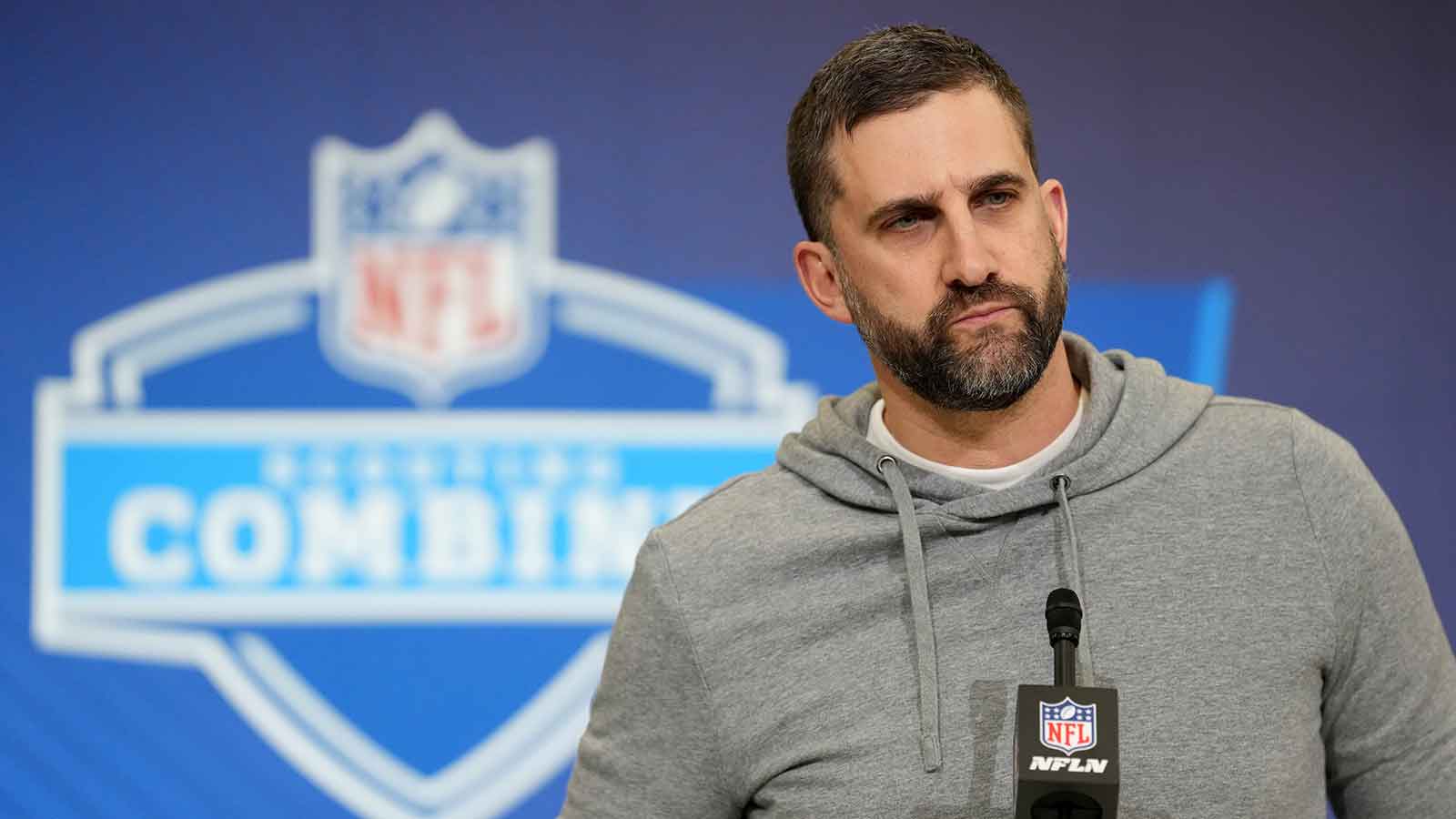
Yet beneath the production lurked structural imbalance. Philadelphia’s passing game never found consistent rhythm. It oscillated between explosive stretches and prolonged stagnation. Reports of philosophical disagreements between head coach Nick Sirianni and Brown only intensified scrutiny. When the postseason arrived, those fissures widened. Hosting the San Francisco 49ers in the Wild Card round, the Eagles fell 23-19 after a failed late fourth-down attempt. That ending crystallized both their competitiveness and their offensive disconnect.
Efficiency and chemistry dip
From a raw production standpoint, Brown still delivered. His 78 receptions, 1,003 yards, and seven touchdowns extended his streak to four consecutive 1,000-yard seasons. Context matters, though, and the efficiency markers told a more sobering story.
His 12.9 yards per catch represented a career low. Meanwhile, his 66.9 receiving yards per game marked his lowest output since his rookie campaign. This is a receiver whose identity is built on explosive chunk plays and bully-ball physicality. That regression just stood out. League insiders reported that Brown was “unhappy on numerous fronts.” That culminated in a visible sideline exchange with Sirianni during the playoff loss. Production remained, but harmony appeared fractured.
Contract realities
Financial mechanics further complicate the situation. Trading Brown before June 1 would trigger a staggering dead-cap hit north of $43 million. That figure alone would deter most organizations. Still, Philadelphia isn’t most organizations.
They have DeVonta Smith fully established as a WR1-caliber talent. The Eagles are also perpetually aggressive in asset management, GM Howie Roseman could prioritize a historic trade haul over short-term cap pain. If Philadelphia believes offensive balance is its championship formula, moving Brown becomes a strategic calculus.
Here are a few possible trade partners.
Buffalo Bills
If Brown becomes available, Buffalo would be among the first franchises dialing Philadelphia’s front office. The Bills have spent two seasons searching for a true boundary alpha to pair with Josh Allen. Khalil Shakir led the team with just 719 receiving yards in 2025. That reflects depth but not dominance.
Brown would instantly recalibrate Buffalo’s passing geometry. His physicality would command double coverage. That would free Shakir to operate in space while restoring vertical aggression to an offense that has plateaued in January. With the Bills perpetually knocking on the Super Bowl door, adding Brown could represent the missing postseason accelerant.
New England Patriots
New England’s resurgence has been fueled by defense, structure, and efficient quarterback play. That said, explosive perimeter talent remains limited. League chatter suggests the Patriots are monitoring Brown’s situation closely. They have both cap flexibility and premium draft capital.
For a quarterback like Drake Maye, having a receiver like Brown provides schematic insulation. His contested-catch dominance and yards-after-contact ability would stabilize the passing game while accelerating offensive growth. The Patriots also possess the asset surplus required to meet Philadelphia’s expected blockbuster asking price. This makes them one of the few AFC teams who can execute such a deal without roster depletion.
New York Jets
The Jets represent the high-variance, high-reward destination. They have more than $83 million in projected cap space and an abundance of early draft capital. With that, New York has both the financial and transactional ammunition for a splash move.
Pairing Brown with Garrett Wilson would instantly create one of football’s most explosive receiver tandems. Wilson’s route artistry combined with Brown’s physical dominance would stretch defenses horizontally and vertically. For any quarterback, such a tandem could extend the Jets’ competitive window while transforming an inconsistent offense into a weekly matchup nightmare.
New Orleans Saints
New Orleans enters the offseason searching for offensive identity recalibration. Chris Olave provides finesse and vertical elegance. However, the roster lacks a true bully-ball receiver capable of dictating coverage leverage.
Brown would fill that void immediately. His presence would allow Olave to operate in advantageous one-on-one matchups while enhancing red-zone efficiency. Should Kellen Moore or a similar offensive architect influence the scheme, Brown’s physical route tree would become a foundational pillar. Cap gymnastics would be required, of course. Still, New Orleans has never shied away from aggressive financial maneuvering.
Major decision looms
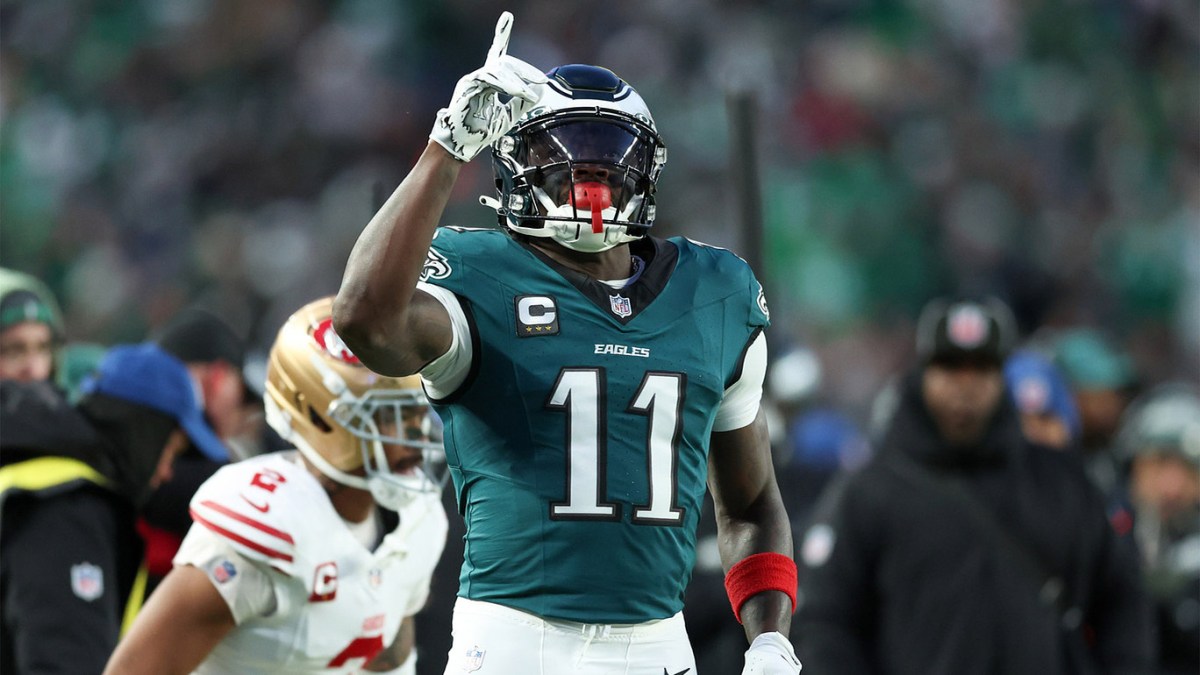
Trading AJ Brown would be seismic for Philadelphia and the league’s competitive ecosystem. Buffalo would gain a playoff closer. New England would gain offensive insulation. The Jets would gain star power. New Orleans would gain physical identity.
For the Eagles, the decision hinges on philosophical direction. If they believe Barkley-led ground dominance and Smith’s ascension can sustain contention, maximizing Brown’s trade value becomes rational. On the flip side, if they prioritize maintaining one of football’s most intimidating receiver duos, the financial and competitive price of separation may simply be too steep.