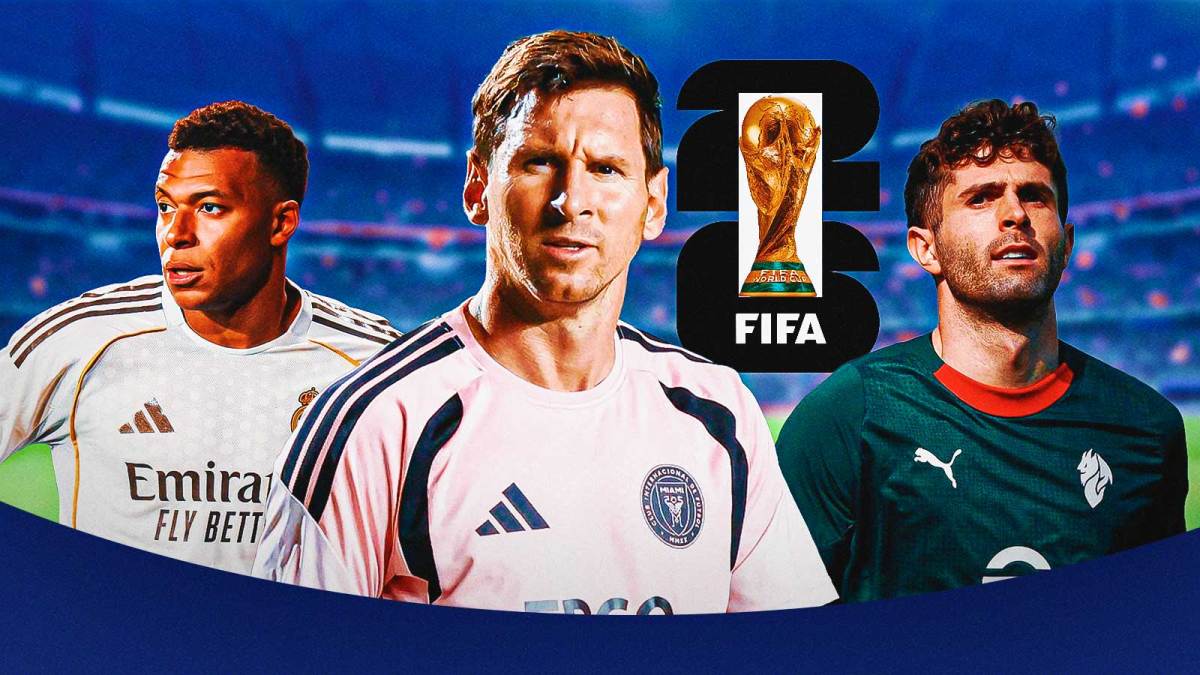
Lionel Messi did not just join Major League Soccer. He recalibrated American sports perception. When he arrived at Inter Miami in 2023, league attendance jumped midseason and executives openly credited him as the primary driver of growth, per ESPN. Stadiums filled. Celebrity sightings multiplied. Global cameras followed.
What Messi normalized in MLS, the 2026 World Cup will institutionalize.
Major League Soccer Team Values 2026: Thanks to Lionel Messi, Inter Miami is a juggernaut both on and off the field, worth a league-best $1.35 billion. But the stalled sales of two rival clubs show the growth isn’t extending to the bottom of MLS’ financial table.
See list:… pic.twitter.com/Sw0hL1OhZn
— Forbes (@Forbes) February 15, 2026
The tournament begins June 11, 2026, with the opening match at Estadio Azteca in Mexico City, and expands to 48 teams and 104 matches across North America, FIFA reports. The final will take place July 19, 2026, at MetLife Stadium in New Jersey. Sixteen cities will host. The scale alone signals permanence.
Argentina has qualified, and the match schedule already places Messi’s national team in Group J fixtures on June 16, 2026, at Kansas City Stadium and June 17, 2026, at San Francisco Bay Area Stadium. Those are not neutral soccer outposts. Those are NFL strongholds.
That symbolism matters.
Messi Made Soccer Mainstream Again
MLS officials acknowledged that Messi’s arrival fueled a measurable attendance spike during the 2024 season . Chicago Fire drew a record crowd when he played. Coaches publicly stated he changed how the world views MLS, per ESPN.
For decades, American sports culture treated soccer as peripheral. Youth participation thrived, but elite legitimacy remained debated. Messi erased that argument in real time.
He brought World Cup authority, Ballon d’Or prestige, and global devotion into a domestic league that once fought for airtime. Pink Inter Miami kits became fashion statements. Matches became cultural events.
The 2026 World Cup will amplify that transformation from club level to continental scale.
Infrastructure Is Already in Place
This tournament does not introduce soccer to America. It builds upon infrastructure already standing.
MLS now spans 30 teams. Soccer specific stadiums anchor multiple markets. Streaming partnerships distribute the league globally. Sponsors invest at scale. Messi’s MLS era proved American appetite exists beyond novelty.
FIFA confirmed the 2026 edition will feature 104 matches, the largest tournament in history. That expansion extends exposure windows and embeds soccer deeper into American summer calendars.
The final at MetLife Stadium on July 19, 2026, places the sport’s most prestigious match inside one of the most recognizable American football venues in the country. The visual alone signals coexistence rather than competition.
Kansas City and the San Francisco Bay Area hosting Argentina’s early fixtures reinforces the same message. Soccer does not occupy fringe markets. It occupies prime real estate.
Globalization Becomes Institutional
Messi represents more than an athlete. He represents globalization in motion.
His presence in MLS attracted global broadcast audiences and accelerated international engagement. The World Cup multiplies that effect across sixteen host cities.
This tournament will not operate as a temporary spike. It will activate tourism economies, sponsorship ecosystems, youth enrollment pipelines, and long term infrastructure planning. International fans will flood American cities in June and July. Global sponsors will anchor activations in NFL stadium corridors.
The United States will not appear as a curious host. It will appear as a permanent node in the global game.
When Argentina steps onto the pitch in Kansas City on June 16 and in the Bay Area on June 17, Messi will not carry the burden of introduction. He will play inside markets that already understand his value.
The Finish Line
The headline promises completion. What does 2026 finish?
🚨😳 Oh My Goodness… this is Lionel Messi’s 𝐀𝐔𝐑𝐀!
Before Inter Miami’s last match, even the opposition fans stood beside the tunnel with their cameras ready, waiting for that one moment.
And when Leo finally walked out, they froze… just to capture the presence of their… pic.twitter.com/OQR788JQrC
— Messi FC World (@MessiFCWorld) February 24, 2026
It finishes the perception gap.
It finishes the novelty stage.
It finishes the debate over whether soccer belongs in America’s top tier.
Messi started the normalization. He shifted MLS from developmental curiosity to premium entertainment. Coaches declared he altered global perception of the league. Attendance data supported that claim .
The World Cup seals it. Opening in Mexico City on June 11. Closing in New Jersey on July 19 (3). Spanning 104 matches across North America. Featuring Argentina and Messi in NFL stadiums mid June.
By the final whistle at MetLife Stadium, American sports culture will not debate legitimacy. It will debate optimization.
Messi ignited the shift. The 2026 World Cup will institutionalize it as fans across the world, including America, get to see how exciting this game truly is.