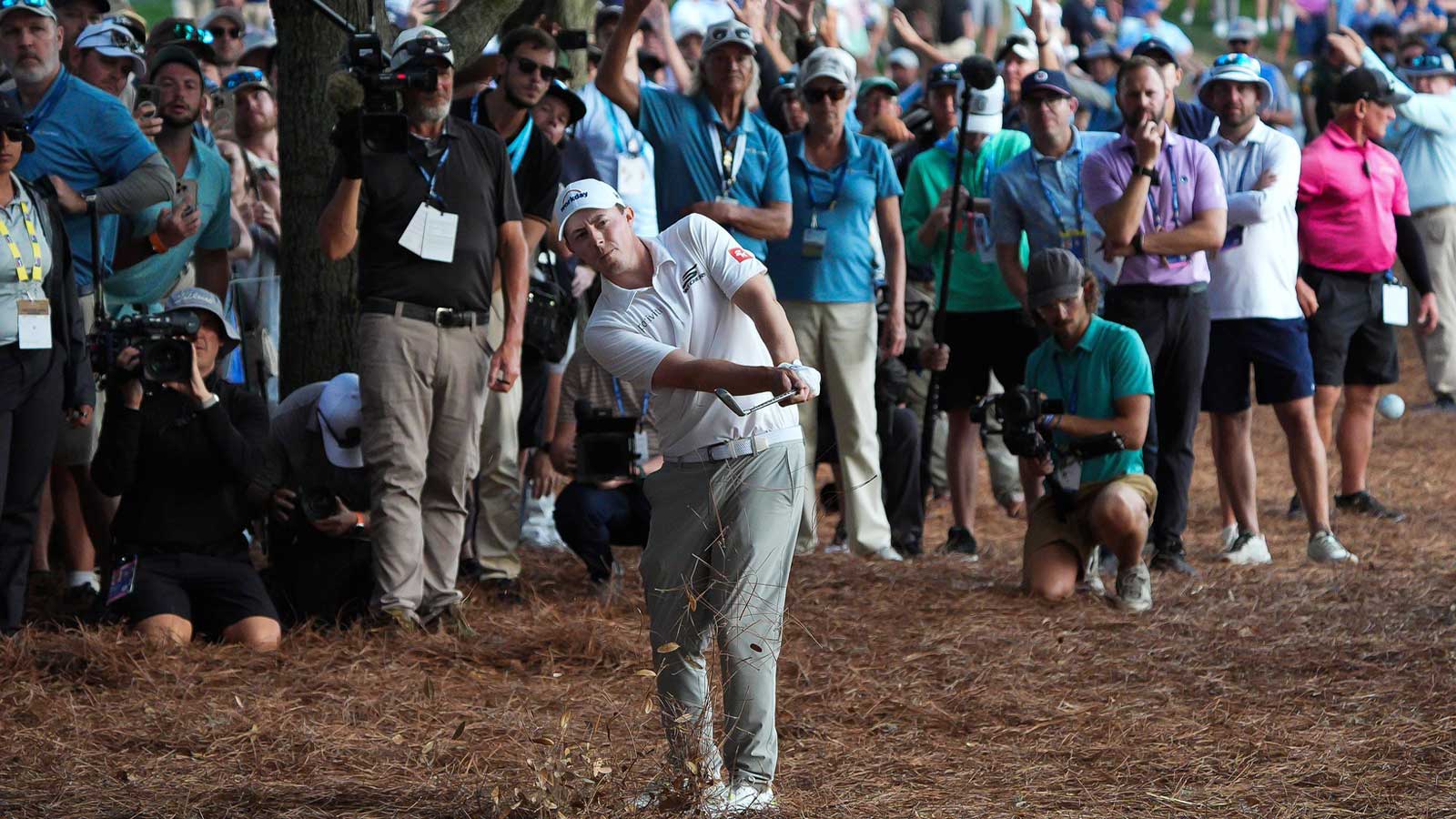

This weekend was the Valspar Championship, and Matt Fitzpatrick won. However, the story of the tournament was not that Fitzpatrick won, but rather that Fitzpatrick immediately went after Adrien Dumont de Chassart's pace of play. He chose his words carefully and never called him out by name, but he laid into the pace, and it was clear who he was talking about.
After the win, Fitzpatrick addressed it directly and even complained to a PGA Tour rules official about the pace of play. His biggest issue with the pace was that, despite being in contention and eventually winning the tournament, Fitzpatrick said his rhythm got thrown off by it.
“That was really frustrating,” Fitzpatrick said. “It was slow today. I felt like there was a lot of stop/start. Yeah, just, you know, just not ready. When you're not ready to play a golf shot, it gets frustrating after a while.
“Particularly when you're playing well yourself, or you're in contention or whatever it is. There's definitely, you know, it definitely knocks you out of your rhythm.”
The pairing of Fitzpatrick and Dumont de Chassart was a tale of two different stories, with Fitzpatrick soaring, while Dumont de Chassart struggled. Fitzpatrick fired a three-under 68 on his way to his first PGA Tour victory in nearly three years. In comparison, Dumont de Chassart's opening tee shot flew out of bounds en route to triple-bogey 8, and he made a second 8 at the par-5 11th. That second triple bogey was the one that Fitzpatrick complained about.
Pace of play has remained a topic of discussion in golf, and specifically, this year, the PGA Tour increased its measures to speed up play.
According to the 2026 PGA Tour player handbook, a player is permitted 40 seconds to play a shot, with a few exceptions allowing 50 seconds. Excessive shot times apply when a player exceeds “120 seconds for the first player in a group to play a stroke; 100 seconds for subsequent players in the group to play a stroke.” Excessive stroke times can lead to fines, and if a player or group is put on the clock by the rules officials, it can result in a one-, two-, three-, or even four-stroke penalty and possible disqualification.