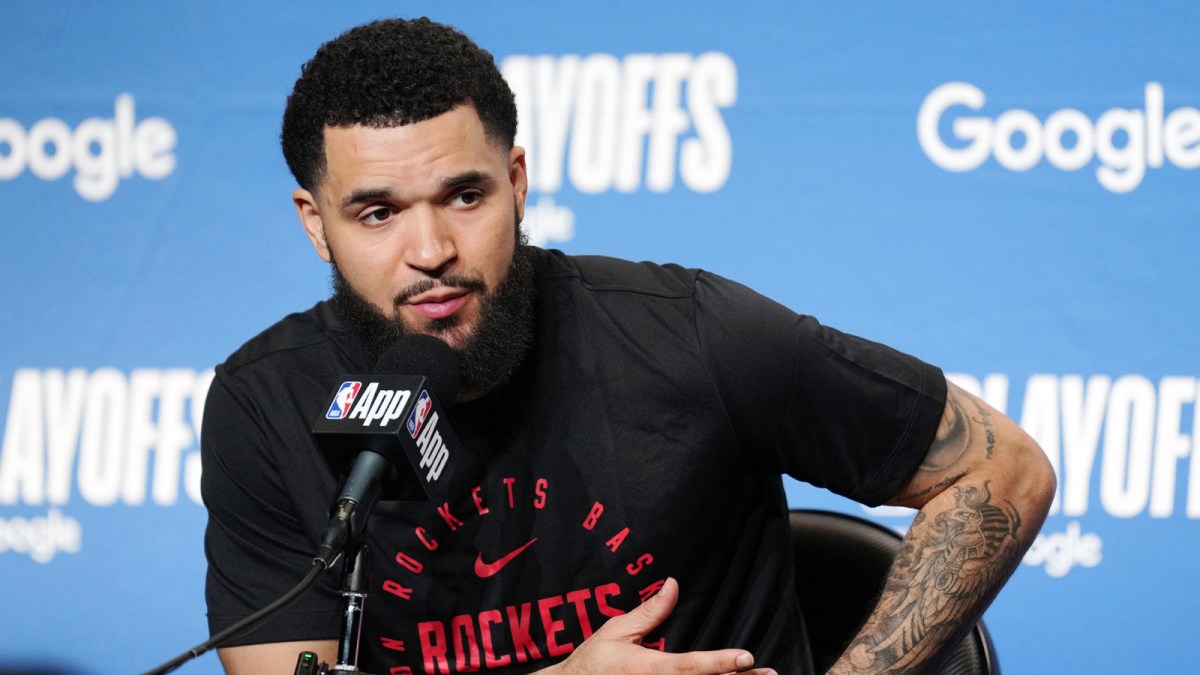
Sports betting now sits inside the daily rhythm of professional basketball, and Fred VanVleet believes that reality has started to cross dangerous lines.
His warning comes as more public confrontations involving bettors and players keep surfacing, per NYTimes. One of the clearest recent examples involved Jimmy Butler before a November game in New Orleans, when a man filmed himself confronting Butler on the street over a lost wager. The bettor angrily questioned why Butler failed to score enough points to cash a parlay and accused him of working for Vegas, turning a private walk into a viral public moment.
For VanVleet, that clip reflected something much larger than frustration over money.
He pointed to how quickly those encounters can shift from reckless words to something far more dangerous. “If Jimmy escalates that situation and somebody’s got a gun on him, that’s real,” VanVleet said, underscoring how thin the line has become between fan anger and real-world risk.
(via @taniaganguli) pic.twitter.com/jqz59rHRVK
— Legion Hoops (@LegionHoops) March 6, 2026
Players feel the pressure beyond the court
The NBA entered formal gambling partnerships in 2018 after the Supreme Court opened the door for states to legalize sports betting. That same summer, BetMGM became an official league partner, helping expand an ecosystem that now surrounds nearly every nationally televised game.
Players can also sign endorsement agreements with betting companies under league rules, though they cannot directly promote NBA wagers. That explains why LeBron James appears in betting ads tied to football rather than NBA outcomes.
VanVleet, however, does not see enough upside to justify what players increasingly face in public and online.
He has described moments where gamblers approached him personally, including one encounter while he attended church. That kind of intrusion, paired with social media accusations whenever unusual betting lines swing, leaves players vulnerable even when no wrongdoing exists.
League spokesman Mike Bass defended legalized partnerships by saying regulated betting creates transparency and accountability compared with illegal markets.
Still, VanVleet believes the revenue does not outweigh the reputational damage or safety concerns. Gambling-related income reportedly makes up about one percent of the shared revenue pool between the NBA and players.
“It’s not substantial enough to make it worth any of this,” VanVleet said. “For us or for the league, quite frankly.”
Once gambling frustration reaches players in parking lots, churches, or city streets, basketball no longer stays inside the arena.