The Toronto Blue Jays enter the final stretch before spring training facing a roster reality that no longer allows patience to dictate decision-making. With payroll commitments approaching competitive limits and a championship mandate already in motion, the Blue Jays must clearly identify which assets serve the present and which no longer align with that urgency. Among all roster decisions facing the organization, one name stands out as the clearest trade candidate, not because of diminished talent but because of timing.
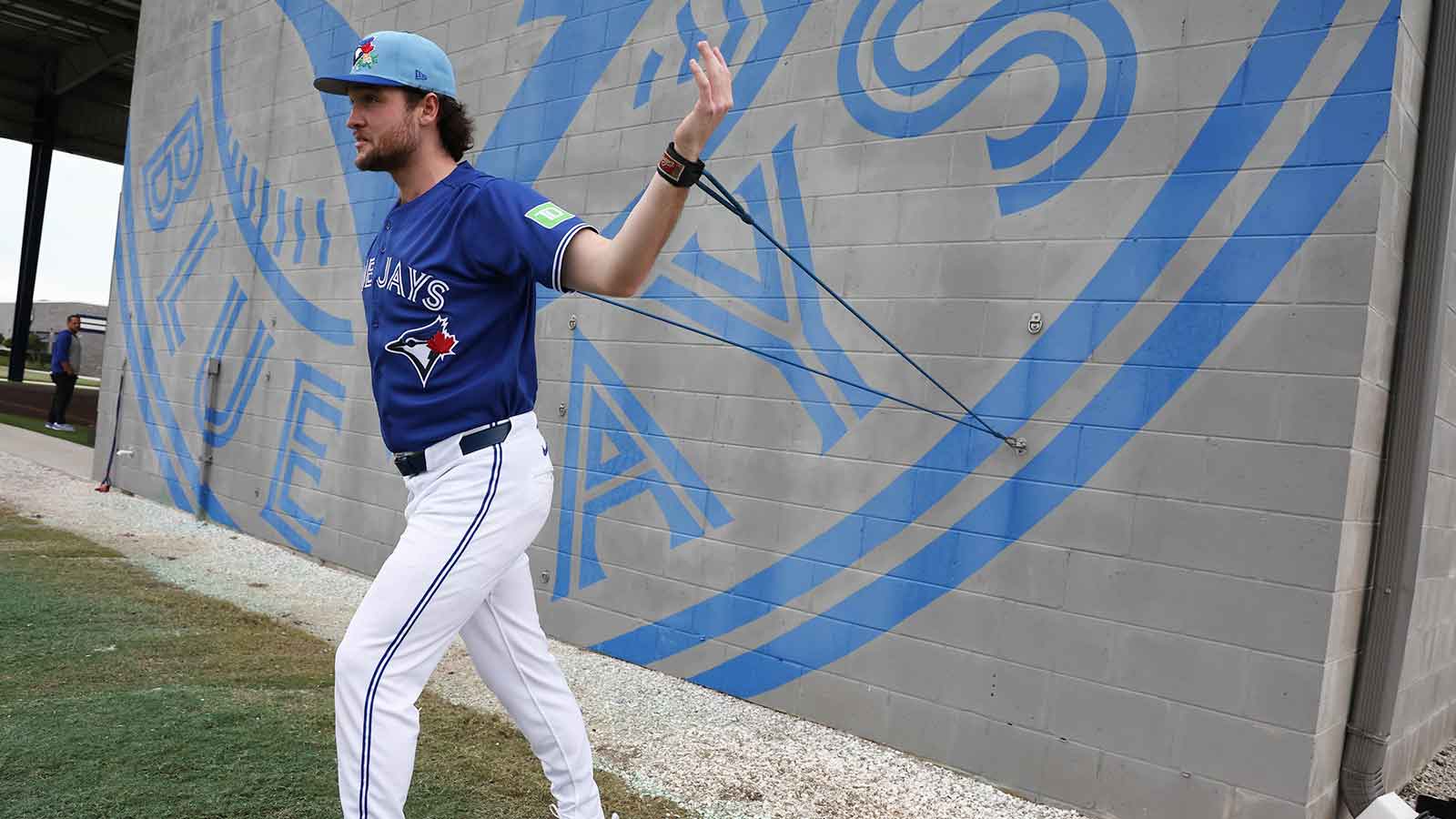
That player is Ricky Tiedemann.
When the Blue Jays selected Tiedemann to the 40-man roster on November 18, 2025, the move carried unavoidable consequences. The left-hander had missed the entire season while recovering from Tommy John surgery, yet the club still used a protected roster spot to shield him from the Rule 5 Draft. In doing so, the Blue Jays effectively began his service clock and burned a minor league option before he threw a competitive pitch. For a rebuilding club, that gamble might be defensible. For a team operating under postseason expectations and record payroll pressure, it represents a luxury that is increasingly difficult to justify.
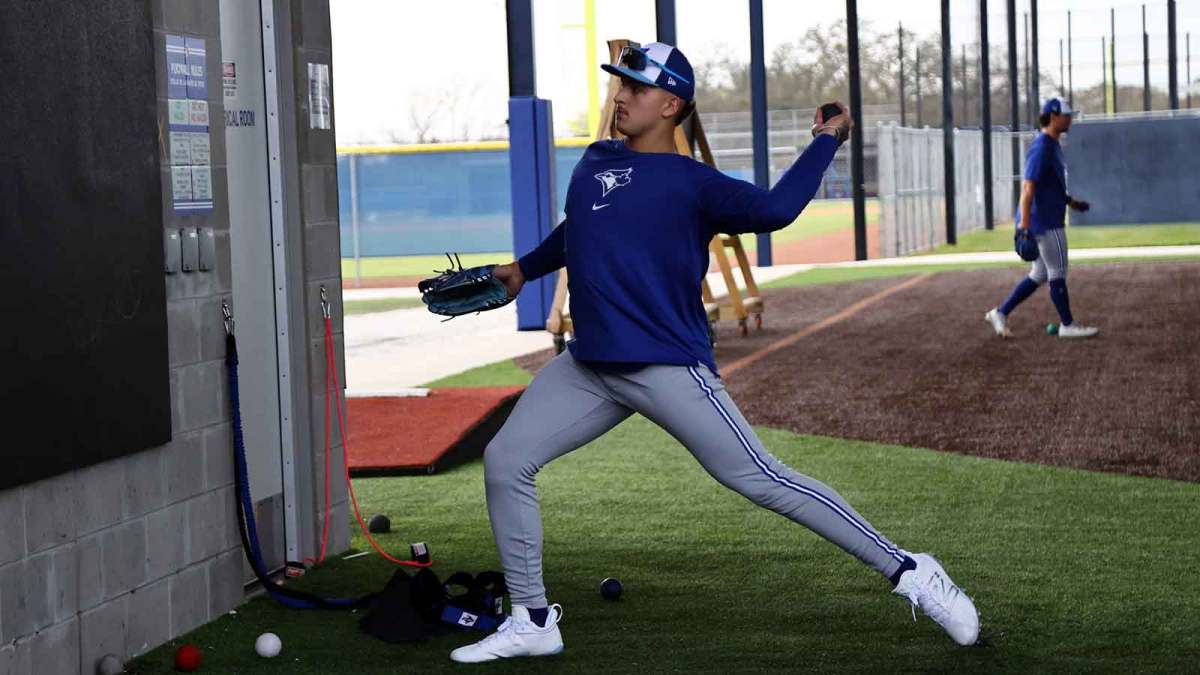
Carrying a pitcher who cannot reliably contribute innings in 2026 strains roster flexibility at the exact moment depth matters most. The timing only sharpens the dilemma. Tiedemann is reportedly healthy and active at the Player Development Complex in Dunedin, with scouts evaluating him through high-velocity bullpen sessions rather than game results. That distinction matters. History consistently shows that the first season back from reconstructive elbow surgery often includes command inconsistency, workload restrictions, and periods of diminished feel once live competition begins.
Currently, the Blue Jays benefit from perception rather than production. Tiedemann’s value is anchored in projection and pedigree, not proof. By midseason, that valuation could look completely different3 if he struggles to regain command in Triple-A or faces early innings caps. From a front office perspective, the moment represents a classic sell-high window. The risk is not that Tiedemann lacks talent. The risk is that waiting allows uncertainty to enter the stat line.
Toronto’s aggressive financial posture leaves little margin for long-term bets. That reality became undeniable when the organization committed 14 years and $500 million to Vladimir Guerrero Jr., signaling that contention is no longer aspirational but expected. The urgency only intensified this winter with the acquisition of Dylan Cease and the signing of Kazuma Okamoto, moves designed to solidify both the rotation and the infield for immediate impact.
Those additions push the luxury tax payroll near the base threshold and increase pressure to convert surplus value into contributors who can affect games from Opening Day forward. A rehabbing prospect with innings limitations offers limited immediate return when compared to a dependable veteran starter or a high-leverage reliever. This is where the pitching depth shifts from developmental assets to trade leverage.
The workload math reinforces the argument. Tiedemann has thrown roughly 140 professional innings since 2021, with a single-season high below 80. After logging zero innings in 2025, medical prudence will almost certainly cap him between 80 and 100 innings in 2026. In the American League East, that is not enough. The Blue Jays cannot afford short starts followed by early shutdown planning when divisional opponents punish any sign of pitching instability.
Meanwhile, the internal hierarchy has changed. Trey Yesavage, selected in the first round in 2024, surged through the system while Tiedemann rehabilitated. His dominance in the minors and September debut altered the rotation outlook in a tangible way. With Cease, Kevin Gausman, Jose Berrios, and Yesavage forming a credible top four, Tiedemann now profiles as depth rather than necessity. That distinction is relevant for a team built to win now.
Championship-caliber organizations trade from surplus to address present weaknesses. The addition of Okamoto strengthens the lineup but exposes a bullpen imbalance. Toronto lacks a true power left-handed reliever capable of neutralizing elite division bats in October. That is not a developmental gap. It is a competitive one. Tiedemann’s upside, age, and pedigree could headline a package that addresses that need immediately without compromising the core.
This is not an indictment of Tiedemann’s future. It is an acknowledgment of market reality. Prospects carry peak value before uncertainty enters the data. For Toronto, holding him through spring training risks watching that value erode while burning another roster resource in the process. The organization has already shown its intentions through spending. The next step requires discipline rather than sentiment. The decision is not about patience or belief. It is about maximizing value while the market still rewards projection, optimism, and upside more than uncertain production.
The Blue Jays are no longer operating within a developmental window that rewards patience. The club now operates within a results-driven cycle that penalizes inefficiency. Trading the 23-year-old before spring training begins converts theory into certainty and aligns every roster decision with a single objective. Winning now.