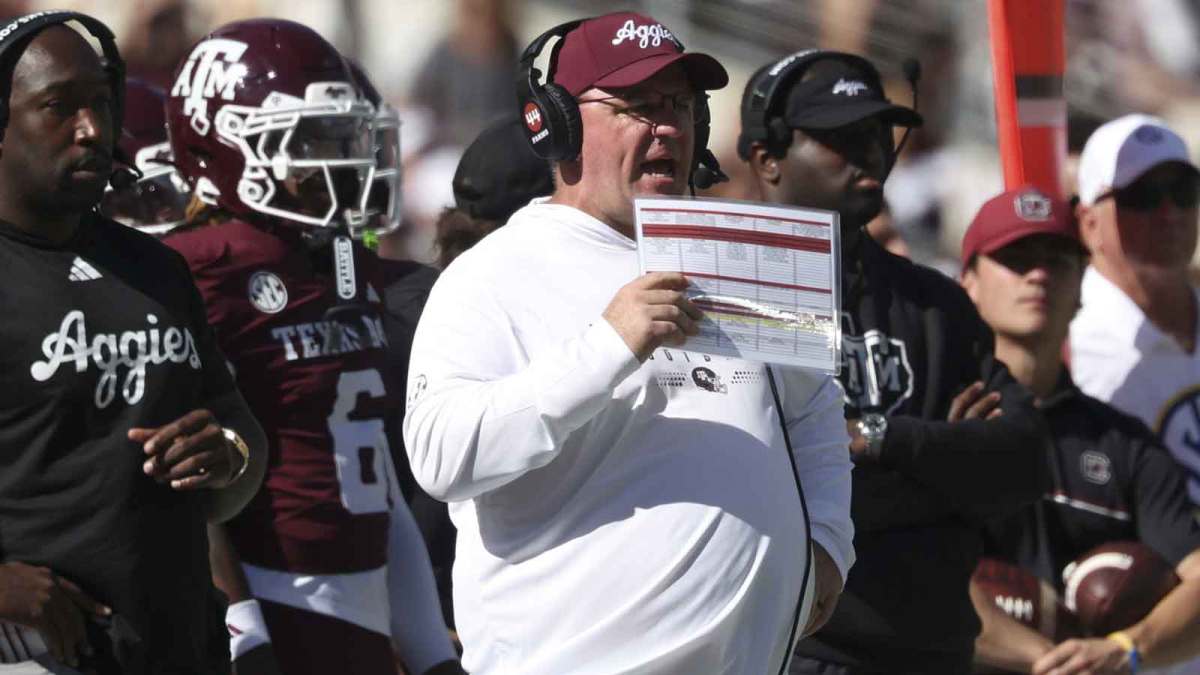
Texas A&M head coach Mike Elko stepped into the broader debate surrounding college football’s future during a recent appearance on The Hard Count. Elko used the platform to question the NCAA’s current leadership structure and advocate for a commissioner-style model to unify the sport’s direction.
Elko, entering his third season leading the Texas A&M Aggies, questioned whether the current governance model provides sufficient centralized authority. With conference realignment, NIL reform, and College Football Playoff expansion reshaping the landscape, he argued that college football needs a singular decision-maker guiding its future.
On3 shared the segment on X (formerly known as Twitter), highlighting Elko’s appearance on The Hard Count with On3Sports’ J.D. Pickell. The clip quickly gained traction Monday evening as discussion intensified around the sport’s power structure.
During the interview, Elko delivered a direct critique of the NCAA’s leadership framework.
“Put somebody in charge. It’s a $1.2 billion industry with not a singular voice in charge of it making decisions for the betterment of college football,” Elko said. “And I think until we get that, we’re going to continue to flounder with some of those areas. What’s best for the SEC isn’t always what’s best for the other conferences. What’s best for the other conferences isn’t always best for the SEC.”
The Aggies head coach continued by emphasizing the importance of enforcement and long-term vision.
“At some point, we’re going to have to have somebody who’s capable of making rules regarding the betterment of college football, enforcement of rules and all of it. Until we get that, I think we’re all at risk of this thing not lasting like we want it to last.”
His remarks highlight the growing tension within college football governance as revenue from the expanded playoff approaches $1.2 billion annually. Texas A&M now finds itself connected to a broader conversation about whether the NCAA can adapt to rapid financial growth—or whether the sport ultimately requires a commissioner-style model to sustain its future.