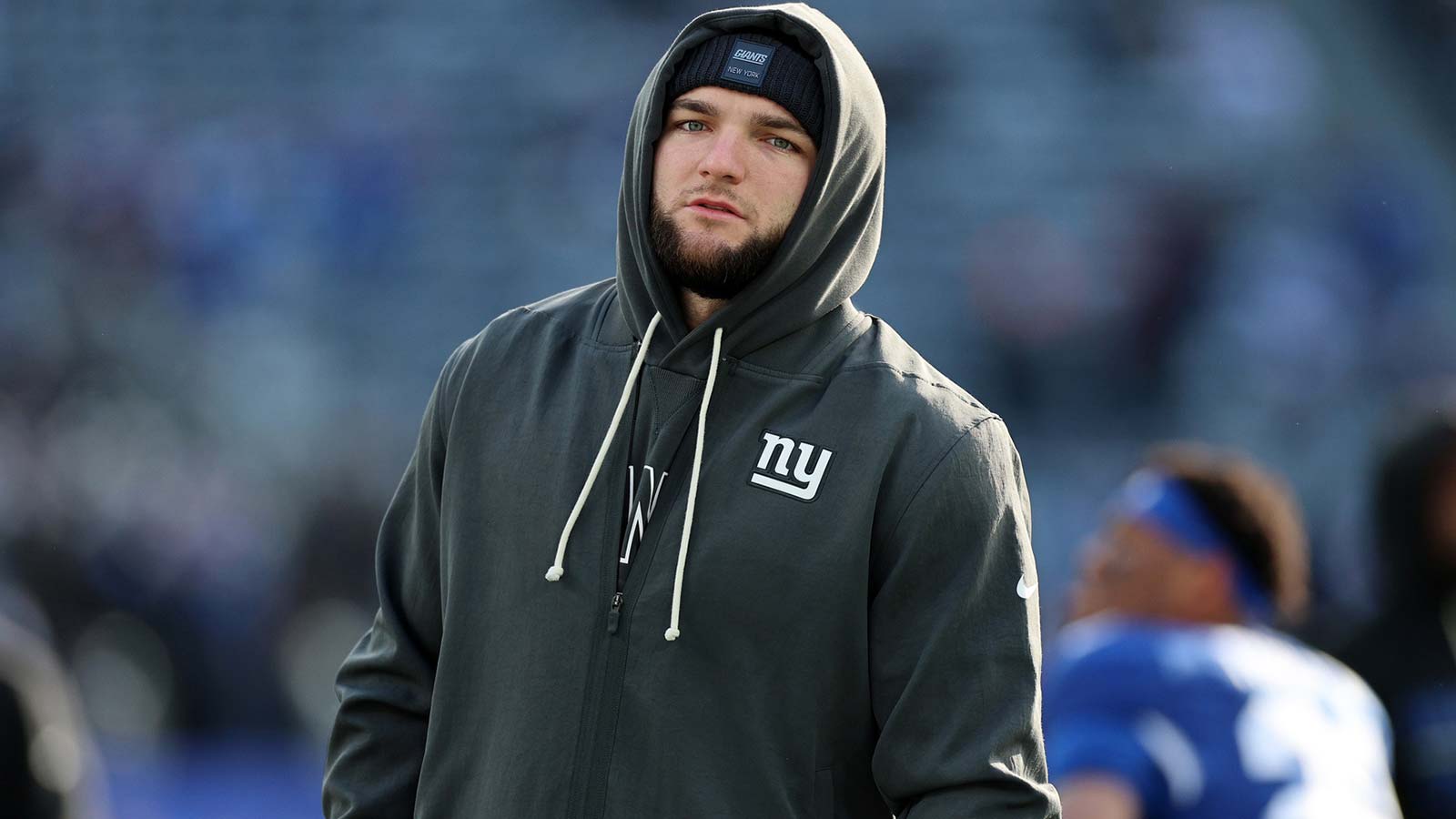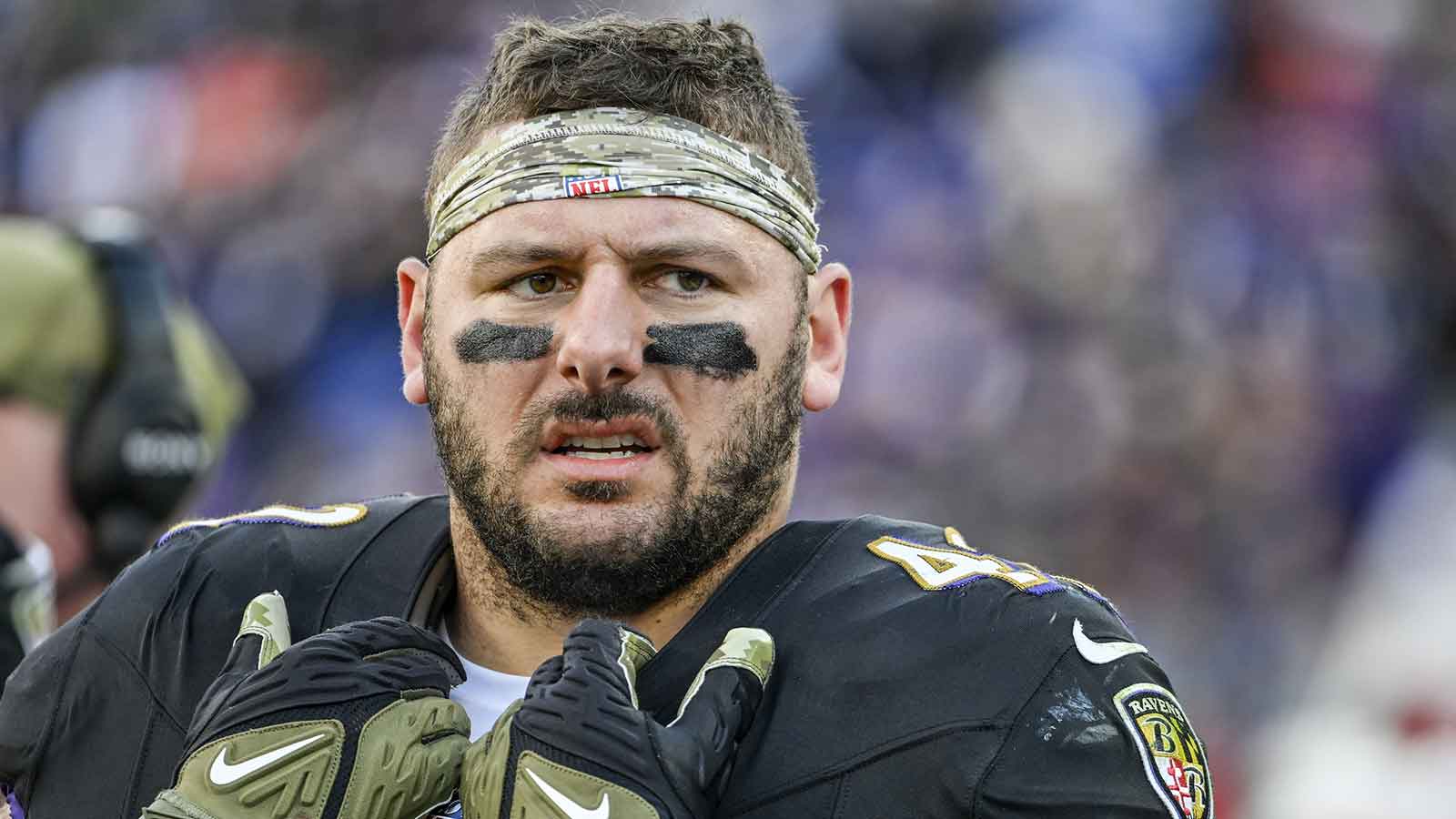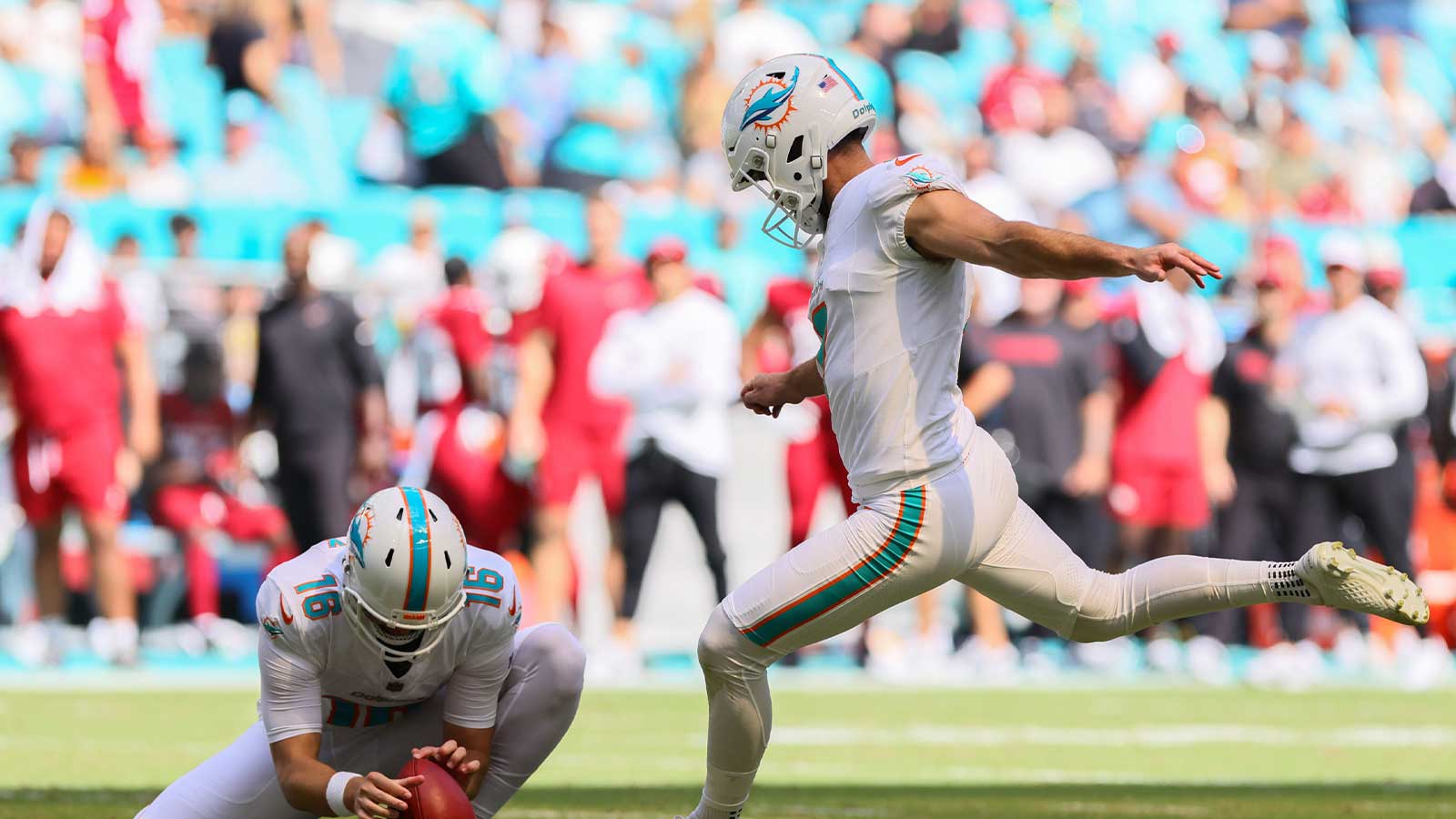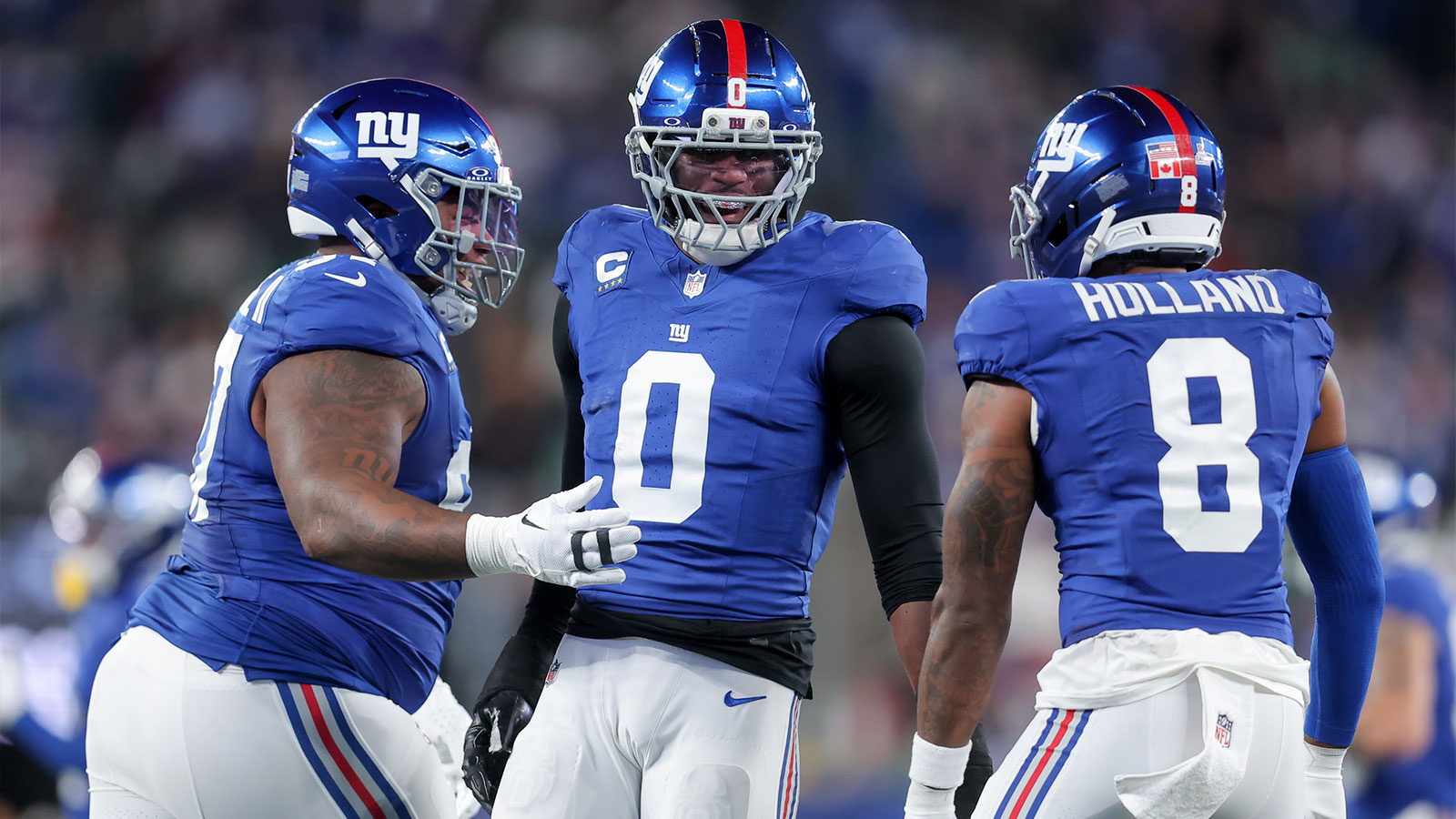
The New York Giants have focused on adding practical depth during the latter part of free agency rather than making headline-grabbing moves. They signed veteran defensive back Elijah Campbell to a one-year deal after his time in Miami, and they re-signed offensive lineman Joshua Ezeudu, also for one year.
While neither signing drastically alters the team's outlook, they both reflect a broader strategy of enhancing the roster's depth as the bigger questions loom over the upcoming draft.
This approach is why the Giants remain an intriguing team with the No. 5 pick, and while free agency has given them additional options in the secondary and improved continuity along the offensive line, the transaction log highlights many low-risk or one-year moves, from Jason Pinnock and Ar’Darius Washington at safety to Jermaine Eluemunor, Aaron Stinnie, and Ezeudu on the offensive line.
As a result, the draft board appears more open than urgent, which typically leads to insightful draft discussions, where the choice reflects the team's vision for building the roster, rather than merely addressing the most pressing need.
OT Francis Mauigoa, Miami
One projected pick for the Giants is OT Francis Mauigoa from Miami, as noted by Tim Crean. This choice makes increasing sense the more one considers it because it emphasizes New York's commitment to protecting quarterback Jaxson Dart in his next chapter.
Crean's perspective is that if the right side of the offensive line lacks stability, it puts undue pressure on the entire offense.
Discussions about enhancing the quarterback's support through skill players become superficial unless the line's protection is solid, and he characterizes Mauigoa as a tackle prospect who boasts ideal size, substantial lower-body strength, and raw power, qualities that can truly stabilize the line instead of merely filling a gap.
For the Giants, this is crucial, especially after a free agency period focused on adding depth without necessarily resolving long-term issues.
Ezeudu’s re-signing is beneficial, and Eluemunor could be a solution for 2026, but the front office may recognize the need for a true anchor if Dart's development is to yield significant results.
With this, Mauigoa would represent a clear indication that the Giants is ready to prioritize protection rather than simply repairing it after setbacks.
S Caleb Downs, Ohio State
Another potential pick is safety Caleb Downs from Ohio State, as suggested by Mel Kiper Jr. Kiper’s choice might seem bolder in terms of draft value, but it makes perfect sense from a football standpoint.
He acknowledges that the Giants already have safety options with Pinnock and Washington, but argues that Downs stands apart in his abilities, and he also describes Downs as a complete football player, emphasizing that pairing him with Jevón Holland would enhance New York's defensive production and improve a run defense that he rates as significantly lacking.
This perspective reveals that the pick is about more than just stacking defensive backs in a pass-heavy league because Downs would help rectify the structural issues in the defense, close gaps, generate turnovers, and strengthen areas that were too easily exploited last season.
In a draft class where the value of positions is heavily scrutinized, Kiper says that New York should not be swayed by the noise and should pick the exceptional safety if they believe he can fundamentally transform their defensive unit.
LB Sonny Styles, Ohio State
In another projection, Daniel Jeremiah predicts Sonny Styles will join the New York Giants, succinctly noting that Styles would be a significant asset behind the Giants’ dynamic front line.
This call carries more weight than it initially appears because Jeremiah focuses on the strategic fit of Styles’ skills rather than just raw talent.
Styles embodies the qualities of a modern front-seven defender who becomes even more formidable when the players in front of him demand attention, and his experience at Ohio State, where he combined a safety profile with linebacker responsibilities, enhances his fit for the Giants.
He is physically capable of handling contact, agile enough to excel in open space, and versatile enough to disguise defensive intentions after the snap. With a player like Styles behind an active defensive line, the team can increase speed without sacrificing size, a combination that top teams seek.
Although the Giants have made several moves to strengthen their middle defense through free agency, Jeremiah’s pick suggests they should still consider selecting a true centerpiece if the opportunity arises.
At the No. 5 spot, the key question becomes: do they prioritize a supporting role, or are they seeking a player who will transform the defense from day one?
WR Carnell Tate, Ohio State
Garrett Podell’s mock draft for CBS Sports focuses on the offense, specifically the wide receiver position, which remains a concern despite free agency efforts, and Podell projects Carnell Tate to the Giants, building on their acquisition of Isaiah Likely, which added a credible passing option.
However, the offense still lacks an outside complement to Malik Nabers, and Podell’s argument is persuasive as it emphasizes the quarterback-receiver relationship.
He notes that Tate would help develop Jaxson Dart, citing impressive stats, including six receiving touchdowns of 30 yards or more in 2025, the highest in the nation.
This isn’t just empty production because it shows Tate's ability to stretch the field and exploit defenses that overcommit to Nabers.
Practically, Tate would give the Giants a legitimate WR2 who is not merely a volume collector or gadget player but a real downfield threat with size and poise, because for a quarterback like Dart, who performs best when he trusts what he sees and can throw confidently, this addition is valuable.
Podell’s mock suggests that the Giants should stop pretending a quarterback can develop in a vacuum and realize Dart's potential; they need to give him a reliable receiving core.
What makes this draft board particularly interesting is that neither scenario feels like a desperate attempt to be innovative because the Giants have multiple needs that require different approaches, and free agency has clarified rather than eliminated that tension.
While their safety room has improved, a top safety is still a reasonable consideration. The offensive line has gained experience, but long-term stability remains difficult to achieve. Although the receiving corps has added new players, the offense could still benefit from another serious threat.
All this suggests the Giants are not limited to a single draft strategy as they can credibly pursue two narratives: one where they invest in Dart’s development by adding a key offensive piece and another where they prioritize acquiring a top defensive leader.
Furthermore, it’s important to recognize how the Giants have built their current roster, because moves involving Campbell and Ezeudu help maintain roster stability, while earlier signings like Likely, Pinnock, Washington, and Eluemunor provide enough flexibility to avoid drafting out of necessity.
This flexibility allows the front office to ask more insightful questions instead of just focusing on the most obvious gaps.
At No. 5, the Giants shouldn’t just consider which position is weakest on paper; instead, they should think about which type of player can best shape the next phase of their roster around Dart and this coaching staff.
This is a more challenging but healthier approach, and it explains why the Giants are in a fascinating position in the first round.
They are well-placed to select a key player while facing important choices, and their post-free agency situation lets them reveal more about their priorities than any public statement could.