The latest discussions surrounding the Seahawks' draft focus on the secondary, and after Mel Kiper Jr.’s new mock draft, released post-free agency, has Seattle selecting Tennessee cornerback Colton Hood at No. 32, especially after losing Riq Woolen, and they retained one key offensive player by re-signing Rashid Shaheed to a three-year, $51 million deal.
This combination of a noticeable departure in the secondary and an expensive return at receiver illustrates why Seattle's first-round conversations have evolved as they have.
Following free agency, they emerged as the defending Super Bowl champions, yet their roster still has unresolved issues. They retained Josh Jobe, acquired Noah Igbinoghene and Rodney Thomas II, and re-signed Josh Jones, but they also watched Woolen and Coby Bryant depart and currently hold only four total picks for the upcoming draft in April.
Therefore, the mock drafts are focusing on specific areas rather than throwing out random names, and the most frequently highlighted needs are cornerback, trench depth, and long-term succession planning for several positions that are stable for now but may not remain so.
The following summary offers a clear picture after the first week of free agency, highlighting the strongest recent mock drafts and a Seattle-specific projection.
Colton Hood, CB, Tennessee
Kiper’s reasoning is direct and aligns closely with Seattle's activities in March. With all the recent roster changes, there is still a need for a young outside corner who can contribute from the start. Kiper describes Hood as a long, physical defensive back that fits Mike Macdonald’s system well. Hood broke up 10 passes in 2025, had only one interception, but still exhibited the skills that make offenses hesitant to target him on the boundary.
He is a strong candidate for them because he fulfills multiple needs, and he is not just a backup option following Woolen's departure, as he also embodies the style that Macdonald prefers in his defense, showcasing length, a willingness to tackle, and the confidence to play aggressively without putting the entire defense in a vulnerable position. The Seahawks require a competitive outside corner who can earn snaps right away, and Kiper’s pick reflects this reality accurately.
Brandon Cisse, CB, South Carolina
If Kiper’s projection of Hood offers a polished solution to Seattle’s cornerback issue, Garrett Podell’s selection of Brandon Cisse provides a bigger-bodied alternative. Podell connects Cisse to the Seahawks due to the number of defensive backs who left and Cisse's ideal NFL size, closing speed, and vision-driven play style, which would suit Macdonald’s defense.
Cisse is the type of corner a team might seek to provide more stability on the outside rather than just speed. Seattle already has Devon Witherspoon, who brings energy and versatility, and what they still need is another larger outside defender capable of handling WR1 types without needing to constantly tilt coverage for protection.
Podell’s projection reflects this, and it indicates a strategic choice to prioritize size and competitiveness after losing a long-time starter.
Jermod McCoy, CB, Tennessee
Nick Baumgardner, The Athletic
Nick Baumgardner links Jermod McCoy to Seattle, representing the highest-variance projection in this analysis. McCoy possesses first-round talent, but there are concerns about his inactivity, as he has not played since 2024 and skipped a workout at the combine, despite claiming to feel healthy. This uncertainty has led to divided opinions around the league.
Nonetheless, it makes sense for Seattle to be associated with him because contending teams often take risks late in Round 1 when they have confidence in their infrastructure.
They may choose a player whose potential is more appealing than his recent performance, and while McCoy would not be a “safe” pick, he could significantly alter the secondary if his medical evaluations and private workouts are satisfactory.
On a Seattle defense that already includes Witherspoon and some veteran players, there is a possibility that the team can afford to be patient with McCoy while still aiming for high potential. This is important because Seattle is not drafting out of desperation.
Avieon Terrell, DB, Clemson
Danny Kelly’s projection in The Ringer's article-free-agency points to Clemson defensive back Avieon Terrell, and it’s easy to understand why this choice resonates in league circles. Terrell is the type of player coaches usually appreciate more than fans initially do, as he plays with energy, tackles well, can operate both inside and outside, and appears ready to contribute without a lengthy apprenticeship, especially on special teams and in sub-packages.
Terrell offers flexibility, and while he may not be the biggest or most dazzling athlete in this range, he plays with a level of urgency and temperament that tends to be advantageous in intelligent defensive systems. If Seattle’s front office believes it can replace Tariq Woolen and Justin Bryant with one player who brings immediate versatility, rather than a player who merely profiles as a traditional outside corner, then Kelly’s projection starts to make a lot of sense.
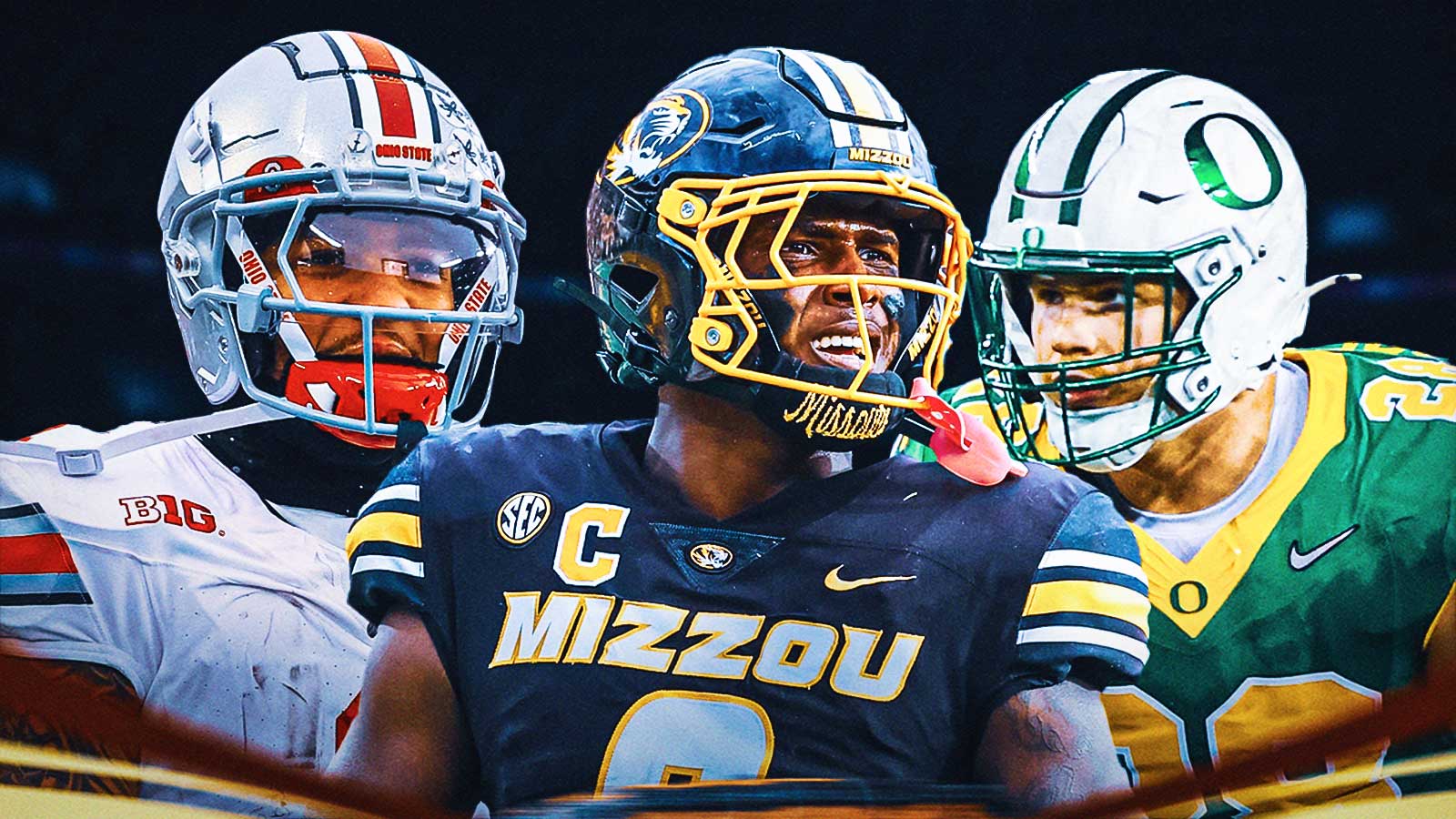
Emmanuel Pregnon, G, Oregon
Tim Crean's viewpoint remains relevant in the context of the Seahawks, as free agency has only strengthened his argument. In his Seattle roundup, Crean connects Oregon guard Emmanuel Pregnon to the Seahawks, citing the team's offensive line struggles over the years and the fact that both Jalen Sundell and Anthony Bradford are on expiring contracts in 2026.
Crean argues that Pregnon could step in as an immediate starter and enhance the run game right away.
This argument still holds after Seattle re-signed Josh Jones, and while he addresses depth, he does not provide long-term stability for the interior line. This is where Pregnon becomes particularly intriguing because the Seahawks won the Super Bowl by maintaining a balanced offense, not by having a line that appeared infallible every week.
If the Seahawks want to ensure their offensive identity doesn’t overly rely on patchwork health and veteran versatility, investing in a solid interior lineman like Pregnon now would be a smart move. Although it may not be the flashy pick compared to selecting another cornerback, it represents the type of forward-thinking decision that strong teams make when they seek to maintain strength rather than merely repeat past success.
That encapsulates Seattle’s draft outlook following free agency.
The board indicates that cornerback is the most pressing need, given that a few players have departed since the beginning of the year, and while Tre Brown and more depth pieces remain on the roster, it’s evident that the secondary is not fully settled.
At the same time, having a player like Pregnon in the conversation serves as a reminder that the Seahawks cannot afford to overlook the trenches just because they won their last game of the season.
After the first week of free agency, the cornerback position remains the most plausible direction unless Seattle opts to trade down, and the fortunate aspect for Seattle is that all of these options are defensible. However, with only four picks, they cannot afford to be wrong.