
The 2026 offseason is going to be a hectic one in the NFL. Tyreek Hill was just released by the Miami Dolphins, meaning one of the best receivers of the 21st century will hit the open market and join a unique free agent class. The 2026 NFL Draft is also right around the corner. It is the franchise tag window that truly kicks off the offseason, though. The window begins on February 17, just over a week after the conclusion of Super Bowl 60, and it will last for two weeks until March 3.
The franchise tag is a tool that allows NFL teams the chance to prevent their best impending free agents from hitting the open market. So, who are the top candidates to be tagged, and should their respective teams actually put the franchise tag on them?
What is the franchise tag?
There are three types of free agents in the NFL. Unrestricted free agents are players whose contracts have expired who have four or more accrued seasons under their belt. They are free to sign with any team around the league.
Restricted free agents have three accrued seasons and an expired contract. The original team of a restricted free agent has the option to tender a contract to these players. If a tendered player agrees to a contract elsewhere, the original team can either match that salary and retain the RFA, or they will be compensated with the draft capital associated with the tender. There is a first-round tender, a second-round tender, and an original-round tender, so not matching an offer sheet would net a team one of these picks in the NFL Draft. Of course, the greater the tender, the higher the contract value. There is also a right-of-first-refusal tender that doesn't have draft capital tied to it.
Lastly, there are exclusive rights free agents, players with fewer than three accrued seasons, and an expired contract. These players are not allowed to negotiate with other teams if their original team offers a one-year deal.
Teams can prevent their players from hitting free agency altogether by putting the franchise tag on them. The franchise tag is a one-year contract, but it comes at a pretty penny. Usually, teams that use the franchise tag on a player will look to lock that player up on a long-term contract. There are three tag types, and teams can only tag one player per offseason.
The first option for tagging a player is the exclusive franchise tag. The one-year contract is worth no less than the average of the top five salaries at a player's respective position or 120 percent of the player's previous salary, whichever is greater. Using this tag ensures exclusive negotiating rights with the tagged player, so said player must agree to sign the tag or sit out the season. This is a rarely used tag because it can make stars disgruntled, but it is also the easiest way to ensure losing an elite player doesn't happen.
There is also the non-exclusive franchise tag. This is also a one-year deal worth no less than the average of the top five cap hits at the player's respective position or 120 percent of the player's previous deal. The difference is that players slapped with this tag are allowed to negotiate long-term contracts with other teams. If a player agrees to a deal elsewhere, the tagging team is given a choice. They can either match the contract or let him leave for his new team, in exchange for two first-round picks. This is the most commonly used franchise tag.
The third tag at a team's disposal is the transition tag. It is a cheaper alternative to the franchise tag, but it comes with the risk of losing a player for nothing. The bargain comes in the form of the transition tag being worth the average of the top-10 contracts at a player's position. However, if a player signs a long-term offer sheet with another team and the tagging team doesn't match the contract, they won't be compensated with any draft capital.
Last year, only two players were franchise tagged: Tee Higgins and Trey Smith. It was the fewest amount of tags used since 2006. That will surely change in 2026.
Franchise tag positional values
Note: Projections provided by overthecap.com
Quarterback: $47,321,000 (franchise tag) – $40,799,000 (transition tag)
Wide receiver: $28,824,000 (franchise tag) – $25,029,000 (transition tag)
Offensive line: $27,924,000 (franchise tag) – $25,305,000 (transition tag)
Linebacker: $28,197,000 (franchise tag) – $23,613,000 (transition tag)
Defensive tackle: $26,311,000 (franchise tag) – $21,608,000 (transition tag)
Defensive end: $27,322,000 (franchise tag) – $22,908,000 (transition tag)
Cornerback: $21,414,000 (franchise tag) – $17,951,000 (transition tag)
Safety: $20,876,000 (franchise tag) – $16,485,000 (transition tag)
Tight end: $16,319,000 (franchise tag) – $13,869,000 (transition tag)
Running back: $14,536,000 (franchise tag) – $11,728,000 (transition tag)
Kicker/Punter: $6,900,000 (franchise tag) – $6,240,000 (transition tag)
Candidates for the tag
Kenneth Walker, Seattle Seahawks, RB:
To tag or not to tag?: Non-exclusive franchise tag
The idea of letting Kenneth Walker walk in free agency was a lot more feasible just a few weeks ago. At the start of the postseason, the Seahawks had one of the best running back tandems in football, with Walker splitting carries with Zach Charbonnet. Then, Charbonnet tore his ACL, which could end up holding him out for all of next season. Walker would go on to rush 27 times for 135 yards in Super Bowl 60 en route to being named the Super Bowl MVP, too.
The prospect of losing a player who has become such an important part of Seattle history seems too much for the Seahawks to bear, so expect Walker to be franchise tagged.
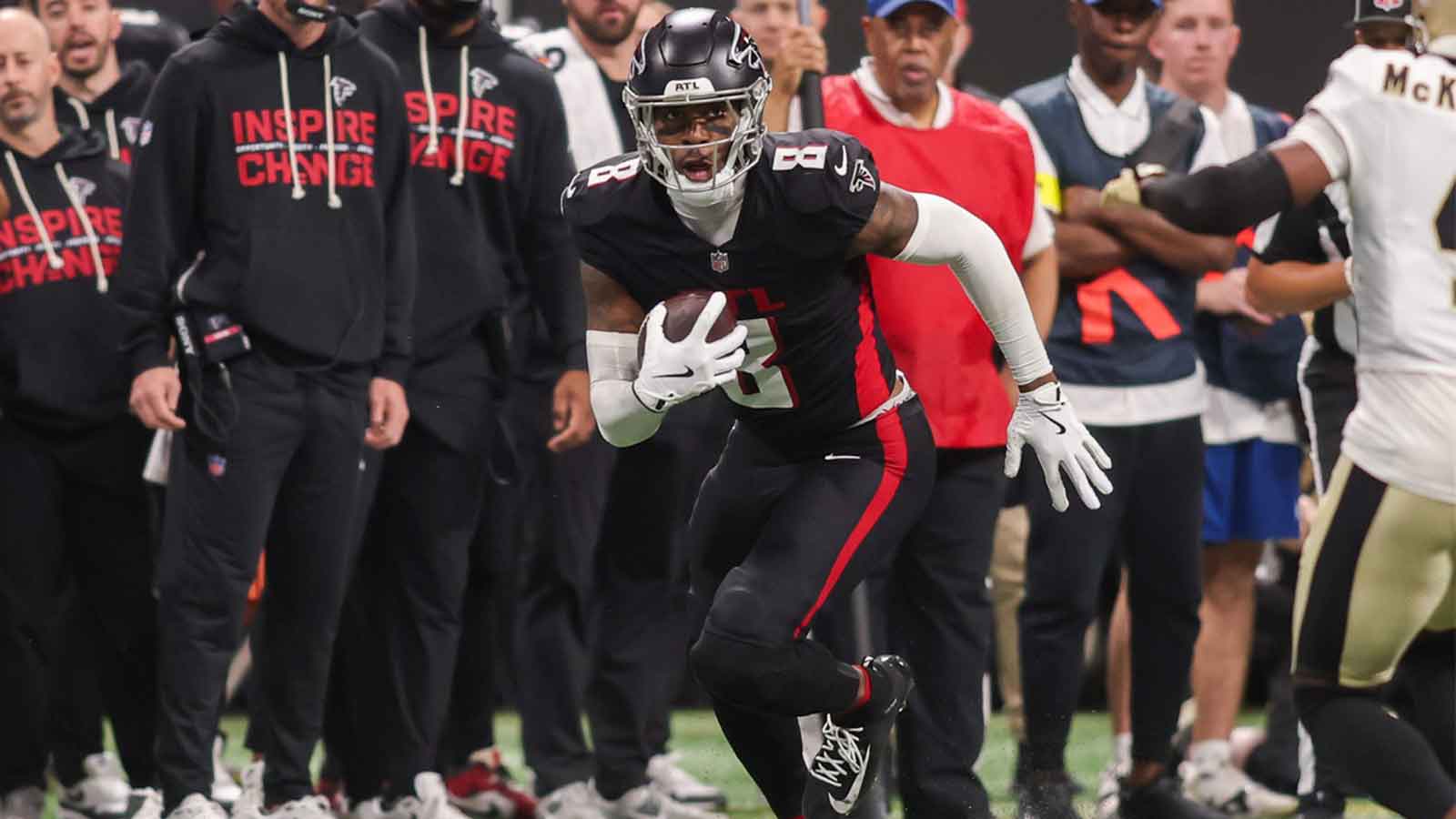
Kyle Pitts, Atlanta Falcons, TE:
To tag or not to tag?: Non-exclusive franchise tag
Kyle Pitts was the highest-drafted tight end in NFL history. While he had an impressive rookie season, he hadn't lived up to his potential for most of his Atlanta Falcons tenure. That led to trade rumors and a near inevitability that Pitts wasn't a franchise tag option coming into the 2025 season. Then, the tight end lived up to his potential to put up the second-best numbers among all players at his position group this past season.
Pitts hasn't been consistent throughout his career, which could make the Falcons hesitant to commit to him long-term. The potential he showed this season makes losing him in free agency too risky, though, so letting Pitts prove himself on a one-year franchise tag seems smart for Atlanta.
Trey Hendrickson, Cincinnati Bengals, DE:
To tag or not to tag?: Don't tag
The Cincinnati Bengals have been hesitant to give their players long-term contract extensions. Trey Hendrickson has been a prime example of this. The defensive end has two seasons with 17.5 sacks to his name, including the league-lead in that regard in 2024. However, he and the Bengals have butted heads ever since, leading to a lengthy holdout. Their relationship may be too far gone, so Hendrickson seems destined to walk in free agency.
George Pickens, Dallas Cowboys, WR:
To tag or not to tag?: Non-exclusive franchise tag
The Dallas Cowboys are another team that hasn't given their superstars the money they deserve when they deserve it. Dak Prescott and CeeDee Lamb weren't given contract extensions until the eleventh hour to do so, and Dallas opted to trade Micah Parsons instead of paying him.
Dallas can't make the same mistake with George Pickens. After trading for the receiver, Pickens developed into one of the top statistical producers in the league. He and Lamb form arguably the best receiver duo in the NFL, so bringing him back should be paramount.
Daniel Jones, Indianapolis Colts, QB:
To tag or not to tag?: Don't tag
Daniel Jones was a draft bust with the New York Giants. He then won a quarterback competition with the Indianapolis Colts and immediately turned them into one of the best offenses in the league. Unfortunately, the Colts started to falter, and things fell off a cliff when Jones tore his Achilles tendon. While Jones seemed like a great fit for the Colts, his future is in doubt. He is rehabbing from one of the worst injuries in sports and may miss all of next season.
The silver lining is the Colts might be able to bring Jones back for cheaper than they would have had he not gotten hurt. Plus, most teams either already have their franchise signal caller or will prefer to get one in the draft rather than taking a gamble on an injured veteran with up-and-down career production. The Colts shouldn't tag Jones, but they should try to re-sign him on the open market under the premise that he will be the starter once he is back from injury.
Travis Etienne, Jacksonville Jaguars, RB:
To tag or not to tag?: Non-exclusive franchise tag
A handful of teams made the leap from bottom dwellers to postseason powerhouses this past season. The Jacksonville Jaguars were one of them. The team will want to add talent in free agency, not lose it, in order to take the next step forward. However, they shouldn't franchise tag Travis Etienne and should instead allocate the money saved by not bringing him back elsewhere to improve the roster.
The Jaguars have enough running back depth. Also, after Trevor Lawrence's breakout season and with the hope that Travis Hunter and Brian Thomas Jr. will have better seasons next year, the Jaguars may lean on their passing game going forward. Paying running backs is always risky due to their short career lifespans and the high chance for injury at the position. Jacksonville should let Etienne walk in free agency.
Jaelan Phillips, Philadelphia Eagles, DE
To tag or not to tag?: Don't tag
The Philadelphia Eagles won Super Bowl 59 in large part because of great defensive depth. They then lost Milton Williams, Josh Sweat, Isaiah Rodgers, Darius Slay, and others in free agency, which played a big part in their demise during the 2025 season. Philadelphia actually did a good job of bringing in reinforcements, but losing any more defensive talent would hurt.
The team traded for former first-rounder Jaelan Phillips at the NFL trade deadline, and the edge rusher broke out with his new team. The Eagles would certainly love to have him back, but he isn't worth the lofty price tag that comes with a franchise tag. The Eagles should try to re-sign him, but without tying him to the huge one-year deal.