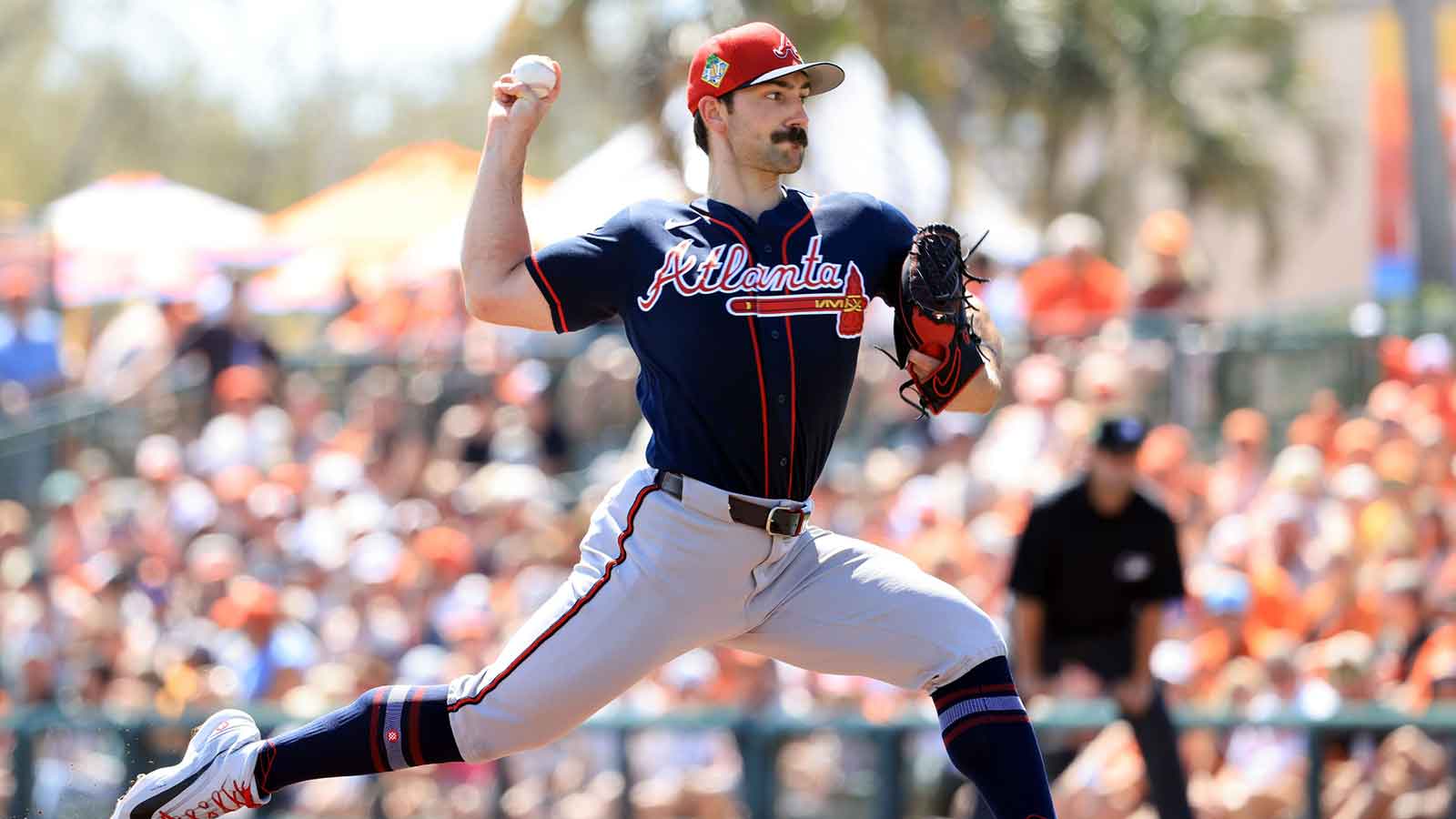
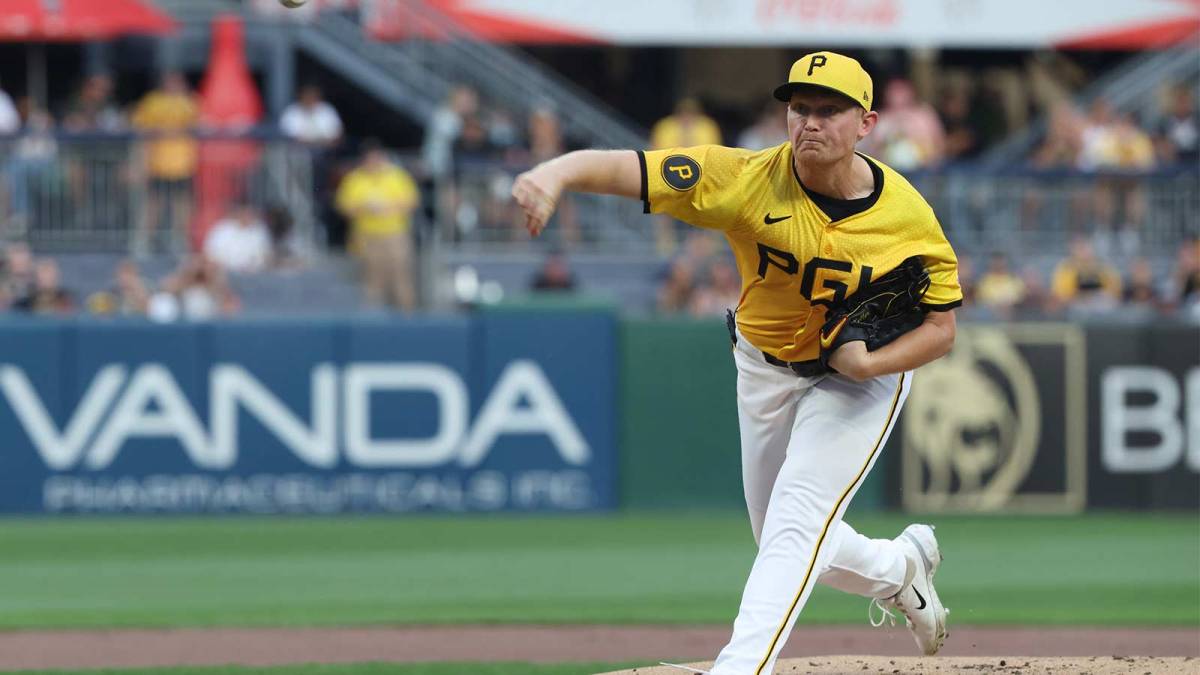
The Atlanta Braves enter late January with spring training on the horizon and a roster that appears nearly finished, aside from one lingering concern. Despite an otherwise productive winter, the Braves’ rotation still lacks a proven innings floor behind its frontline arms. October has consistently shown how quickly depth can erode when starters break down. For a club with World Series expectations after missing the playoffs for the first time in seven seasons last year, this is no longer a talent issue. It is a durability problem.
With pitchers and catchers reporting in roughly two weeks, the window to act remains open but narrow. One decisive move can still reshape the 2026 outlook without sacrificing long-term flexibility. The path forward is straightforward and clear as the Braves can convert surplus into stability through a targeted last-minute trade.
The proposal is simple and direct. The Braves send catcher Sean Murphy to the Pittsburgh Pirates in a rare one-for-one exchange for right-handed pitcher Mitch Keller. It is the type of trade where timing, contracts, and competitive incentives align cleanly for both sides.
From Atlanta’s perspective, the logic centers on roster balance. When Murphy arrived three years ago, he fit the profile of a franchise cornerstone. That context has shifted. Drake Baldwin did more than debut last season as he seized the everyday role and went on to win National League Rookie of the Year. His left handed bat also provides lineup balance that Murphy does not. Allocating $15 million annually to a backup catcher no longer aligns with how the Braves need to deploy resources.
Moving Murphy answers the question that has lingered over recent postseasons of who can reliably take the ball every fifth day. Keller fits that need precisely. He is not a high variance arm or a projection. He is a known quantity who has made at least 29 starts in four consecutive seasons while logging heavy workloads in each of the last three. That consistency brings much needed stability to the middle of the rotation behind Spencer Strider and Chris Sale, particularly as Strider continues working back to full form following an uneven 2025 return from elbow surgery.
The urgency is amplified by the current health profile of the staff. Reynaldo Lopez is recovering from a 2025 shoulder injury, with clearer updates expected once spring training begins. Grant Holmes dealt with elbow inflammation late last season, though the organization remained encouraged by his progress entering the offseason. Spencer Schwellenbach is returning from a June 2025 elbow fracture and is expected to be ready for the start of the 2026 season. AJ Smith Shawver underwent Tommy John surgery for a torn UCL on June 9, 2025, and is expected to miss most of the 2026 season.
In the context of this hypothetical trade, adding Keller gives the Braves insulation it has lacked in recent years, easing pressure on returning arms and reducing the risk of overextending pitchers still navigating recovery or development.
Pittsburgh’s motivation is just as clear. The Pirates have built significant pitching depth, led by Cy Young winner Paul Skenes and supported by emerging arm Jared Jones. With top prospect and potential 2026 Rookie of the Year candidate Bubba Chandler nearing major league readiness, Keller becomes a logical trade chip. While valuable, he occupies a rotation spot that could soon be claimed by a higher-upside arm.
That surplus allows the Pirates to address their most glaring weakness. Catching production weighed heavily on the club in 2025, delivering sub replacement offense and limited defensive value. A healthy Murphy immediately raises the floor. He provides Gold Glove caliber defense, elite pitch framing, and legitimate middle of the order pop, while also offering leadership for a young pitching staff.
The injury context is what makes the trade viable. Murphy’s offseason hip surgery and shortened 2025 season have depressed his market value just enough for a budget-conscious team to engage. In a vacuum, a fully healthy Murphy would command more than Keller. The temporary uncertainty levels the exchange and creates opportunity for both sides.
Every offseason features one move that appears obvious only in retrospect. For Atlanta, that moment has arrived. Standing pat risks revisiting the familiar script of rotation attrition and bullpen strain when October returns. Acting now transforms surplus into certainty. The pieces align. The rationale is sound. GM Alex Anthropolis and the Braves front office should attempt to make a move before spring training begins.