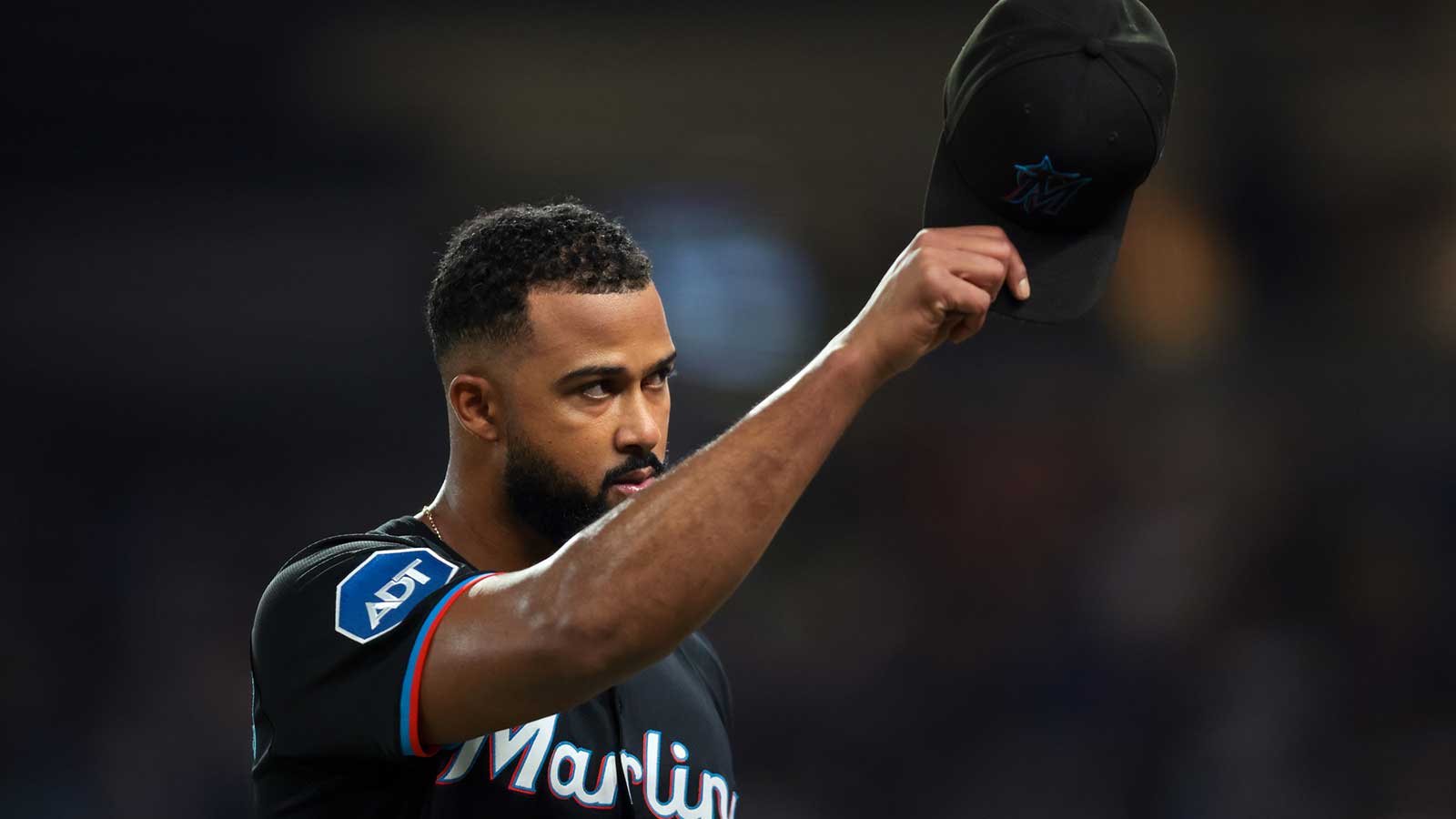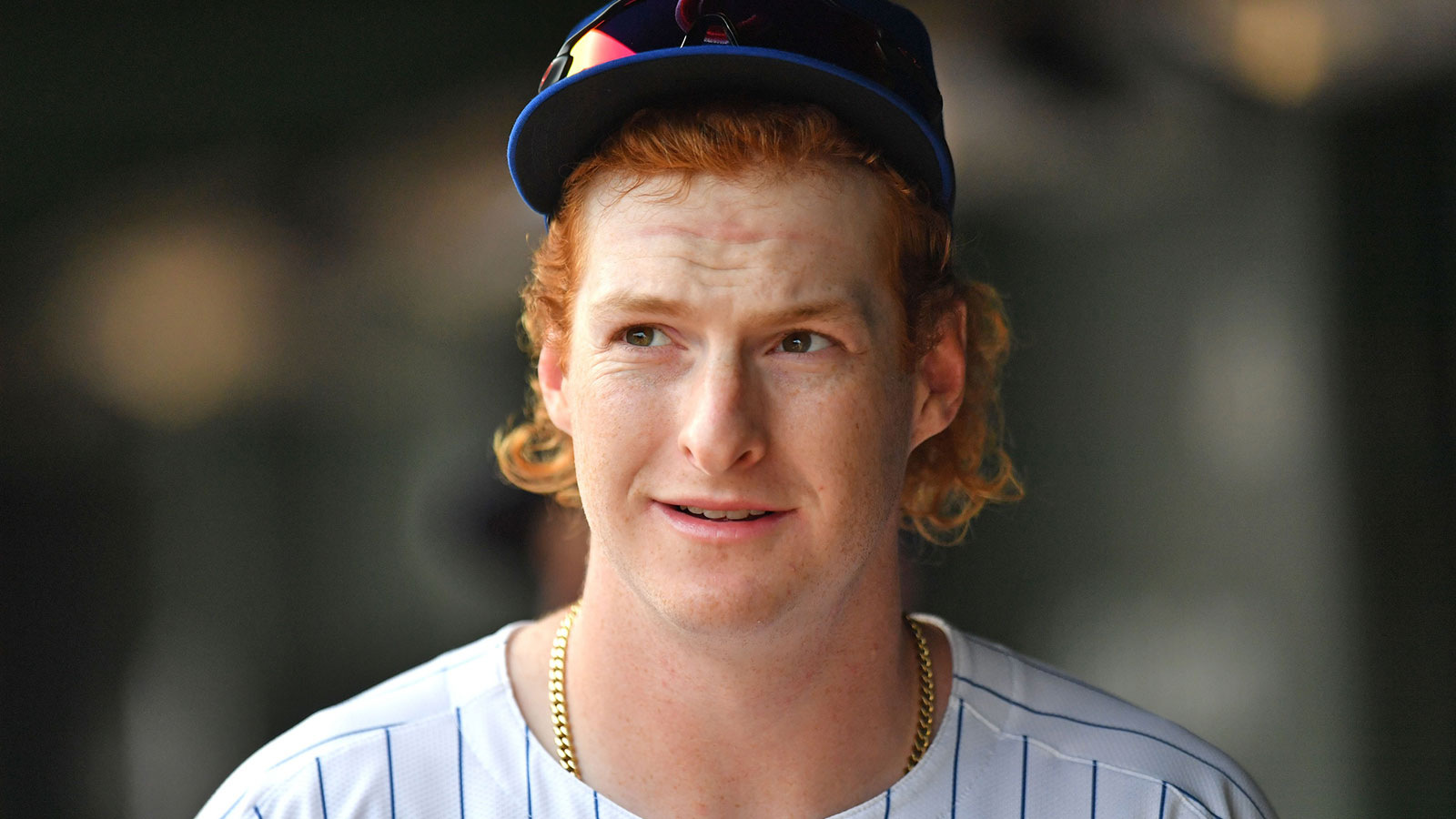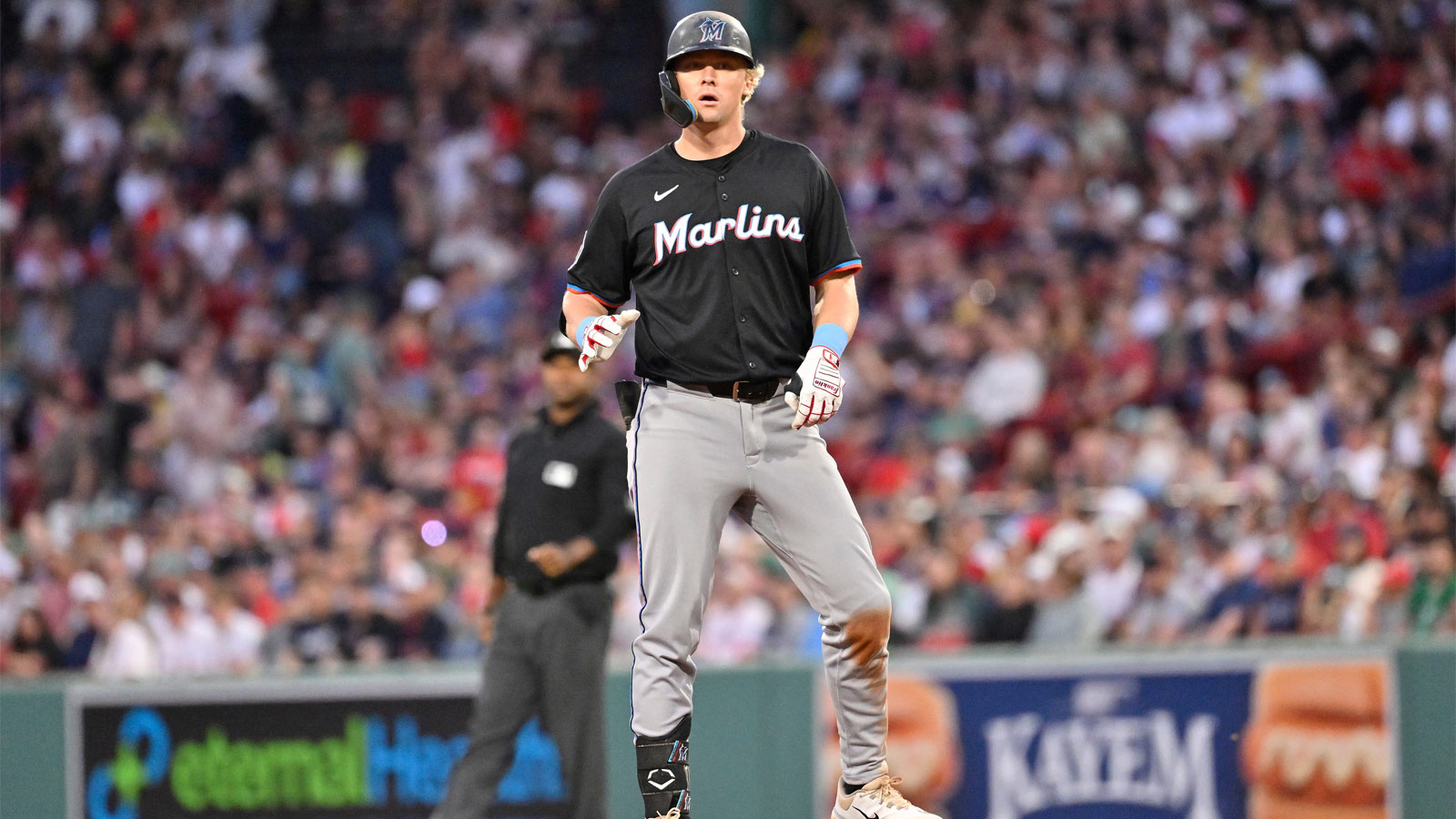
The first true blockbuster of the 2026 MLB calendar year arrived on Wednesday, with two franchises moving in opposite directions, each executing a deal aligned with its competitive timeline. The Chicago Cubs addressed a pressing short-term need by acquiring starting pitcher Edward Cabrera, while the Miami Marlins leaned further into a long-term rebuild by converting pitching strength into offensive upside.
For the Cubs, the move centered on stability. Chicago entered the offseason with uncertainty behind its top rotation arms, and the free-agent market offered limited options without heavy financial commitments. Cabrera provides immediate impact at a manageable cost, remaining under team control through the 2028 season.
That control gives the Cubs three years of rotation certainty without restricting payroll flexibility, a key consideration as Chicago’s front office evaluates additional roster upgrades across the lineup. The structure of the deal allows the club to remain aggressive without sacrificing long-term financial maneuverability.
The 27-year-old pitcher is coming off the strongest season of his career. In 2025, he posted a 3.53 ERA with 150 strikeouts across 137.2 innings while reducing his walk rate to 8.3 percent. The improvement in command mattered as much as the raw production, signaling growth rather than the volatility that previously defined his profile.
When healthy, Cabrera’s power arsenal and swing-and-miss ability give the Cubs a legitimate mid-rotation anchor with upside for more. That upside factored heavily into Chicago’s willingness to part with premium prospect capital.
The Cubs’ rotation upgrade earns a B grade.
Chicago filled a critical hole without compromising payroll flexibility, keeping avenues open to pursue offensive help elsewhere on the roster. That restraint is notable given the aggressive nature of the acquisition.
Still, the cost was substantial. The Cubs surrendered Owen Caissie, their top prospect, along with two additional infield prospects. Caissie’s left-handed power profile is rare and difficult to replace internally, particularly for a Chicago roster still searching for consistent middle-of-the-order production.
The right-hander’s injury history also introduces risk, preventing the deal from reaching elite territory despite its upside.
For Miami, timing defined the decision.
The Marlins’ rebuild has emphasized asset maximization and long-term lineup construction. Starting pitching represents organizational depth, while power hitting remains a persistent weakness.
By trading Cabrera after a breakout season, Miami avoided future arbitration escalation and lingering durability concerns while selling at peak value.
The return for Miami reflects that strategy. Caissie headlines the package as a potential middle-of-the-order bat, a profile the Marlins have lacked for years.
Despite a brief and uneven major league debut, Caissie’s minor league production remains compelling. He dominated Triple-A pitching with a .281 average and an .887 OPS, slugging 41 home runs across two seasons.
Cristian Hernandez adds projectable infield depth, while Edgardo De Leon provides developmental upside. Together, the trio deepens Miami’s system without compromising payroll flexibility or future maneuverability.
Viewed through those lens, the deal earns the Marlins an A-minus grade.
The trade also reshapes the broader pitching market. With one of the top controllable starters now off the board, rotation scarcity increases, strengthening leverage for remaining sellers.
When evaluating MLB trade grades, context matters. The Cubs accepted risk to compete now. The Marlins embraced patience to build later. Both franchises executed with clarity, making this a rare deal where each side walked away aligned with its long-term vision.